Speed Limits in Austria: km/h and mph by Road Type
Austria's speed limits by road type, in km/h and mph: towns, country roads, motorways, trailers, winter tires and what to check before you drive.
On this page
Last updated November 2026. The default speed limits in Austria are 50 km/h (about 31 mph) in built-up areas, 100 km/h (about 62 mph) on country roads and 130 km/h (about 81 mph) on motorways. Any posted sign overrides these defaults, and trailers, studded tires and heavy vehicles change the numbers. For licence, vignette and parking rules, start with our Austria driving guide.
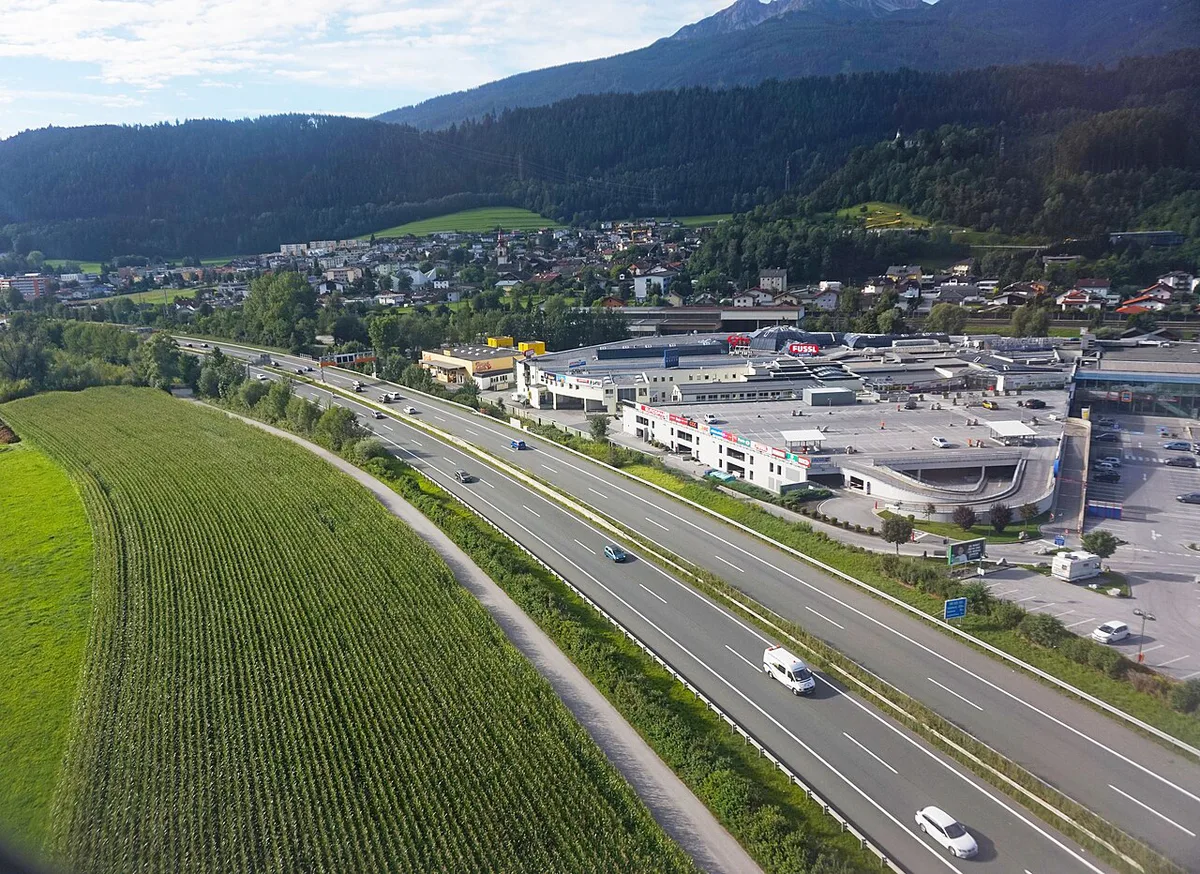
Featured image: Alexander Baranov from Montpellier, France, CC BY 2.0, via Wikimedia Commons.
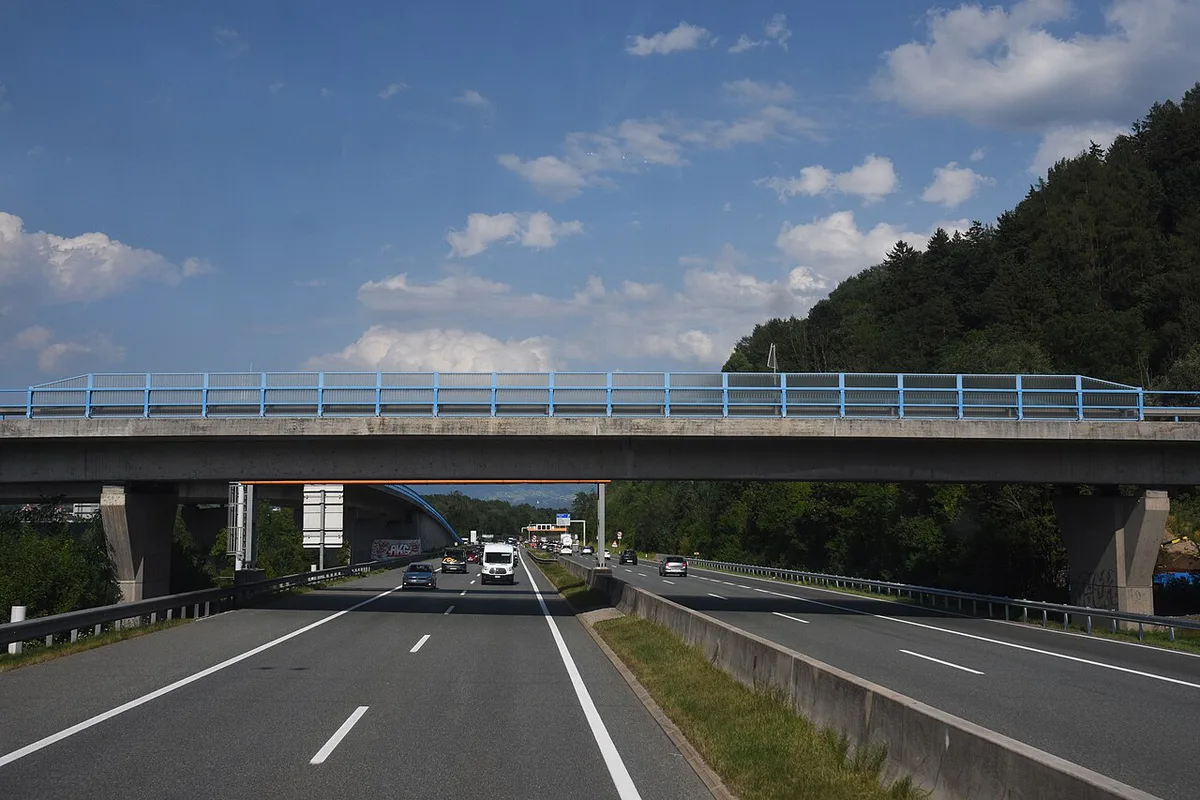
Austria Speed Limits at a Glance
Rules checked November 2026. These are the default limits for a passenger car up to 3.5 t, and they apply unless a sign says otherwise. Mph figures are rounded from km/h, so use them for planning only. Your rental car's speedometer may show km/h as the main scale, so drive by that.
| Road type | Default km/h | Approx. mph | Notes |
|---|---|---|---|
| Built-up area (town or village) | 50 | 31 | 30 km/h applies in many residential streets |
| Outside built-up areas (country roads) | 100 | 62 | Lower signed limits are common on bends and in valleys |
| Motorway (Autobahn) | 130 | 81 | Variable limits can be lower |
| A10, A12, A13 and A14 at night (22:00 to 05:00) | 110 | 68 | Signed night limit on these motorways |
Speed Limits by Road Type
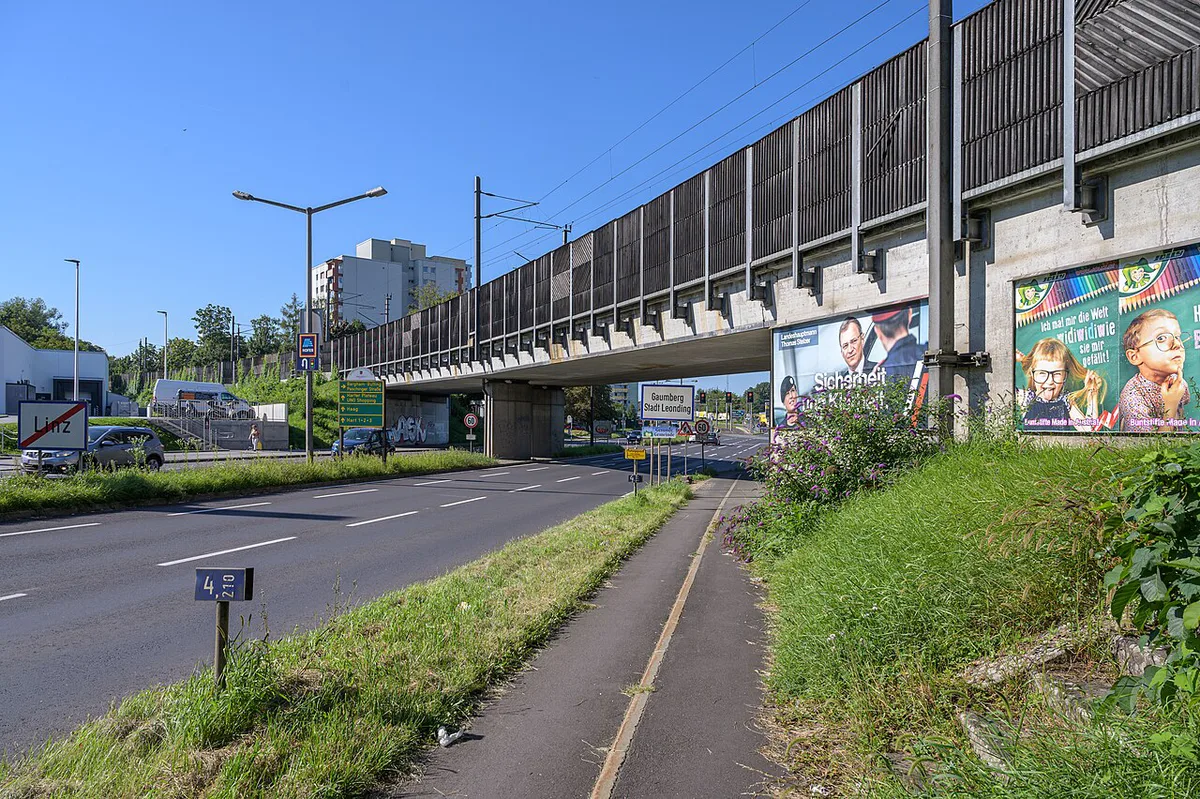
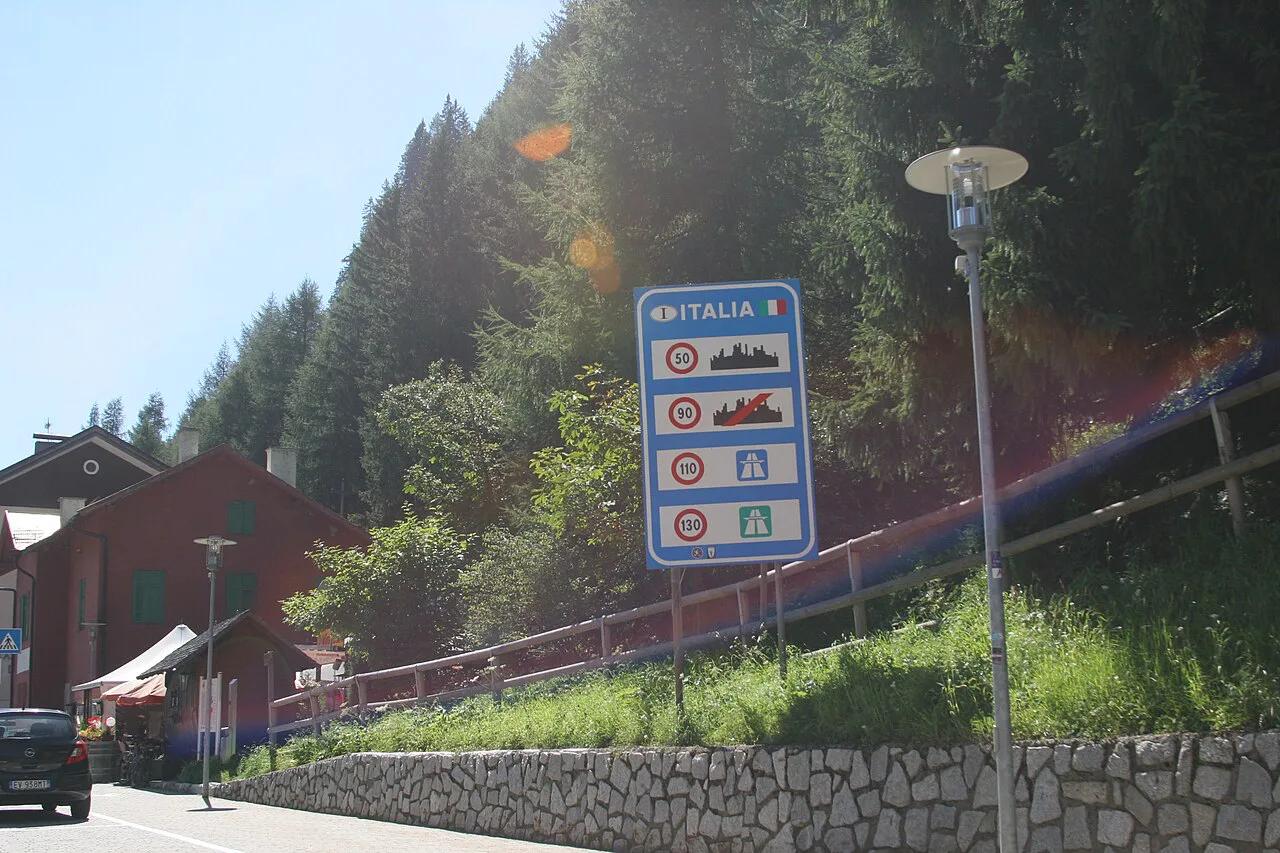
Austria sets limits by road category, with one time-of-day exception: from 22:00 to 05:00 the limit drops to 110 km/h on the A10 Tauern, A12 Inntal, A13 Brenner and A14 Rheintal motorways. Built-up areas begin at the town-name sign and end at the same sign with a red diagonal bar. Inside them the default is 50 km/h. Many residential streets are signed at 30 km/h (about 19 mph), so watch for zone signs when you turn off a main street. Outside built-up areas the default is 100 km/h. That covers federal and regional roads, including most of the winding valley roads you will use on an alpine trip. On motorways the default rises to 130 km/h. A vignette is needed on those roads, and our Austria vignette guide explains how to buy one. Austria drives on the right, with overtaking on the left.
Special Cases: Trailers, Motorhomes, Studded Tires, Heavy Vehicles
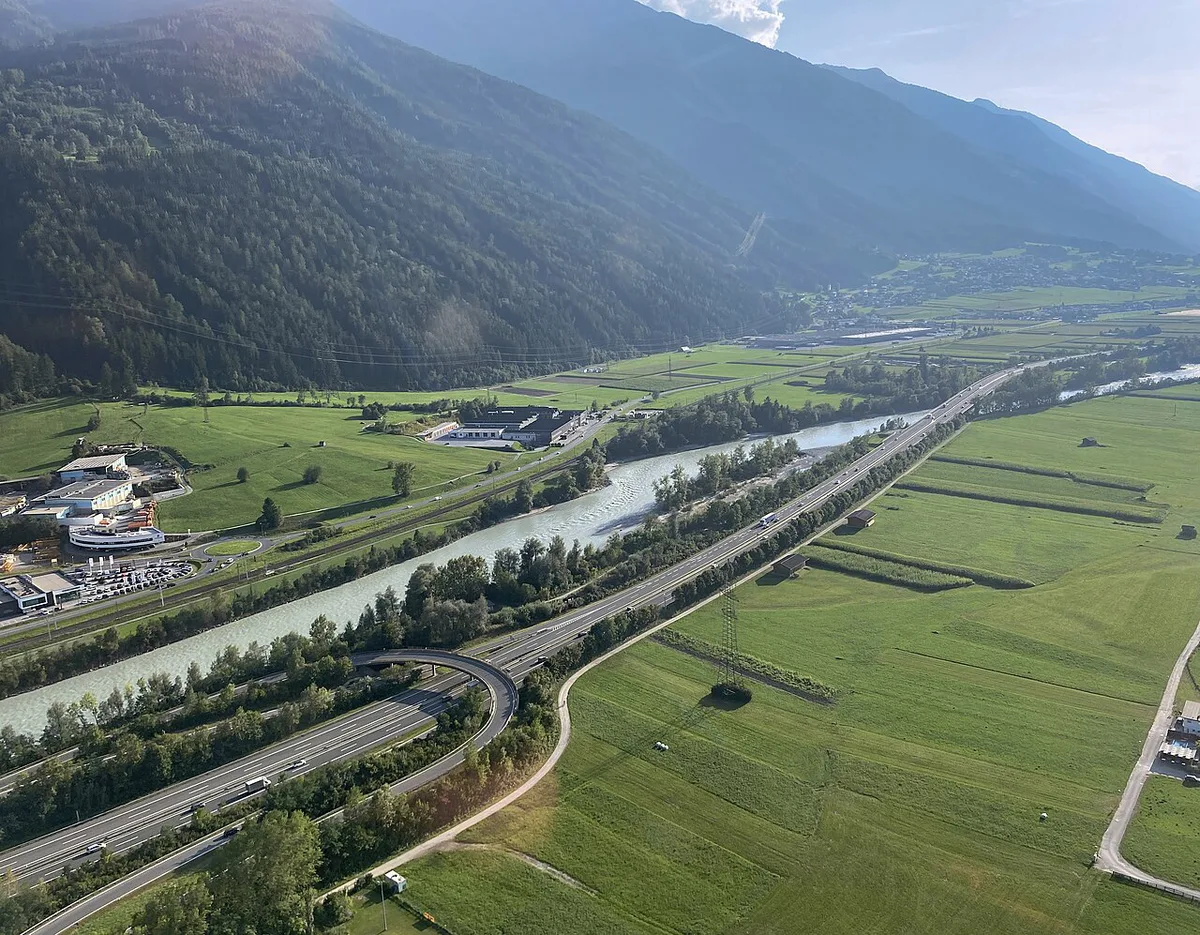
Towing lowers the limit on country roads and motorways. A car with a light trailer up to 750 kg may do 100 km/h both outside towns and on motorways. With a heavier trailer, as long as the combination stays within 3.5 t, the limits are 80 km/h outside towns and 100 km/h on motorways. Motorhomes up to 3.5 t follow the car limits, while vehicles over 3.5 t are held to 70 km/h outside towns and 80 km/h on motorways. A car with studded tires is capped at 100 km/h on motorways and 80 km/h elsewhere, and it must carry a studded-tire sign on the back. If your rental car has studs, that cap overrides the default.
| Vehicle | Built-up km/h | Country road km/h | Motorway km/h |
|---|---|---|---|
| Car up to 3.5 t | 50 | 100 | 130 |
| Car with trailer up to 750 kg | 50 | 100 | 100 |
| Car with trailer over 750 kg, combination up to 3.5 t | 50 | 80 | 100 |
| Car with studded tires | 50 | 80 | 100 |
| Vehicle over 3.5 t | 50 | 70 | 80 |
How to Read Austrian Speed Signs
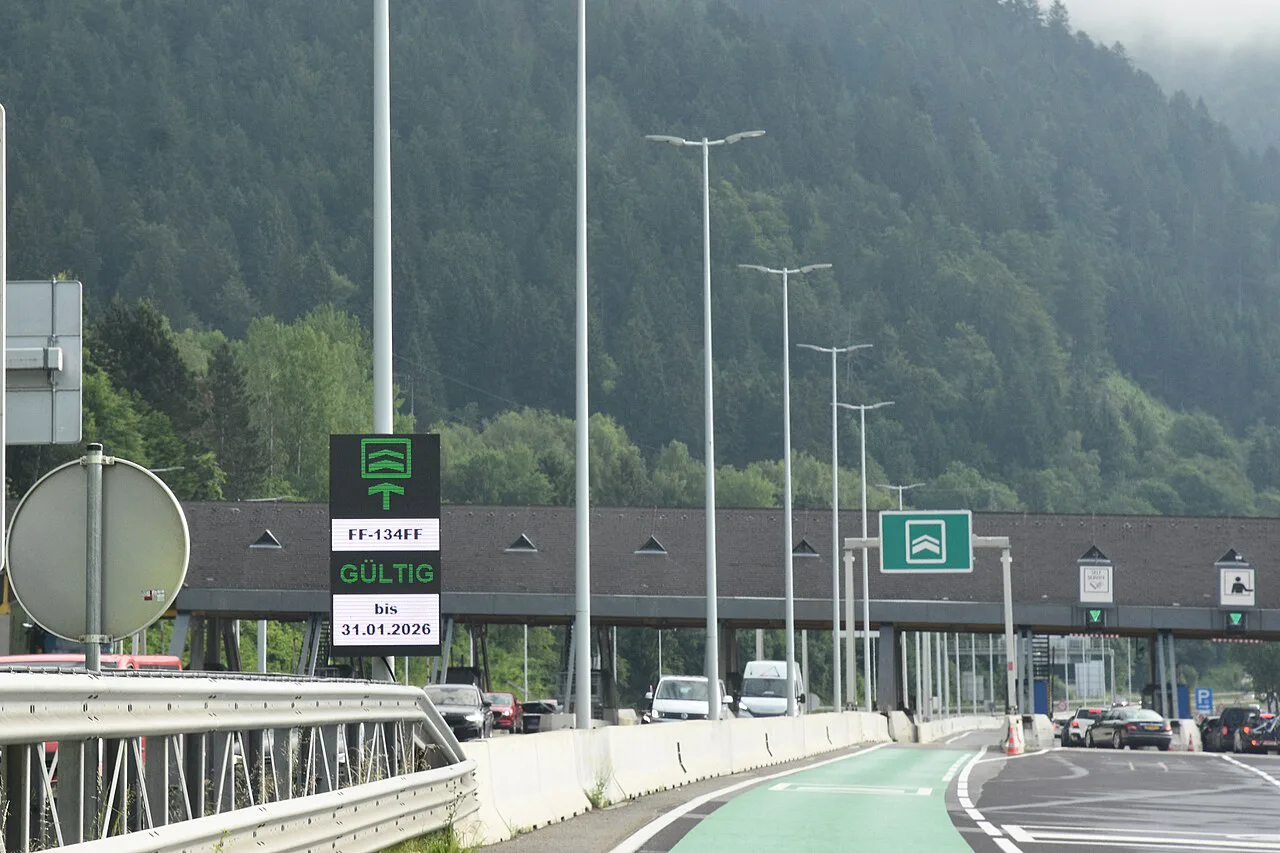
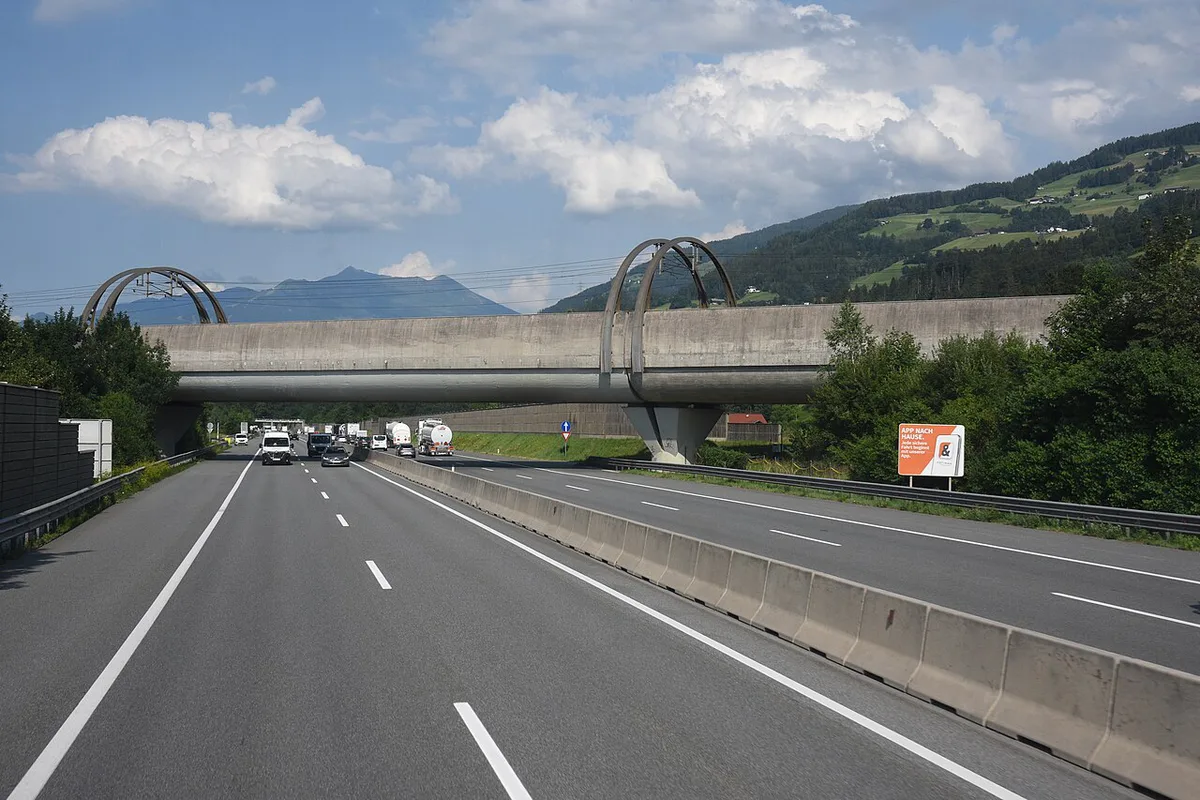
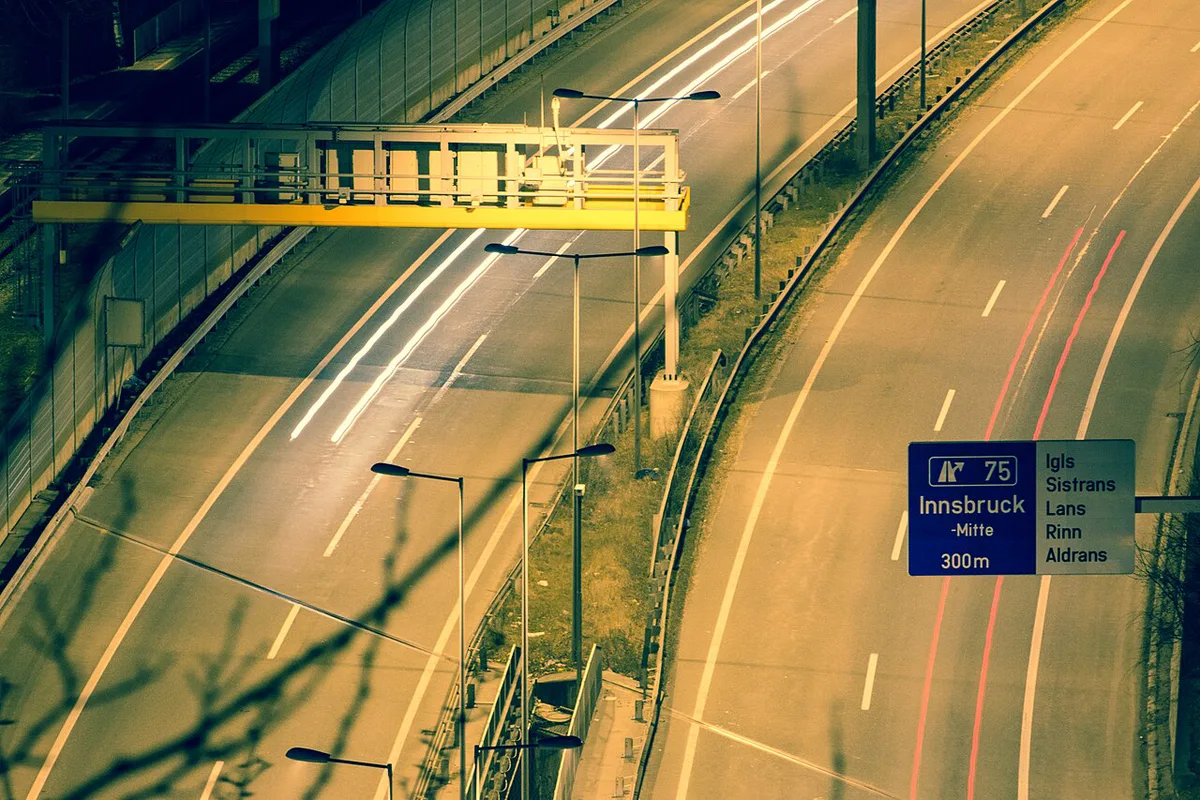
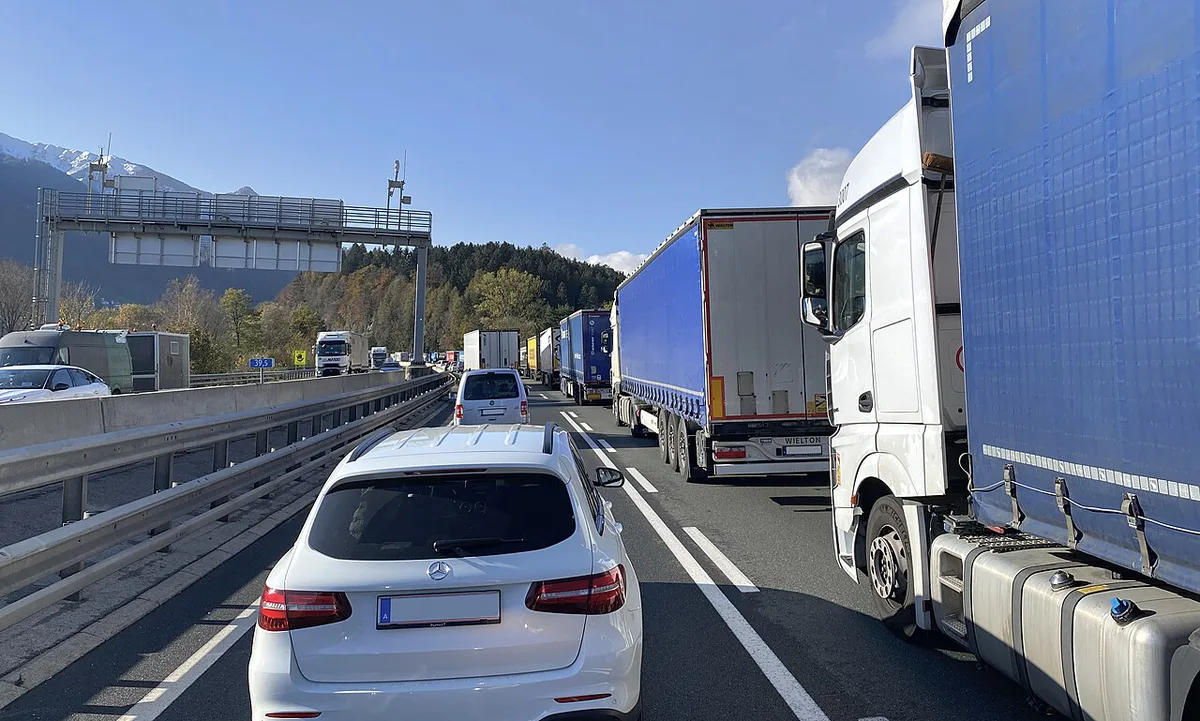
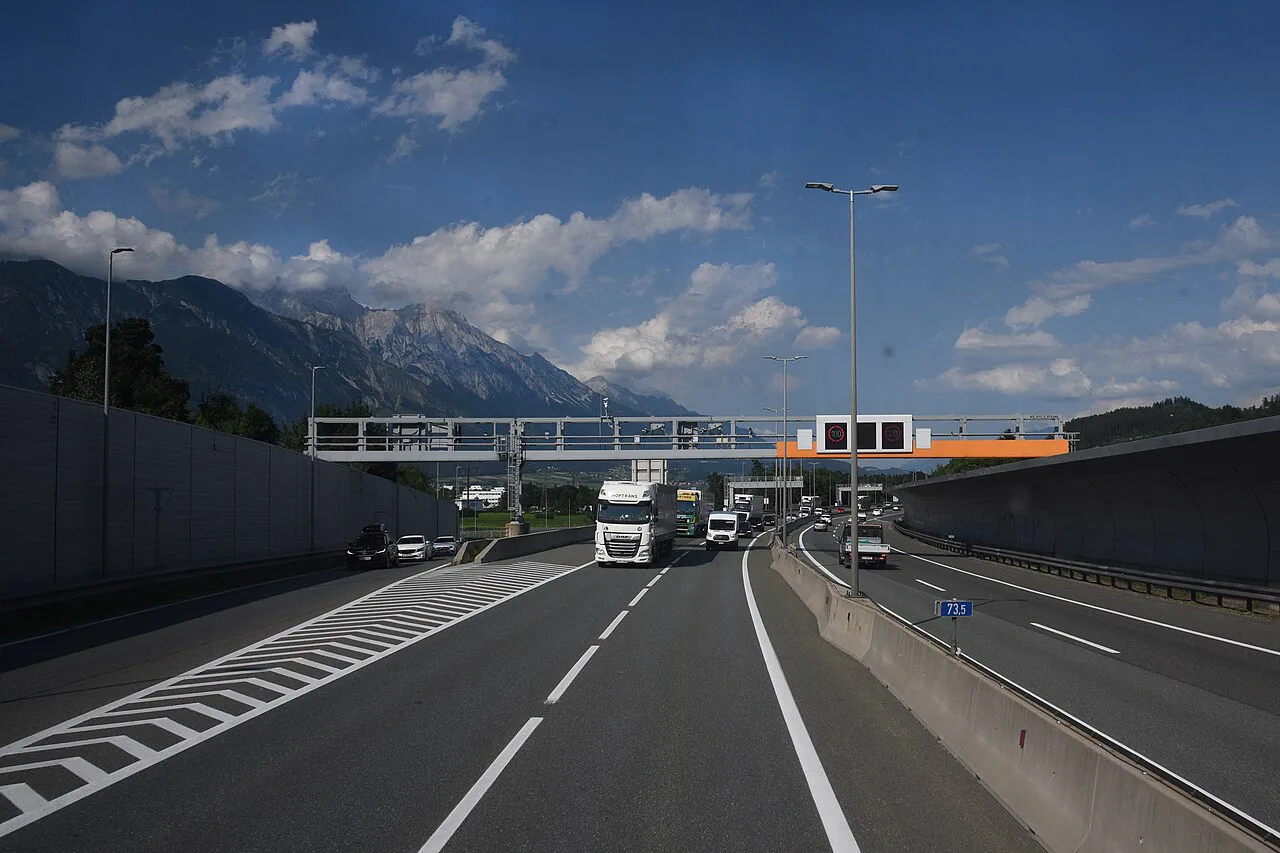
A round white sign with a red border and a black number sets a maximum. A white sign with a diagonal bar ends that limit, and the default returns. Zone signs, such as 30 km/h residential zones, stay in force until a matching end-of-zone sign. Signed limits always beat the defaults, in both directions. Electronic gantries are the other sign type to watch. On the A12 Inn Valley motorway in Tyrol, variable limits can drop below 130 km/h. Some of those reductions come under the IG-L air-quality rules. Gantries show the current figure, so follow the display rather than your memory of the default. Land Tirol publishes regional traffic information. Treat any temporary roadwork limit the same way, as binding from the sign onward.
Speed Cameras, Section Control and Rental Cars
Austria uses both police checks and automatic radar. Police may collect fines on the spot. Section control, which averages your speed between two points, operates on some stretches, so braking just before a camera does not help. Radar detectors are banned. Fines for small overages vary by state and by how the offence was recorded, so no single figure applies. The top band is set in the road traffic act (StVO § 99): exceeding the limit by more than 40 km/h in town or more than 50 km/h outside town costs €400 to €6,000. A ticket can arrive weeks after your trip. Rental firms usually pass the driver's details to the authorities and may add an admin charge, so read the fee clause before you sign. Our Austria car rental guide covers what else to check at pickup.
Mountain Roads, Passes and Tunnels: Why Legal Speed Isn't Real Speed
On alpine roads, your average speed falls far below the legal limit. Hairpins, gradients and slow campervans set the pace, so plan time by road type rather than by km/h. The Silvretta High Alpine Road: Toll, Season & Driving Guide and the Gerlos Pass Guide: Toll Road, Old Road and Winter Tips are hairpin climbs where the 100 km/h default means little. The Hahntennjoch, with grades up to 18.9% and a ban on caravans, and the Kaunertal Glacier Road: Toll, Season & Driving Guide are also slow drives, so allow generous daylight margins. Tunnels need steady speed, not cruise-control complacency. Descents can add speed without you noticing, so brake early and use a lower gear. Tolls and routes are covered in our Austria toll roads guide. For tunnel examples, see the Brenner Pass: Route, Tolls and Border Crossing Guide, Felbertauern Tunnel: Toll, Route and Winter Driving Guide and Arlberg Tunnel: Toll, Rules and Arlberg Pass Alternative.
Winter Driving and Speed
Winter tires are required from 1 November to 15 April when roads are snowy or icy. Studded tires carry the 100 and 80 km/h caps above. Black ice forms most often in early morning near freezing, so drop well below the limit on shaded valley roads. The Arlberg Pass: Drive It, Skip It, or Take the Tunnel? is a typical stretch where conditions change quickly. Where a sign requires chains, fit them. Winter tires must have at least 4 mm of tread to count. The ÖAMTC publishes current conditions for mountain legs.
A car on studded tires must show the studded-tire sign on the back and stay at or below 100 km/h on motorways and 80 km/h elsewhere.
Common Mistakes to Avoid
Most speed tickets for visitors come from a few repeat errors.
- Reading km/h as mph: 130 km/h is about 81 mph, not 130.
- Carrying German autobahn habits over: Austria has a general 130 km/h limit.
- Missing temporary limits at roadworks or on gantries, especially on the A12.
- Forgetting that a trailer lowers the limit to 100 km/h on motorways.
- Assuming a ticket vanishes after you return the rental car.
- Speeding on 30 km/h residential streets just off a main road.
Plan the Route Around Real Speeds
Once you know the limits, build your days around road type, not distance alone. Our Austria road trip itinerary shows realistic daily legs. Allow extra time on any day that includes a pass or toll road.
Frequently Asked Questions
Is there any speed limit on the Autobahn in Austria?
Yes. The default motorway limit is 130 km/h, about 81 mph. Variable signs, roadworks and vehicle type can lower it, for example 100 km/h with a trailer.
Are Americans allowed to drive in Austria?
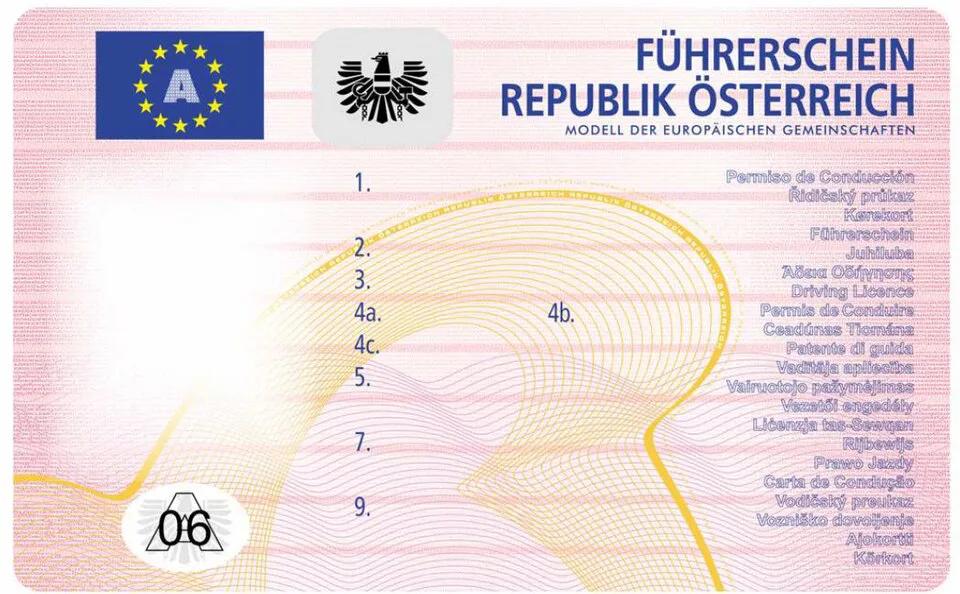
Yes, with a valid US licence and usually an International Driving Permit. Our guide to driving in Austria with a US license explains the paperwork.
Road-rule changes worth knowing
Optional updates to our guides.
You might also like
Continue reading
More guides you'll find useful