
Autobahn Guide: Speed Limits, Rules and Tips for Visitors
Is the autobahn really limit-free? Learn the real speed rules, lane etiquette, tolls and rest stops, plus a drive-or-train guide for visitors.
On this page
Last updated November 2026: the autobahn is Germany's federal motorway network, officially called the Bundesautobahn and written as the letter A plus a number. There is no blanket speed limit, but plenty of stretches have one, and an advisory speed of 130 km/h (81 mph) applies elsewhere. Use this page as the quick version, then follow the links into our full driving guide for depth.
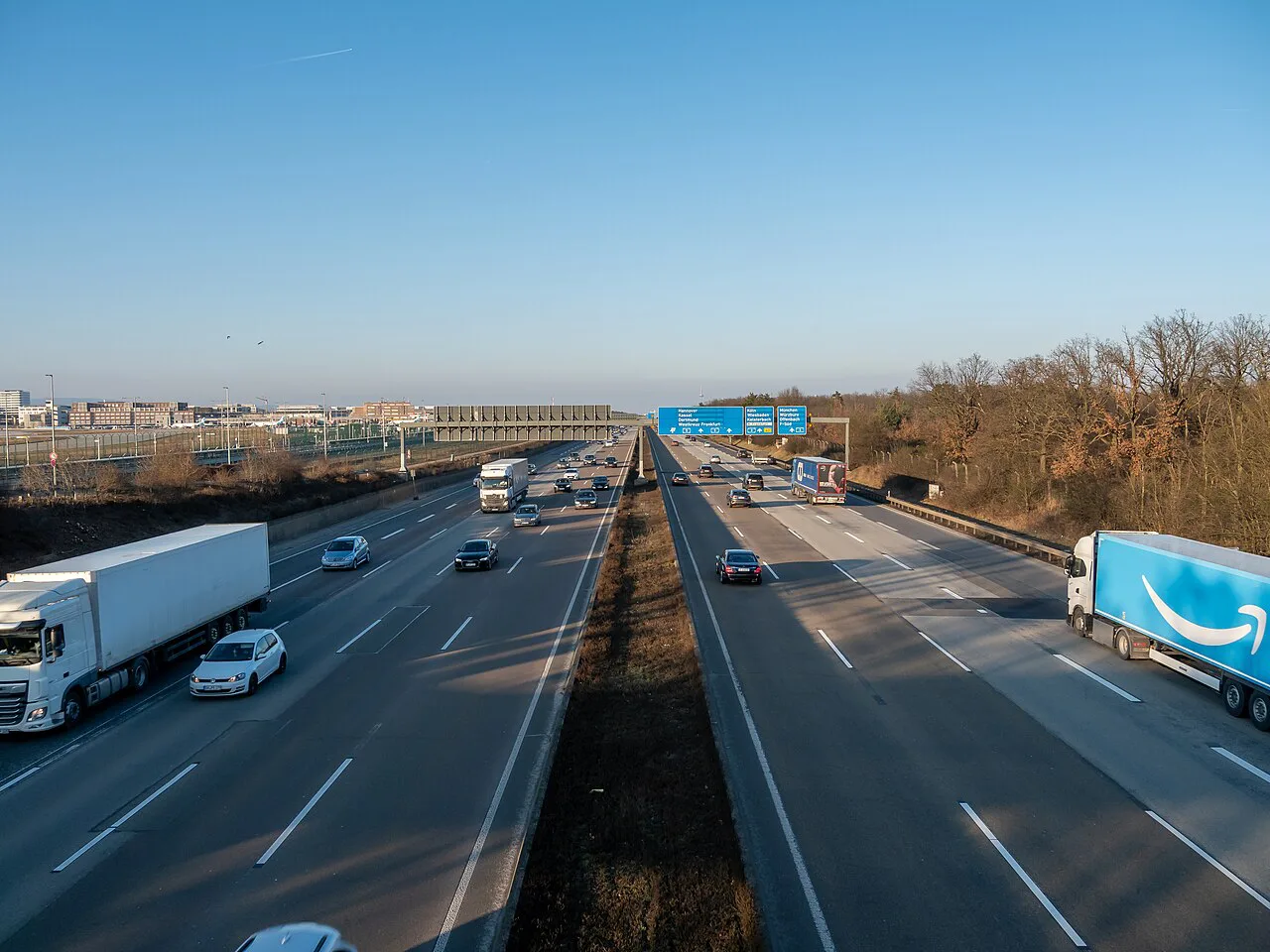
Featured image: Matti Blume, CC BY-SA 4.0, via Wikimedia Commons.
Is There Really No Speed Limit on the Autobahn?
Not quite. Unrestricted stretches carry an advisory speed (Richtgeschwindigkeit) of 130 km/h (81 mph). Driving faster is not illegal in itself. It can, however, raise your share of liability if a collision happens. A 2017 Federal Road Research Institute report found that in 2015 about 70.4% of the network had only the advisory limit. Another 6.2% had temporary limits for weather or traffic, and 23.4% had permanent limits. Limits are most common near cities, at roadworks, and on curvy or crash-prone sections. Electronic signs can change the limit with conditions. Our guide to how the speed rules work covers the details. For limits on other road types, see national speed limits by road type.
How to Read the Autobahn: Numbering, Signs and Exits
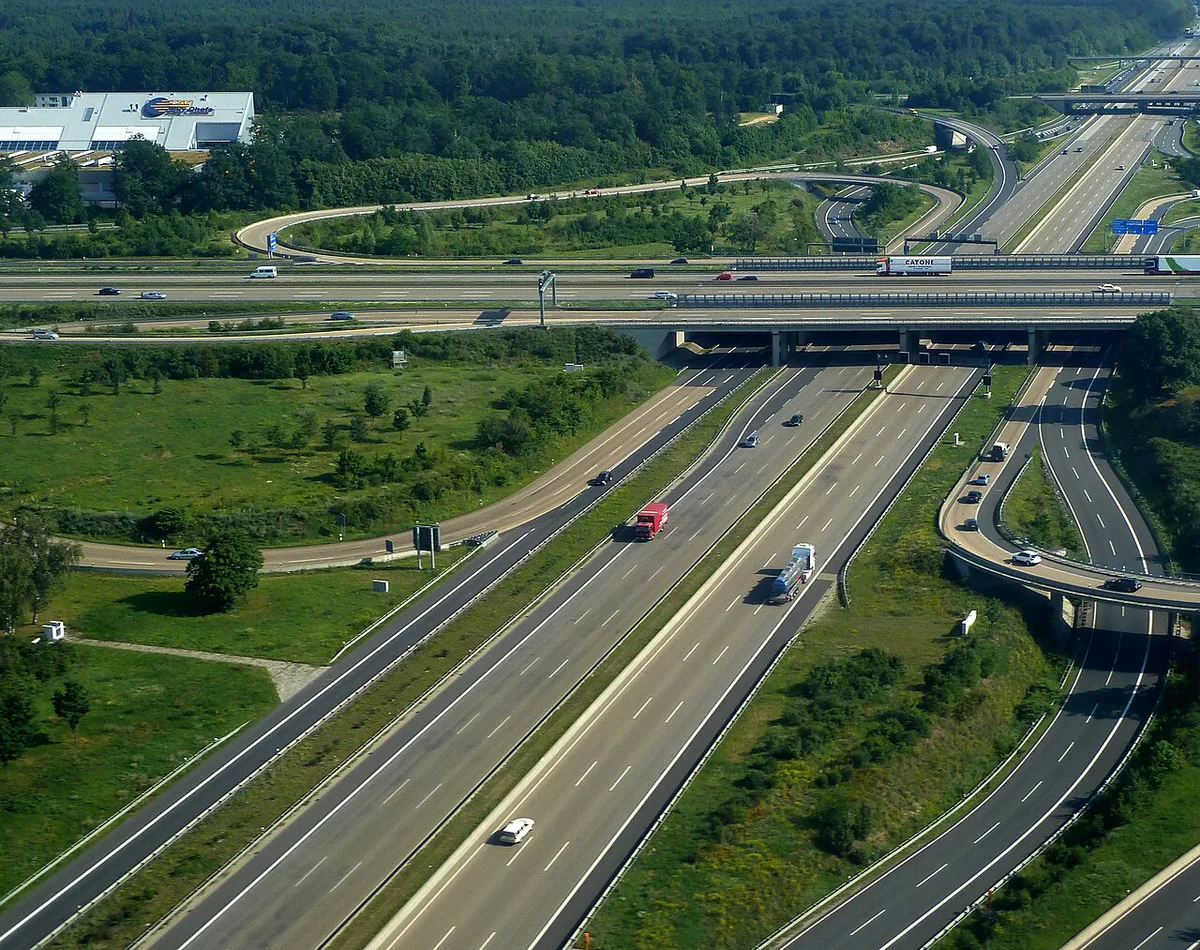
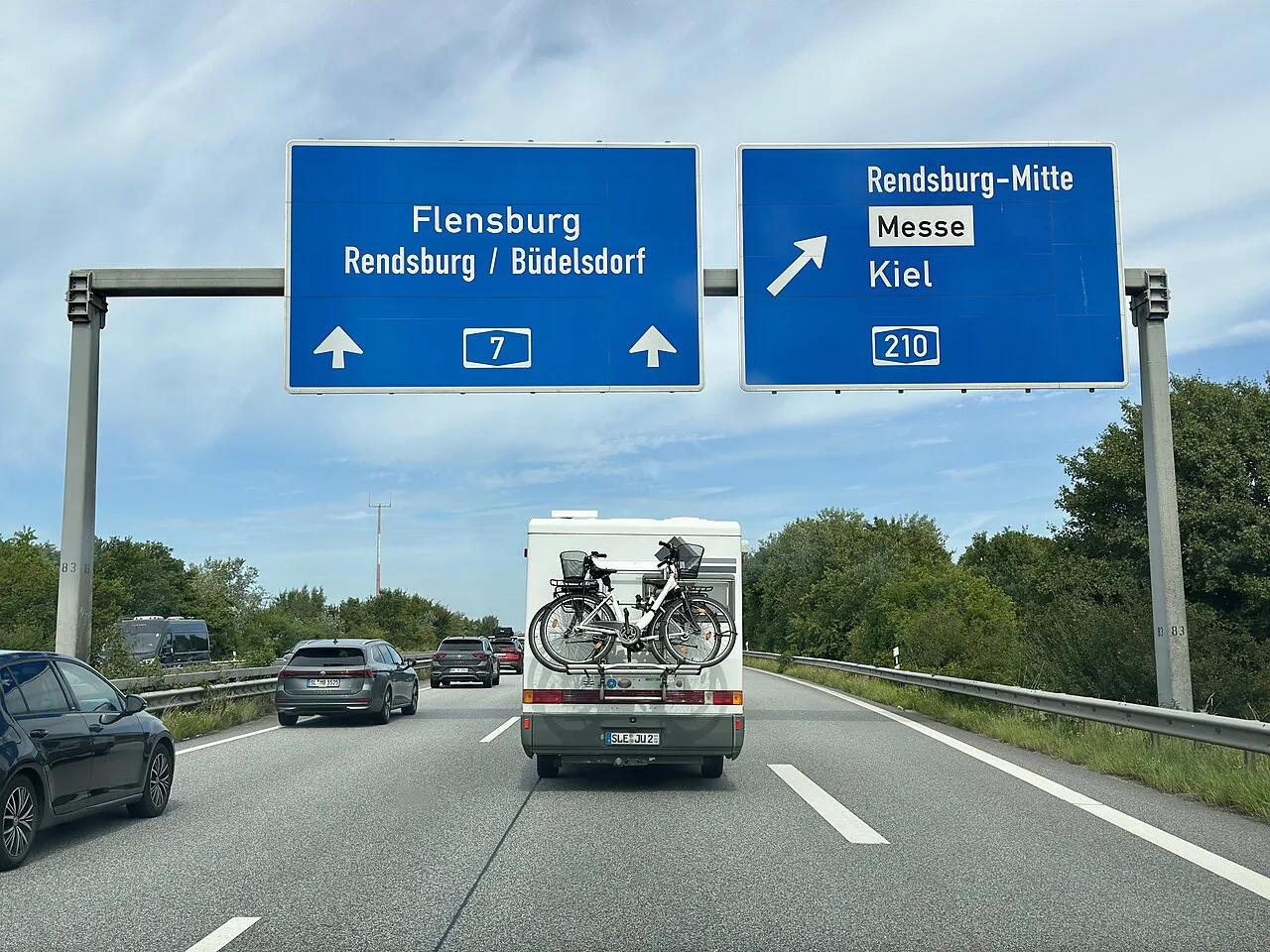
Germany's network was about 13,220 km (8,215 miles) long at the start of 2025, and the federal transport ministry is responsible for it. Routes use the letter A and a number, such as the A7, A8 or A3. Main routes have one digit. Shorter regional routes have two digits, and short local ring roads or links often have three. Even numbers generally run east–west, and odd numbers run north–south. Signs are white on blue. Nearly all exits are on the right, so plan your move into the right lane early. Rest areas are announced in advance with a blue "P" sign. Our guide to blue autobahn signs explains the speed-limit and end-of-limit symbols.
- A7 runs north–south, and A8 runs east–west: odd and even numbers tell you the general direction.
- A + two digits: a regional link between major cities or regions.
- A + three digits: usually a short local route, such as a ring road.
Autobahn Rules That Catch Visitors Out
Most rules are familiar from any motorway. A few deserve extra attention because they are enforced strictly.
Any vehicle that cannot exceed 60 km/h (37 mph) is barred, so a slow rental car has to stay off the network.
- Keep right unless you are passing. The left lane is for overtaking.
- Never pass on the right. It is strictly forbidden.
- Do not stop, reverse or make a U-turn. Parking is allowed only in designated areas.
- Pedestrians, bicycles and vehicles that cannot exceed 60 km/h (37 mph) are barred.
- In congestion, form an emergency corridor (Rettungsgasse). Left-lane drivers move left, and everyone else moves right.
- Do not tailgate. Close following is frowned upon and can be penalised.
- Enter and leave only at marked junctions.
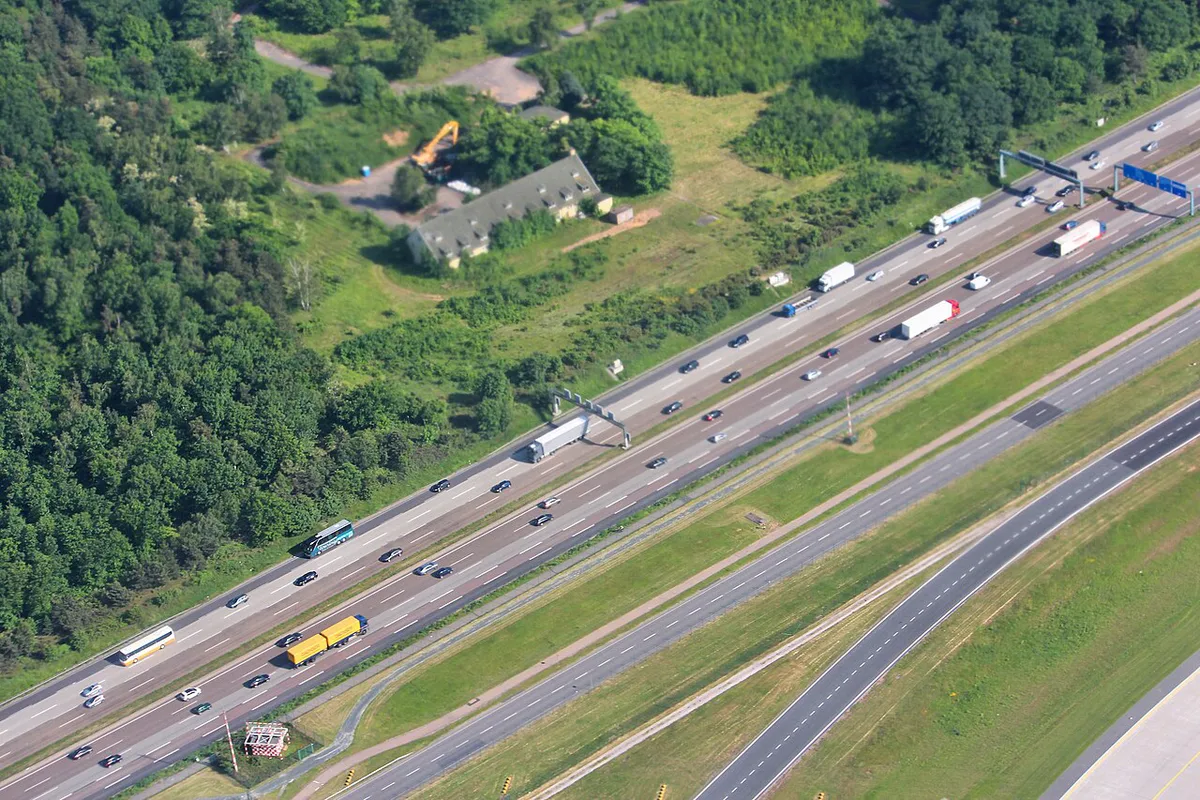
Lane Discipline on the Autobahn in Practice
Treat the right lane as your home lane, even when it feels slow. Move left only to pass, then return. Approach speeds can surprise you. A car doing 130 km/h may pull out to pass a truck, while a faster car closes from behind. Check your mirror before every lane change. Flashing headlights from behind usually mean the driver wants you to move over. Do not speed up or brake in response. Just signal and return to the right when it is safe. Fatigue builds quickly on long, fast stretches, so build in regular breaks. Never drive after drinking. See the alcohol limit for drivers before you plan a dinner stop.
Before You Drive: Licence, Car and Paperwork
Work through this short checklist before pickup. Start with your permit: our page on US licence rules explains what American visitors need. Next, compare rental car choices, including insurance and one-way fees. Check whether your route enters a city with a low-emission zone. Entry needs a sticker, and the low-emission zone sticker guide explains how to get one. Rental cars are often supplied with one, but ask at pickup. The Federal Environment Agency keeps the official list of the 35 active zones. In winter, read the winter tyre rules before you book. Finally, download offline maps and set your fuel level before you leave the lot.
Autobahn Costs, Tolls and Fuel
Passenger cars do not pay a toll on the autobahn. Rules differ for trucks, and our page on toll rules for cars covers the few exceptions. Fuel is cheaper at an Autohof, a large station just off a regular exit, than at a motorway Raststätte. Plan your fill-ups accordingly. Your bigger costs are usually the rental, one-way drop fees and city parking. Read the city parking rules before you drive into Munich, Frankfurt or Berlin. Hotels with parking usually cost less than central garages. Prices change often, so compare current rates at booking.
Rest Areas, Fuel and Breakdowns on the Autobahn
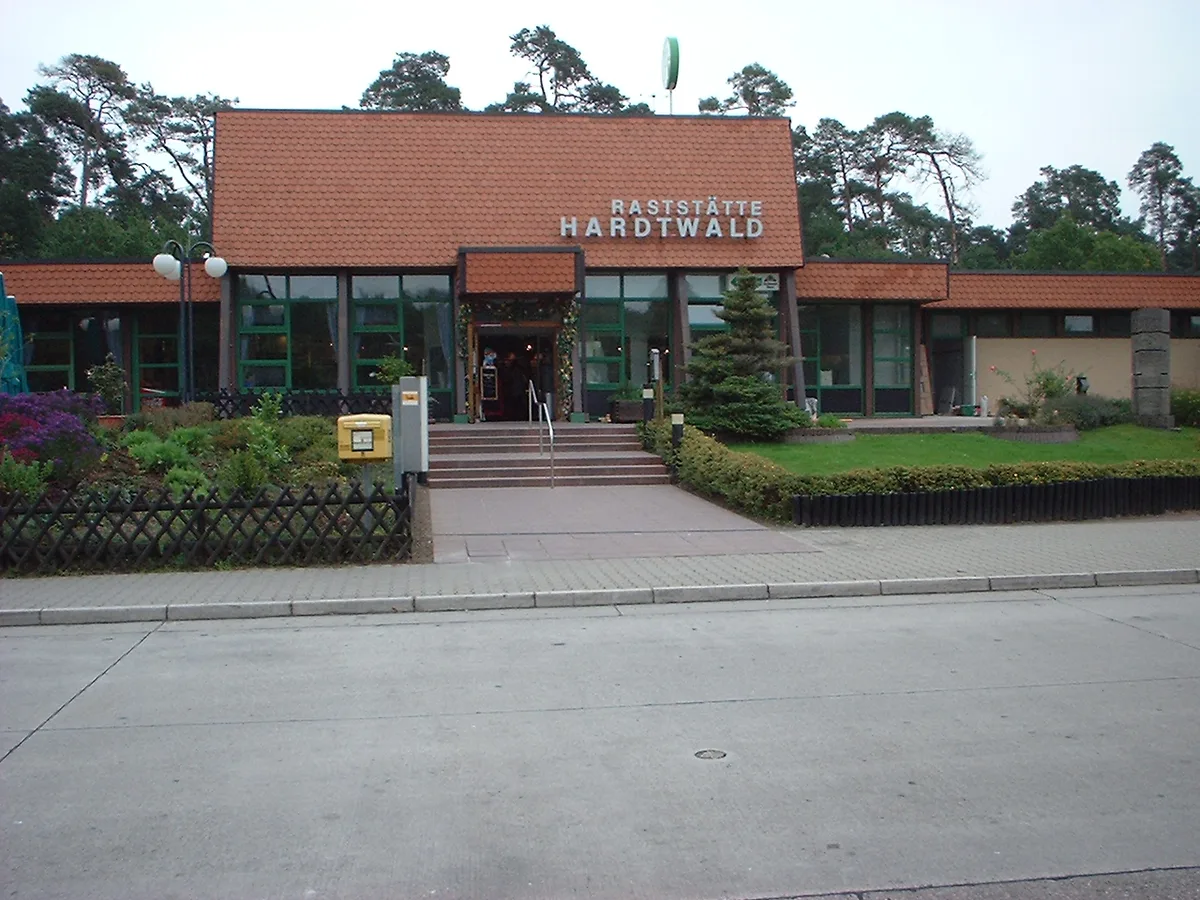
Rest stops come in two kinds. An unmanaged parking area (marked P) offers parking and sometimes toilets. A managed Raststätte adds fuel, charging, toilets and food, and some have hotels. Managed sites are spaced roughly every 50 km (31 miles) and are usually open all night. Parking anywhere else on the autobahn is prohibited. If your car breaks down, pull onto the right-hand shoulder, put on hazard lights and wear a high-visibility vest before you leave the vehicle. Move behind the barrier. Use the orange emergency phones, which are spaced along the network. Triangular stickers on the barriers point to the nearest one. Your rental company's roadside number is the other call to make.
Managed sites are spaced roughly every 50 km (31 miles), so plan fuel around them, but cheaper Autohof stations sit just off regular exits.
Autobahn or Train? A Decision Table
Driving suits some trips and rail suits others. Use this table to match your route, luggage and tolerance for fast traffic.
| Route type | Time reliability | Stress | Cost | Luggage | Best fit |
|---|---|---|---|---|---|
| Long city-to-city hops, such as Frankfurt to Munich | Train is steadier; roadworks and congestion hit driving | Higher by car in heavy traffic | Rail fare versus fuel, parking and sticker | Easy on a train, easy by car | Solo or couple with light bags: train |
| Short city-to-city links | Both usually reliable | Low by train | Parking often outweighs the saving | Car better with bulky gear | Rail if you stay in cities |
| Rural or scenic destinations | Car gives more flexibility | Moderate; smaller roads are slower | Rental plus fuel, plus one-way fee | Car easiest | Families and multi-stop trips: drive |
Where to Experience the Autobahn as an Enthusiast
Public autobahn driving is traffic driving, with limits, trucks and speed cameras. A track is a different thing. If you want a closed-circuit experience, the Nürburgring runs public sessions, and the official site lists dates and conditions at the Nürburgring website. Our page on Nürburgring public sessions explains how a tourist drive works. Do not treat an unrestricted stretch as a test track.
A Short History of the Autobahn
The first public road of this kind opened between Cologne and Bonn in 1932. Today it is the A555. Large-scale construction of the Reichsautobahn began after 1933, and the first section from Frankfurt to Darmstadt opened in 1935. During the war, building relied increasingly on forced labourers and concentration camp inmates, under very poor conditions. West Germany repaired and expanded the network after 1949. Reunification in 1990 brought the former East German routes into one system, and the current numbering system took effect on 1 January 1975.
Frequently Asked Questions
How fast can you go on the autobahn?
On unrestricted stretches, there is no fixed limit, only an advisory speed of 130 km/h (81 mph). On many sections near cities, at roadworks, or in poor weather, posted limits apply and are enforced. Going faster than the advisory speed can increase your liability after a crash.
Can I drive on the autobahn as a tourist?
Yes, if your vehicle can exceed 60 km/h (37 mph) and you hold a valid licence. Passenger cars pay no toll. Read our guide on US licence rules, then follow the keep-right and no-passing-on-the-right rules.
Road-rule changes worth knowing
Optional updates to our guides.
You might also like

Continue reading
More guides you'll find useful