Parking in Germany: Rules, Signs, Discs & Fines (Visitor Guide)
How parking works in Germany: paid zones, the Parkscheibe disc, signs, garages, fines and tips for visitors and rental drivers.
On this page
Last updated November 2026: parking in Germany works in four main ways, which are paid street bays, free time-limited zones, garages and private lots. Most visitor fines come from a missing ticket, a wrongly set disc or a stop under a no-stopping sign. Our wider driving rules cover the rest of the road.
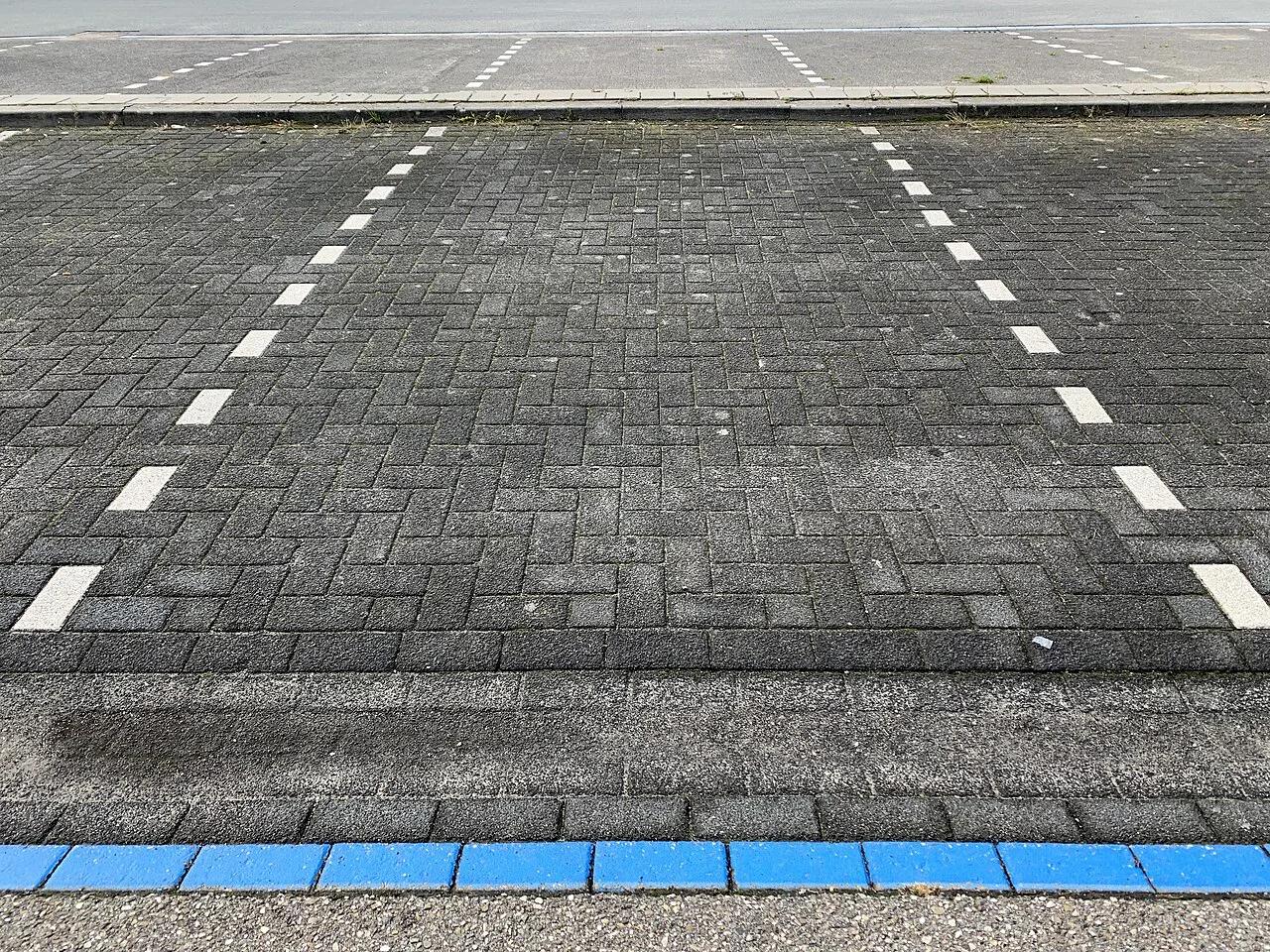
Featured image: Démarche Modi, CC BY-SA 4.0, via Wikimedia Commons.
Quick answer: how parking in Germany works
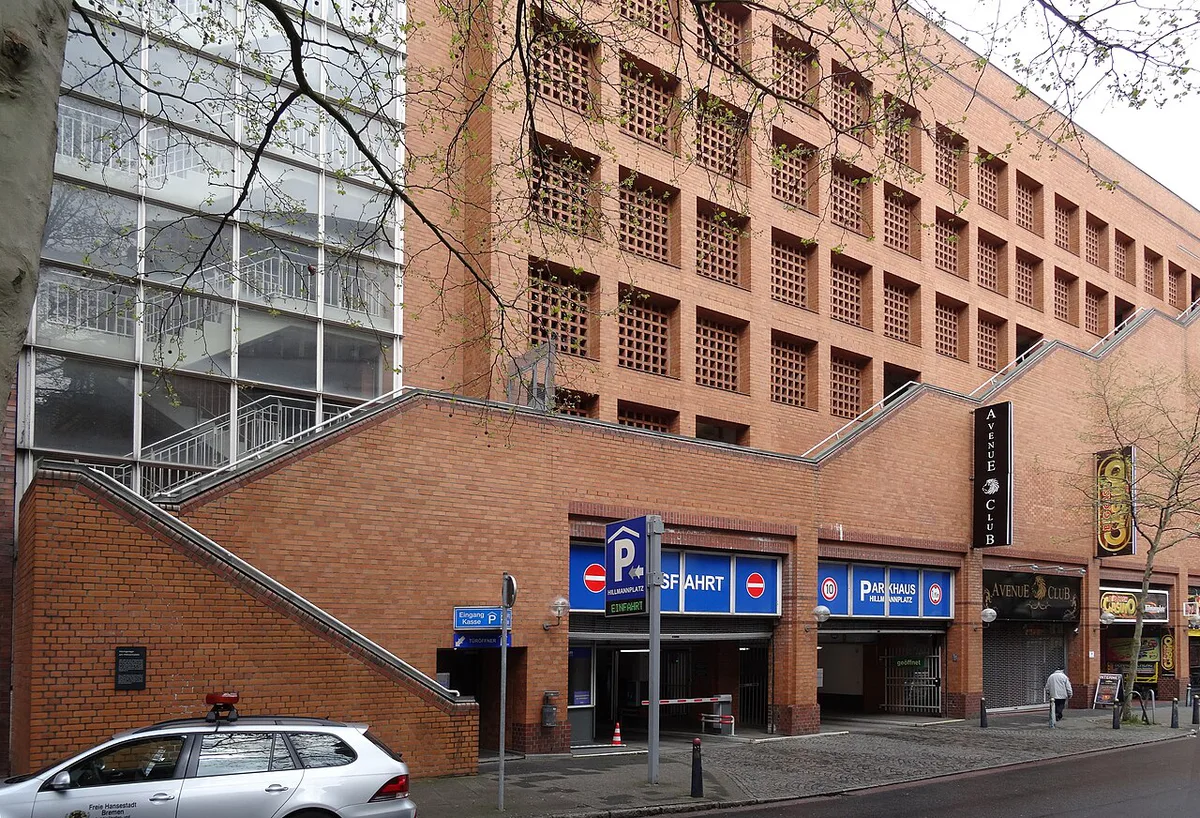
Look at the nearest sign before you leave the car. It tells you whether the spot is paid, free with a disc, reserved for residents or off limits. Signs beat habit, and a spot that looks free is often restricted. The table below sums up the four setups you will meet most.
| Type | How it works | Typical mistake |
|---|---|---|
| Paid street bay | Pay at a Parkscheinautomat (pay-and-display machine) or an older Parkuhr (meter), then follow the sign for the paid hours | Leaving without a ticket on the dashboard |
| Parkscheibe zone | Free, but only for a limited time shown on the sign, with a disc set to your arrival | Forgetting to set the disc |
| Parkhaus (garage) | Take a ticket on entry and pay at a machine or the exit barrier | Losing the ticket before you pay |
| Private or customer lot | Meant for shoppers or guests of one business, with its own rules on the board at the entrance | Parking there while visiting somewhere else |
Reading parking signs and markings
German signs are blunt once you know four terms. A Haltverbot means no stopping at all. A Parkverbot means no parking, though a short stop to drop someone off may be allowed. Anwohnerparken means resident-permit parking, so visitors without a permit should look elsewhere. A small plaque under a sign limits the rule to certain days or hours. Our German road signs guide shows the full set.
| Sign or plaque | What it means | What to do |
|---|---|---|
| Haltverbot (restricted or absolute no-stopping sign) | You may not stop, even briefly | Move on and look for another bay |
| Parkverbot (no-parking sign) | Parking is banned here | Find a legal bay nearby |
| Anwohnerparken (resident permit sign) | Permit holders only, usually within stated times | Read the plaque, then park elsewhere if it applies |
| Sign with a disc symbol | Free parking for a limited time with a Parkscheibe | Set the disc and respect the limit |
| Plaque with days and hours | The rule applies only in those windows | Read the plaque before you assume the spot is free |
How to use a Parkscheibe (parking disc)
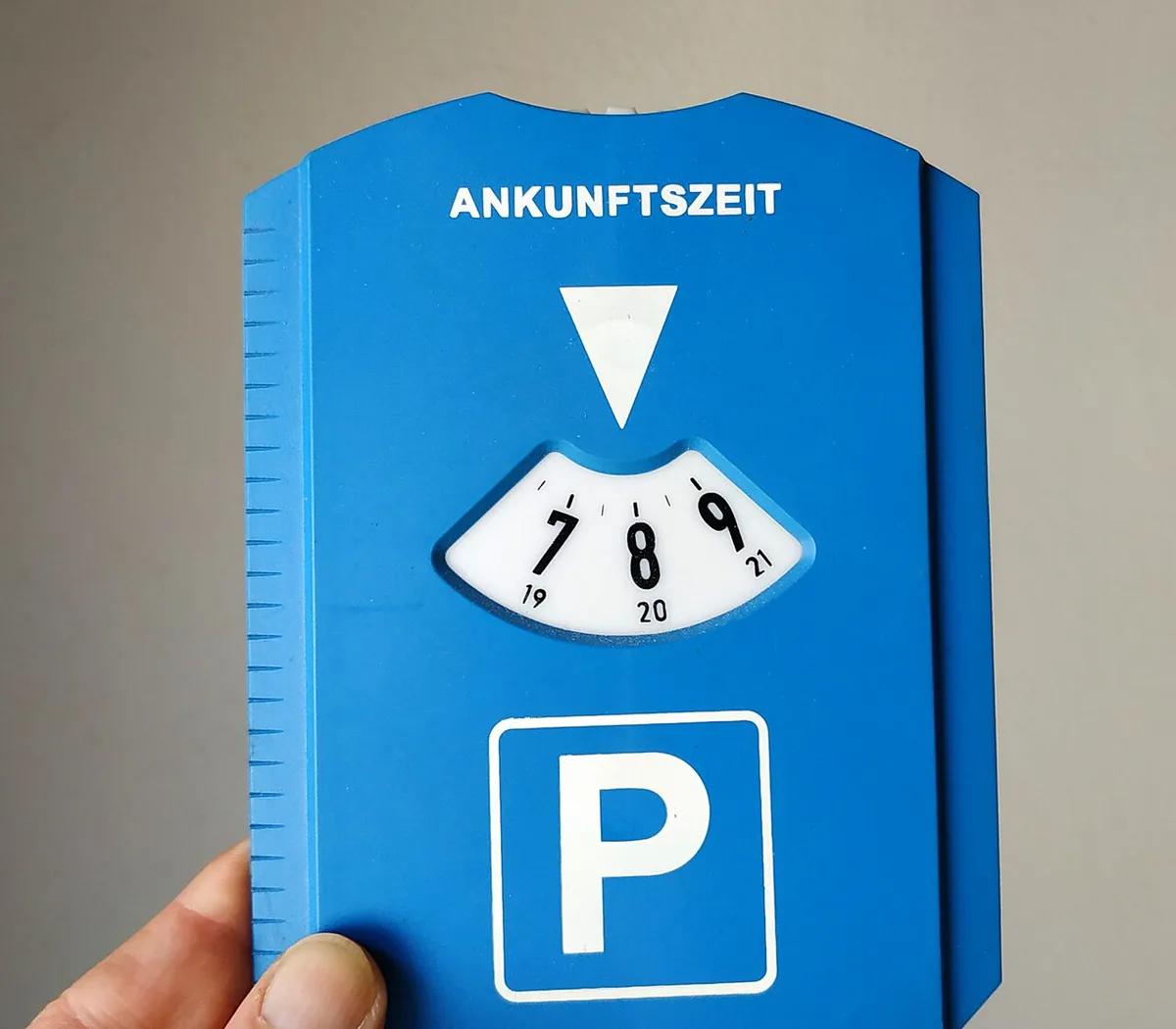
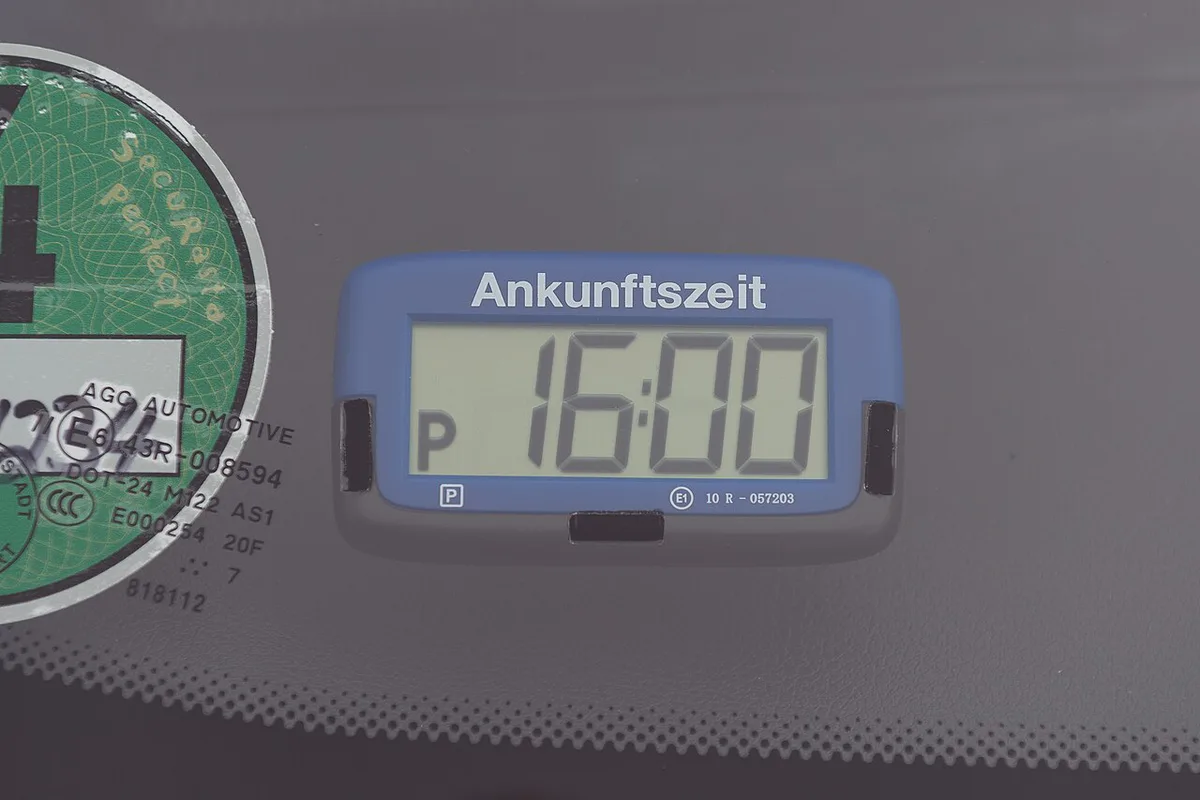
A Parkscheibe is a blue cardboard or plastic clock disc. Set it to your arrival time, rounded up to the next half hour. Place it on the inside of the windscreen, where it is clearly visible from outside. It only applies where a sign with a disc symbol allows it. You can buy one at petrol stations and many shops. Rental cars often carry one, so open the glovebox at pick-up. If there is none, ask the desk. Our car rental guide covers other pick-up checks.
Paid parking: meters, machines and garages
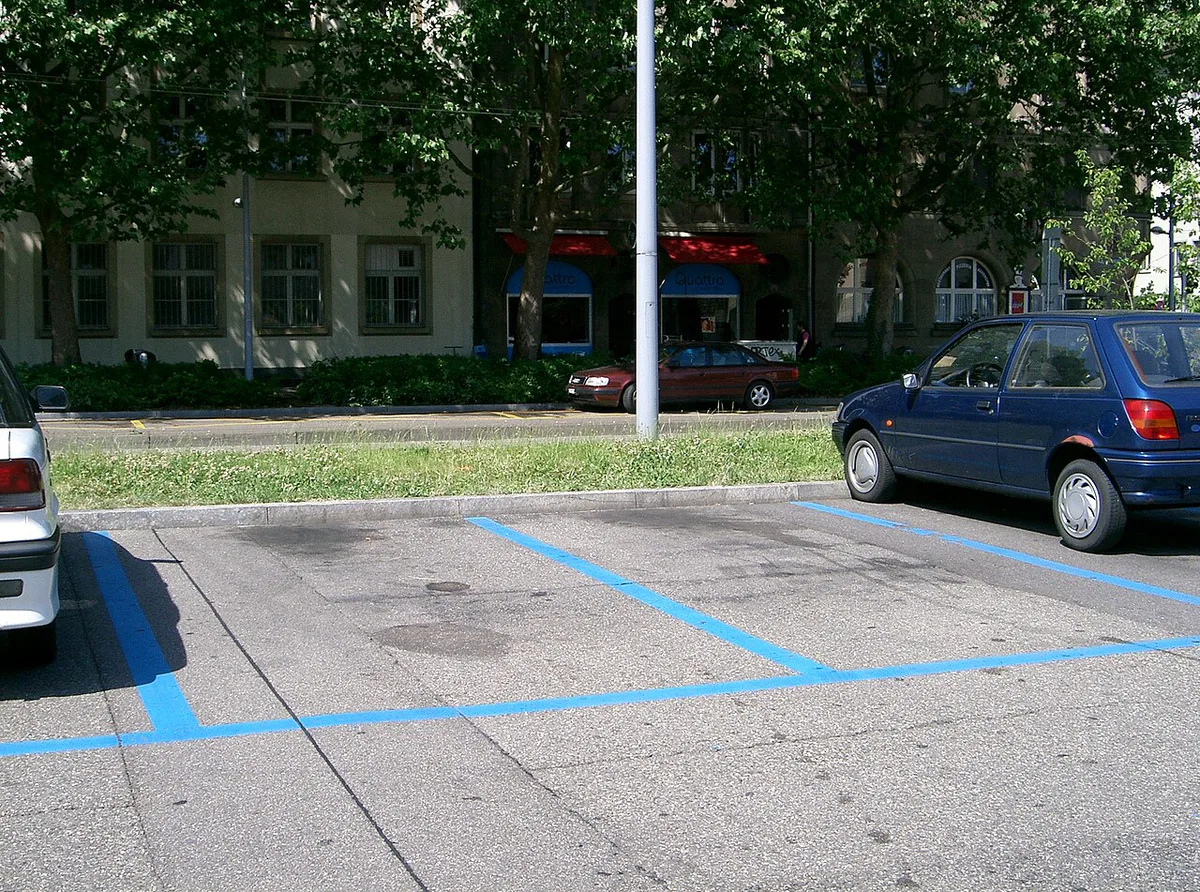
At a Parkscheinautomat, enter your plate number only if the machine asks for it. Pay for the time you need and put the ticket on the dashboard. Many machines take coins and cards, but older ones may be coins only, so carry some change. Some cities also accept payment through apps. Check the sign or machine for the local options. Paid hours end at the time on the plaque, and many streets are free outside them. Read the plaque for each street, because rules are local. In a Parkhaus, you take a ticket at the barrier. Pay at a machine near the exit or at the barrier itself, depending on the garage. Keep the ticket with you, not in the car. Garages cost more than street bays in most centres, but they remove the risk of a time-limit mistake. For other travel costs, our toll roads guide helps with budgeting.
Street vs garage vs park-and-ride
Pick by how long you will stay and how central you need to be. Park-and-ride (P+R) lots sit at the edge of a city and link to trams or trains. They suit full-day visits to dense centres.
| Option | Cost level | Time limit | Ticket risk | Best for |
|---|---|---|---|---|
| Street bay | Moderate | Often capped by the sign | Higher if you misread it | Short stops |
| Parkhaus | Higher | Usually none | Low | Evenings, rain, luggage |
| Park-and-ride | Usually low | Varies by site | Low | Full-day city trips |
Fines, towing and rental-car tickets
A parking ticket is a Strafzettel. It may be tucked under your wiper, and the issuing authority sets the fine. Fines are lower for overstaying a paid ticket and higher for blocking others. Official fine tables are published by the federal transport ministry, and the Federal Ministry for Digital and Transport is the place to start. A badly parked car can be towed, and you then pay towing and storage costs on top. If you drive a rental car, the notice usually goes to the rental company first. It may pass the fine on to you, often with an admin fee. Ask the desk about its policy before you sign. Keep photos of where you parked in case you need to dispute a notice.
Parking rules visitors trip over
A few road rules affect where you can leave the car. Check each before you drive into a city.
- Low-emission zones: many city centres require a sticker, so read our Umweltplakette sticker guide before you arrive.
- Winter conditions: snow and ice change how safe a bay is, and our winter tyre rules explain the equipment side.
- Licence admin: US drivers should read about driving with a US licence before they hire.
- Evening parking: if dinner includes alcohol, leave the car and read our drink-driving limit guide.
Parking in German cities
Large centres such as Berlin, Hamburg, Köln, München and Frankfurt have the densest demand. Parking there is tight, restricted and mostly paid. Altstadt (old town) cores and pedestrian zones often limit or ban cars, so the nearest garage or P+R lot is the usual answer. Smaller towns tend to have more free or disc-based bays near the centre, but still read each sign. For Munich, the official Munich city site is the place to check local parking arrangements. Directory tools such as next-parken.de can help you find lots by city.
Common parking mistakes checklist
Run through this list before you walk away from the car.
- Read the plaque under the sign, not only the sign.
- Set the Parkscheibe to your arrival time.
- Put the paid ticket on the dashboard where it can be seen.
- Take your Parkhaus ticket with you.
- Do not park in Anwohnerparken bays without a permit.
- Do not stop at all under a Haltverbot.
- Ask the rental desk how it handles fines and fees.
Frequently Asked Questions
Where can I have free parking?
Free parking exists in disc zones, on some streets outside paid hours and in some customer lots. Read the sign and plaque for the exact limits. Private lots usually restrict use to customers.
What is parking like in Germany?
Parking is well organised but strictly signed. Big city centres are tight and mostly paid, while smaller towns offer more free or disc-based bays. Garages and park-and-ride lots are the easy option in dense areas.
How much is the fine for not paying parking fees?
Amounts depend on the offence and the local authority, so no single figure applies everywhere. The federal transport ministry publishes official fine information. In a rental car, the company may add its own admin fee.
Road-rule changes worth knowing
Optional updates to our guides.
You might also like
Continue reading
More guides you'll find useful