
German Road Signs Explained: Key Signs Drivers Should Know
Understand German road signs by shape and colour. Covers priority, speed, zones, and the signs visitors most often misread.
On this page
Last updated November 2026. German road signs follow a standardised European pictogram system, so most of them look familiar to visitors. A handful of signs and unmarked rules catch foreign drivers out, and this guide covers those first. For the wider picture of renting and driving here, start with our Germany driving guide.
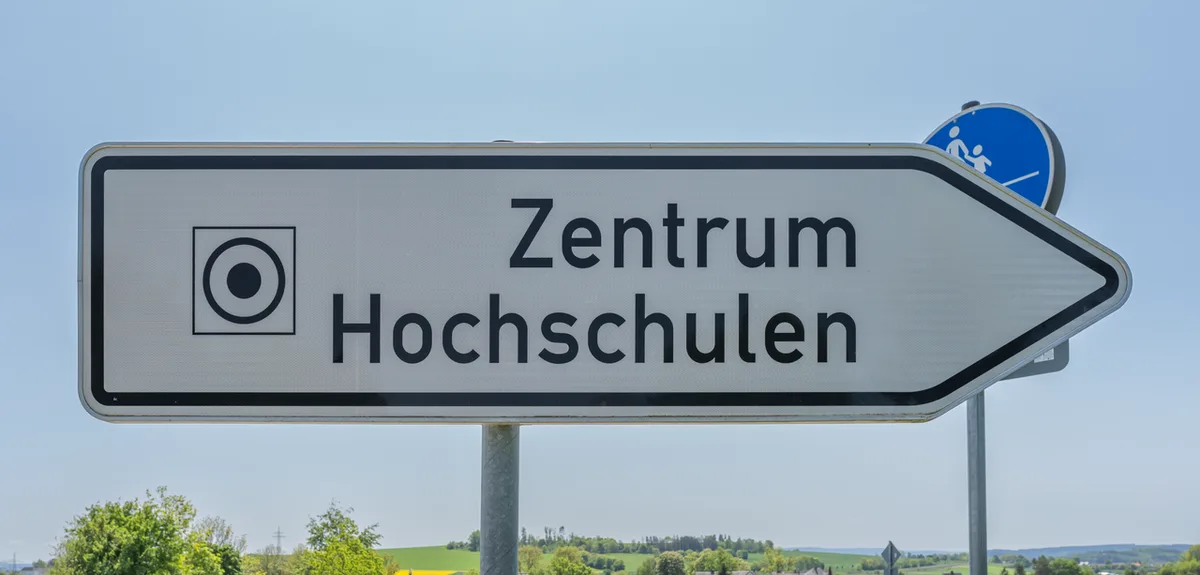
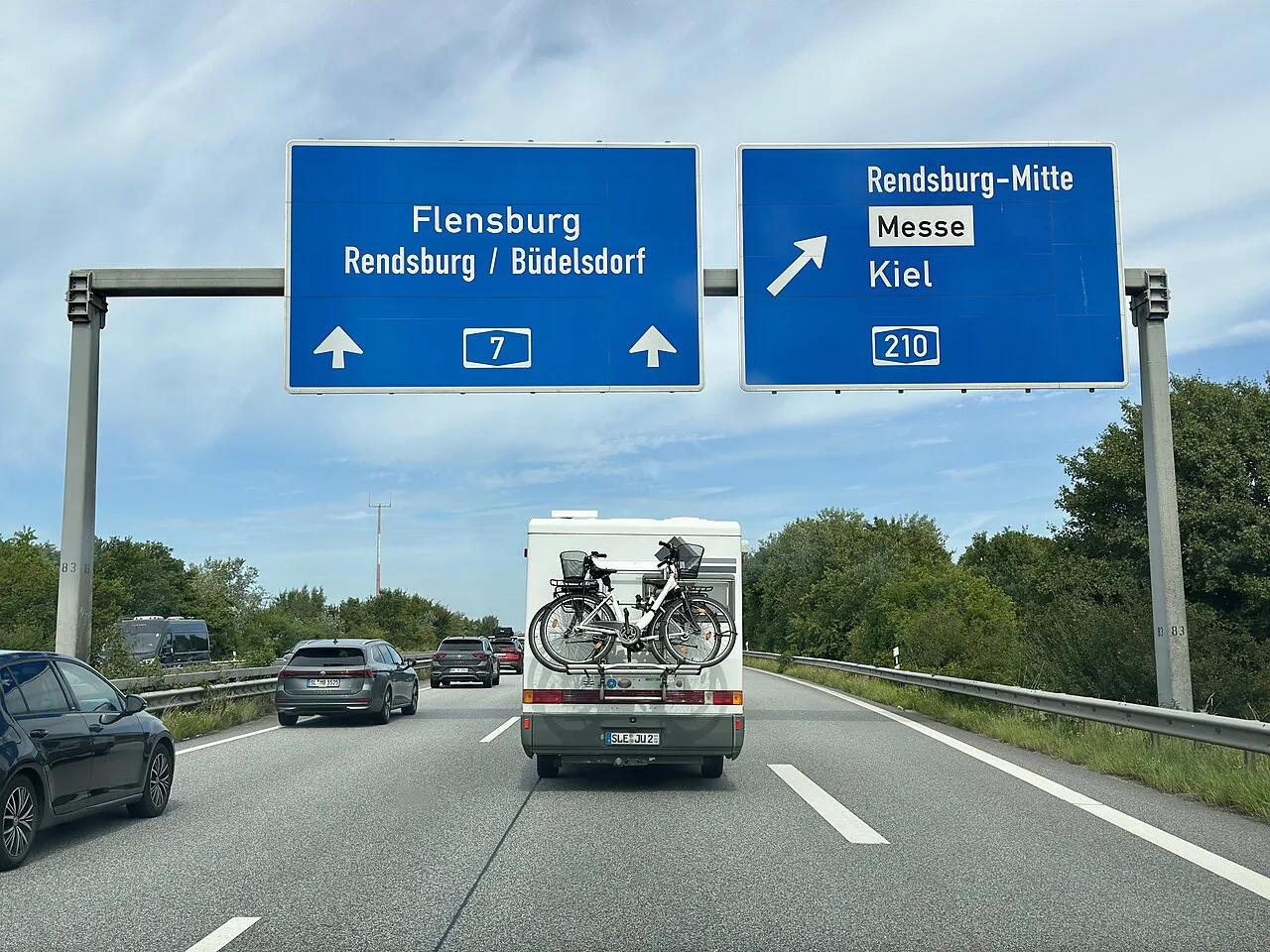
Featured image: PantheraLeo1359531, CC BY 4.0, via Wikimedia Commons.
How German Road Signs Are Organised
Shape and colour tell you the sign's job before you read the symbol. Triangles with a red border warn of a hazard. Round signs with a red ring forbid something. Round blue signs order something. Rectangles and squares mostly inform. Official sign meanings sit in the Straßenverkehrs-Ordnung (StVO, the road traffic regulations): sections 39 to 43 set out what signs mean, and the StVO's annexes illustrate the warning, regulatory and direction signs. Most supplementary plates are listed in a separate federal sign catalogue (VzKat). Each sign has a number, such as 306 for the priority road, which helps when you look one up. The Federal Ministry for Digital and Transport is the national authority for road traffic policy. Most pictograms need no German. A few signs carry words, which the glossary below covers.
Sign Families at a Glance
German signs are grouped into families called Verkehrszeichen. This table covers the ones you will meet on a normal road trip.
| Family | Shape and colour | What it means for you |
|---|---|---|
| Warning (Gefahrenzeichen) | Triangle, red border, white background | A hazard ahead: a bend, a crossing, roadworks, wildlife |
| Regulatory (Vorschriftzeichen) | Mostly round, red ring for limits and bans | A rule you must obey, such as a speed limit or no overtaking |
| Mandatory (Gebotszeichen) | Round, blue background | An order, such as a direction to follow or snow chains required |
| Direction and information (Richtzeichen) | Rectangle or square, often blue or yellow | Priority roads, parking, one-way streets, Autobahn entry |
| Supplementary plates (Zusatzzeichen) | Small white rectangle under a main sign | Limits or adds conditions: time of day, weekdays, vehicle type |
Priority and Right-of-Way Signs
A yellow diamond with a white border marks a Vorfahrtstraße, a priority road. You keep right of way at junctions until the same diamond appears with a black diagonal bar, which ends it. A red-bordered triangle pointing downward means give way. A red octagon means stop. Many visitors miss the rule with no sign at all. At an unmarked junction, traffic coming from the right goes first. Germans call this rechts vor links (right before left). It applies on many residential streets and in older town centres. If you see no diamond, no triangle and no stop sign, assume the right-hand driver has priority.
Speed, Zone and Autobahn Signs
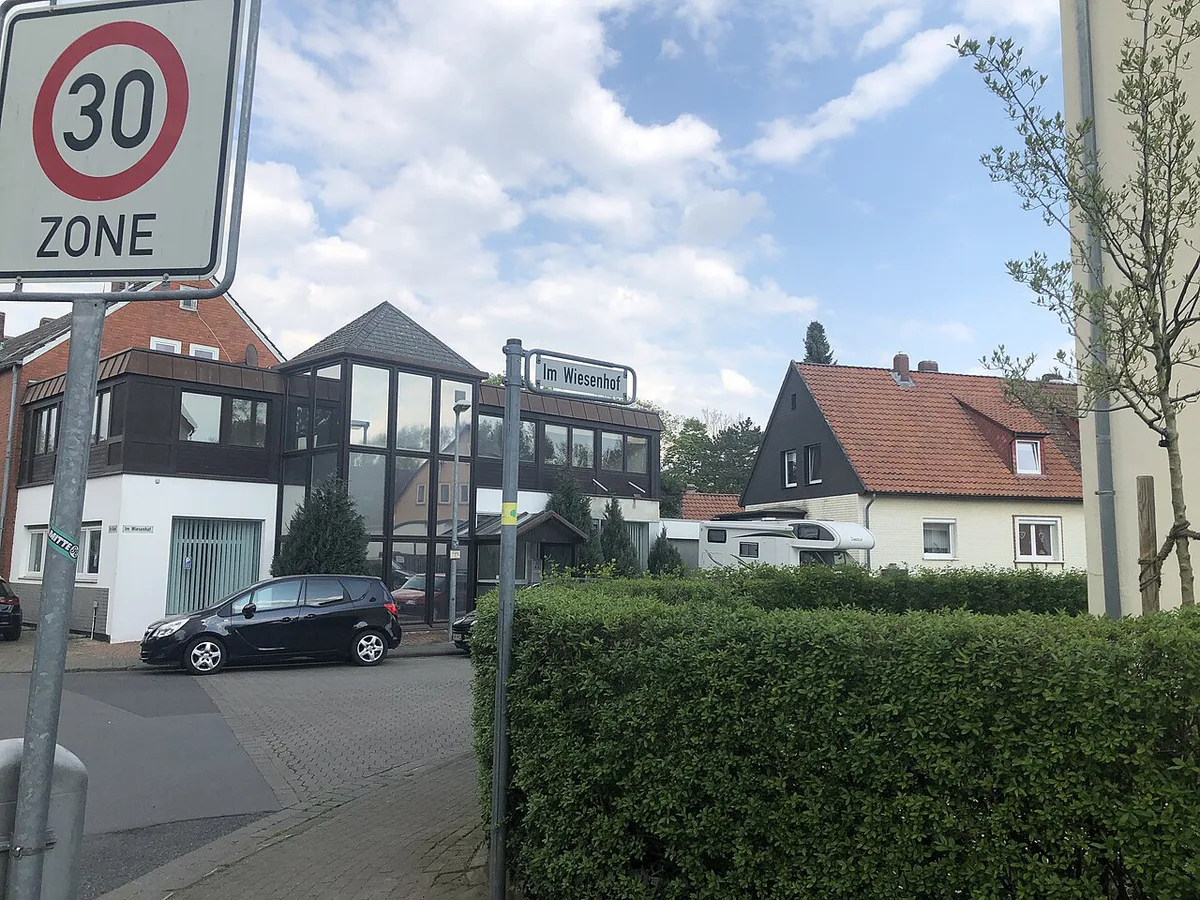
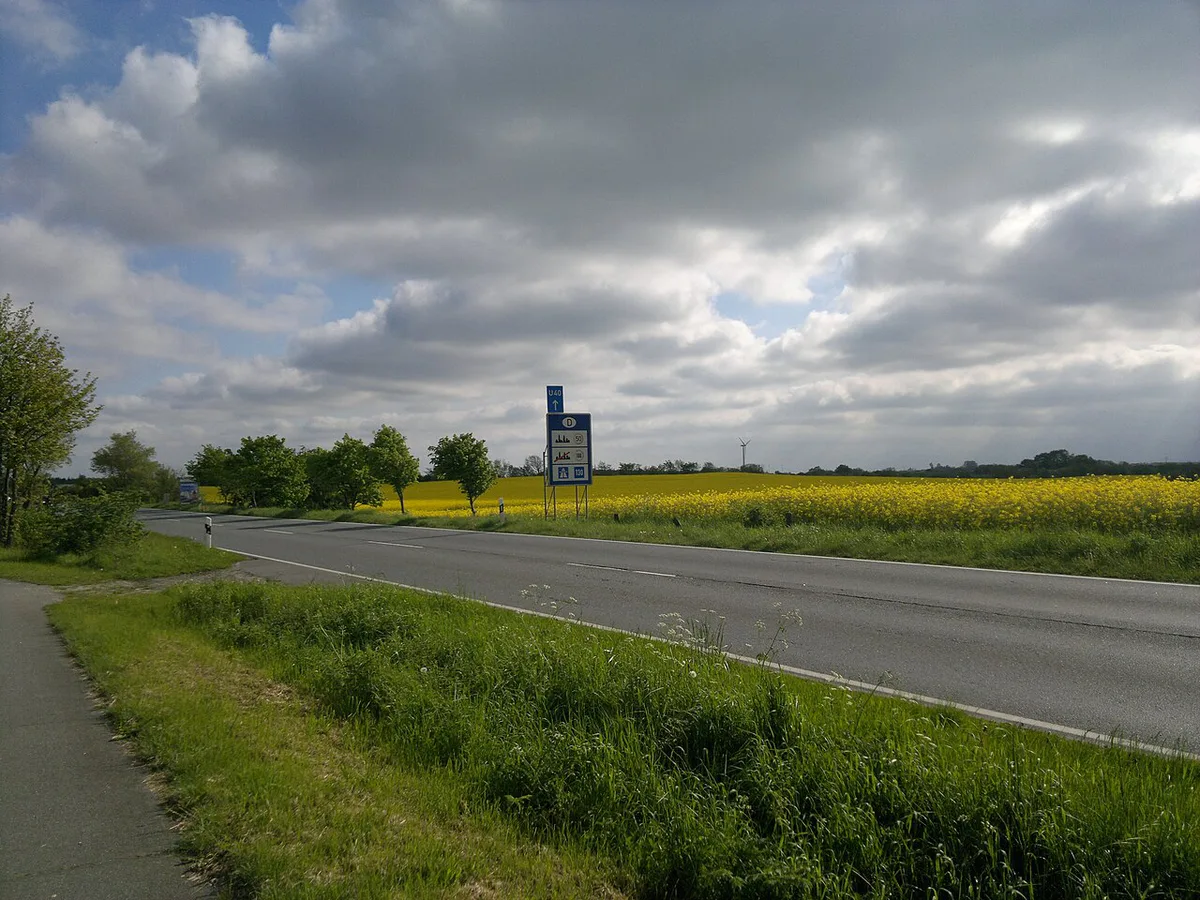
Germany has an implicit 50 km/h limit inside built-up areas. A yellow town-name sign at the entrance starts it, and many towns post no separate speed sign. Residential streets often sit in a Tempo 30 zone, shown by a sign with 30 inside a red ring and the word Zone. Zone limits apply until you pass a sign that ends the zone (sign 274.2). An end sign, the limit sign struck through with diagonal stripes, cancels a limit and returns you to the default rule for that road. On the Autobahn there is no general limit. Many stretches still carry posted limits, and elsewhere the advisory speed (Richtgeschwindigkeit) of 130 km/h applies without any sign. It is a recommendation rather than a hard cap. The old blue advisory-speed sign (380) was withdrawn in 2013 and stopped being valid on 31 October 2022. At border crossings, an information board (sign 393) lists Germany's general limits, including the 130 km/h advisory. Our guide to the Autobahn Speed Limit: What Applies and Where explains where limits apply. For the national picture, see Speed Limits in Germany: Autobahn, Town & Rural Roads Explained. Our general Autobahn guide covers motorway etiquette and lane rules.
Inside built-up areas the 50 km/h default still applies at unmarked junctions, where traffic from the right goes first.
Parking, No-Stopping and Restricted-Zone Signs
Halteverbot means no stopping. A sign with one red diagonal bar is the milder restriction, and a sign with a crossed pair of bars is the stricter one. Some zones require a Parkscheibe, a cardboard parking disc you set to your arrival time and place behind the windscreen. Rental cars often include one, so look in the glovebox. Our parking in Germany guide covers payment and disc rules in more detail. A sign reading Umweltzone (sign 270.1) marks a low-emission zone. A plate beneath shows which sticker colour is allowed inside, and in practice that is green. Many visitors ask whether they need a sticker for a city centre. Read the Umweltplakette guide before you enter one. The Federal Environment Agency keeps the official list of the 35 active zones, and driving into one without a sticker costs €100.
Seasonal and Conditional Signs
A round blue sign showing a tyre with chains (sign 268) means snow chains are required on that stretch. You will mostly meet it on mountain roads in winter. Conditions change from year to year, so read what the plate says. Time-conditional plates are common too. A 30 sign with a plate listing hours applies only at those hours, such as school-day mornings. Our winter tyres guide covers what your car needs in cold months. Read the main sign first and the plate second. The plate usually narrows or extends the rule.
Signs Visitors Commonly Misread
These mistakes cost foreign drivers the most confusion.
- A supplementary plate that restricts the main sign: time of day, weekdays, or a vehicle type. Obey the rule only when the plate's condition applies.
- Anlieger frei under a no-entry sign: access is allowed for residents and people visiting them, not for through traffic.
- Detour signs: Umleitung marks a diversion. On the Autobahn, on-demand detour signs (Bedarfsumleitung) show a U and a number; follow the same number until it brings you back to the motorway.
- The white diagonal-stripe sign: it ends a limit but does not mean no limit applies. Default rules for the road type still count.
- Blue Autobahn signs versus white or yellow road signs: blue marks the motorway, and its rules differ from ordinary roads.
- The missing sign at unmarked junctions: with no priority sign, rechts vor links applies.
How to Read a Sign Post, Step by Step
German posts often stack two or three signs with plates underneath. Reading them in a fixed order stops you from missing the one that matters.
- Shape and colour first: a red ring forbids, a blue disc orders, a triangle warns.
- Then the symbol or number on the main sign: the speed, the banned vehicle or the required action.
- Then the plate directly beneath it. A plate applies only to the sign it sits under, and it can limit the rule to certain hours, days, distances or vehicles.
- Then work out what ends the rule: a matching end sign or the end of a zone. A speed limit stays in force until a sign cancels it or a town sign changes the default.
- Last, look for temporary signs at roadworks (Baustelle). They set the rules for the length of the works, often with a lower limit and narrower lanes.
What Ignoring a Speed Sign Costs
The yellow town sign is the one visitors miss most, because it sets 50 km/h without showing a number. Fines for speeding inside built-up areas are higher than outside them. These are the standard car fines listed by the motoring club ADAC. A €28.50 processing fee is added to fines of €60 or more, and rental companies usually add their own fee for passing your details on.
| Over the limit in town | Fine | Points | Driving ban |
|---|---|---|---|
| Up to 10 km/h | €30 | None | None |
| 11 to 15 km/h | €50 | None | None |
| 16 to 20 km/h | €70 | None | None |
| 21 to 25 km/h | €115 | 1 | None |
| 26 to 30 km/h | €180 | 1 | 1 month if repeated within 12 months |
| 31 to 40 km/h | €260 | 2 | 1 month |
Carrying 80 km/h from a rural road into a village signed at 50 means 30 km/h over, which already costs €180 and a point.
German Words You Will See on Road Signs
Most signs use pictograms, but a few use text. These words come up most often.
- Ausfahrt: exit
- Umleitung: detour
- Anlieger frei: access for residents only
- Einbahnstraße: one-way street
- Baustelle: roadworks
- Gesperrt: closed
- Vorfahrt: right of way
- Parkscheibe: parking disc
What to Do Before You Drive
Check the rental car for a parking disc and any emission sticker before you leave the lot. Our car rental guide lists what to ask at the desk. Read up on licence and translation rules in our guide on driving in Germany with a US licence. If your route includes toll sections, read about Toll Roads in Germany: Do Cars Pay? (Visitor Guide) first. Sign meanings in this guide are simplified. For the full catalogue, use the StVO text and the federal ministry's official pages. The Germany driving guide ties these rules together with fuel, tolls and route planning.
Road-rule changes worth knowing
Optional updates to our guides.
You might also like

Continue reading
More guides you'll find useful