
Autobahn Speed Limit: What Applies and Where
Is there a speed limit on the autobahn? See where limits apply, what the 130 km/h advisory speed means, and how to avoid fines as a visitor.
On this page
Last updated November 2026: the autobahn speed limit is not one number, because some stretches have no general mandatory limit while many others carry signed limits. A non-binding advisory speed of 130 km/h (about 81 mph) applies everywhere. This guide covers the autobahn only, so use our full German speed limit rules for other road types.
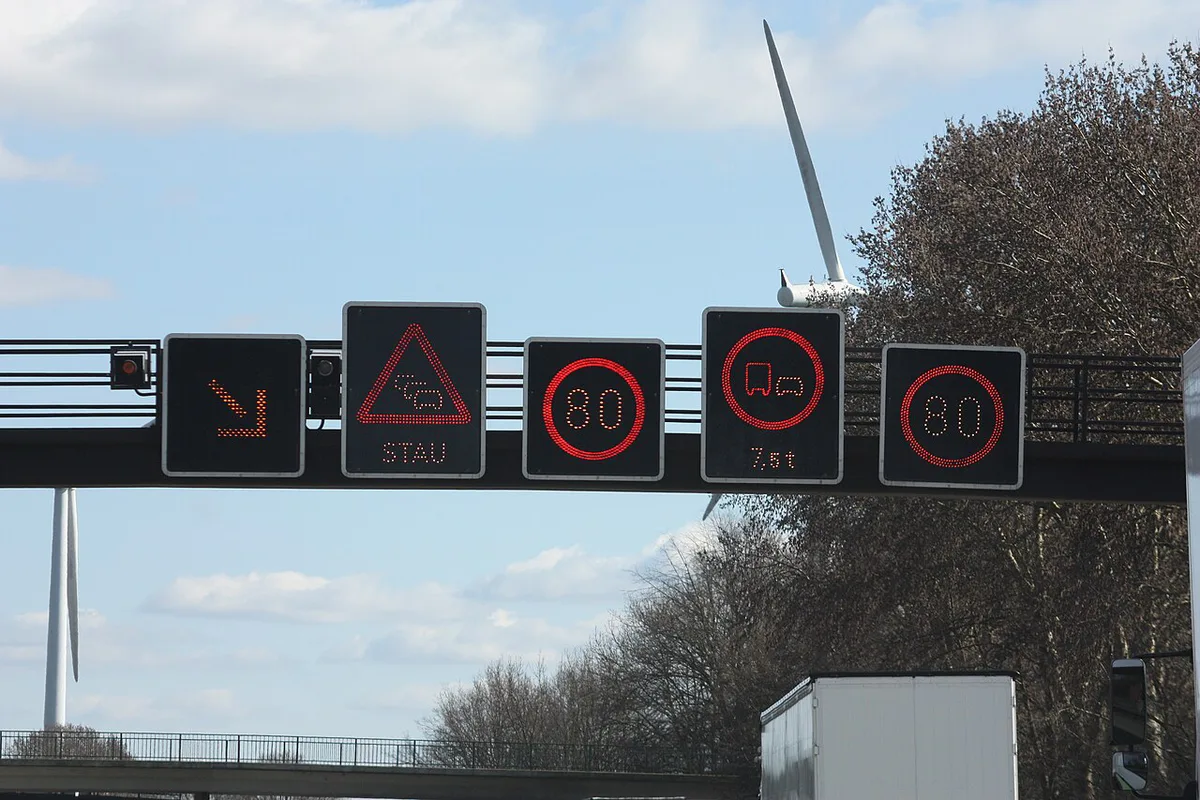
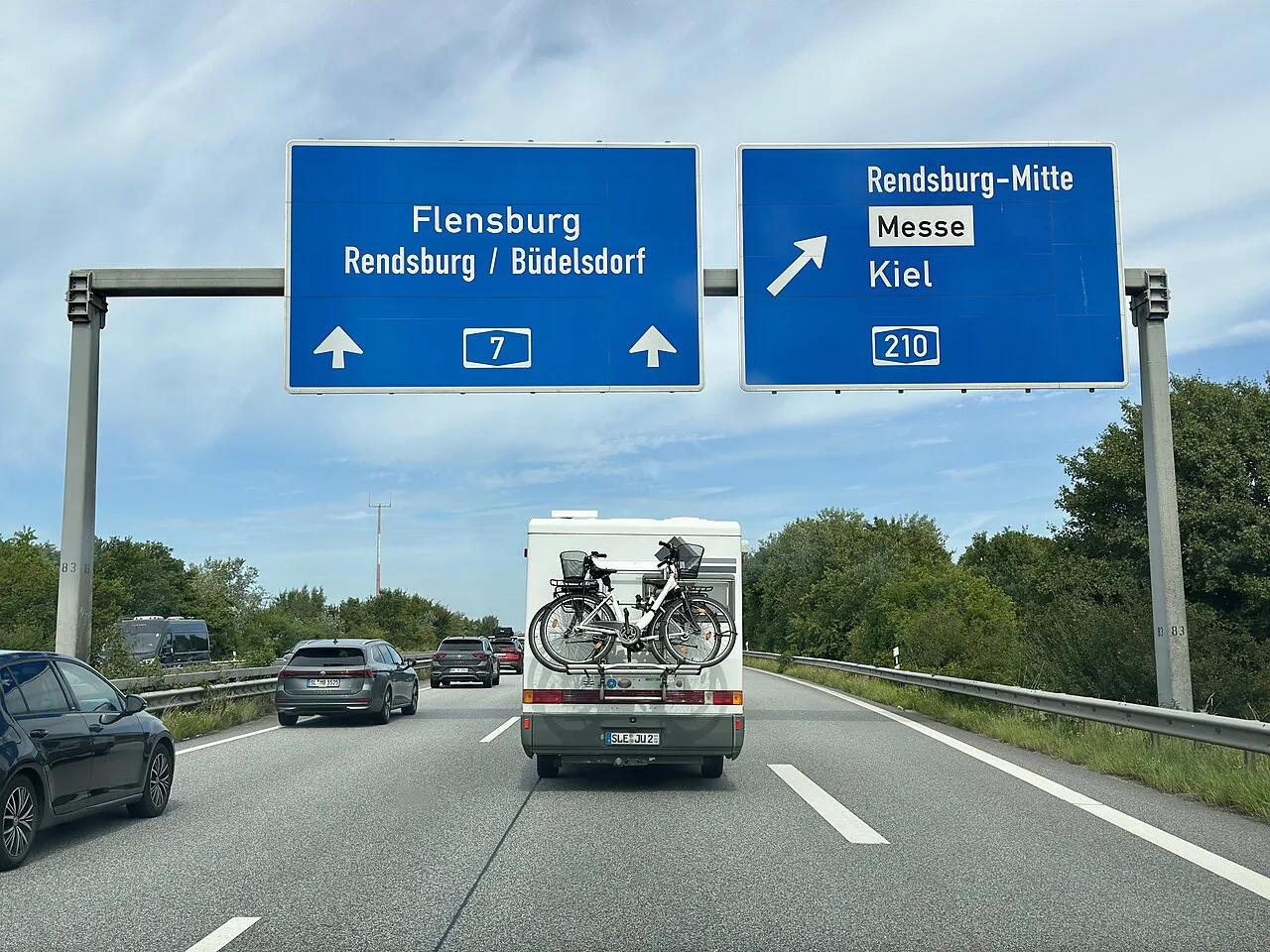
Featured image: Politikaner, CC BY-SA 3.0, via Wikimedia Commons.
Short answer: is there a speed limit on the autobahn?
Yes and no. Some autobahn sections have no general mandatory limit, and a car may legally go faster than 130 km/h there. Many other sections are signed with a hard limit, and that number is binding the moment you pass the sign. The 130 km/h advisory speed (Richtgeschwindigkeit) is a recommendation, not a legal ceiling. Our autobahn overview covers the network itself. For the wider picture of renting, paying and navigating, start with 7 Rules for Driving in Germany: License, Autobahn, Sticker. Where limits apply: construction zones, busy or accident-prone sections, noise-sensitive stretches and junctions are the usual places for signs. Treat any posted number as the rule and the advisory speed as your default everywhere else.
Where signed limits apply on the autobahn
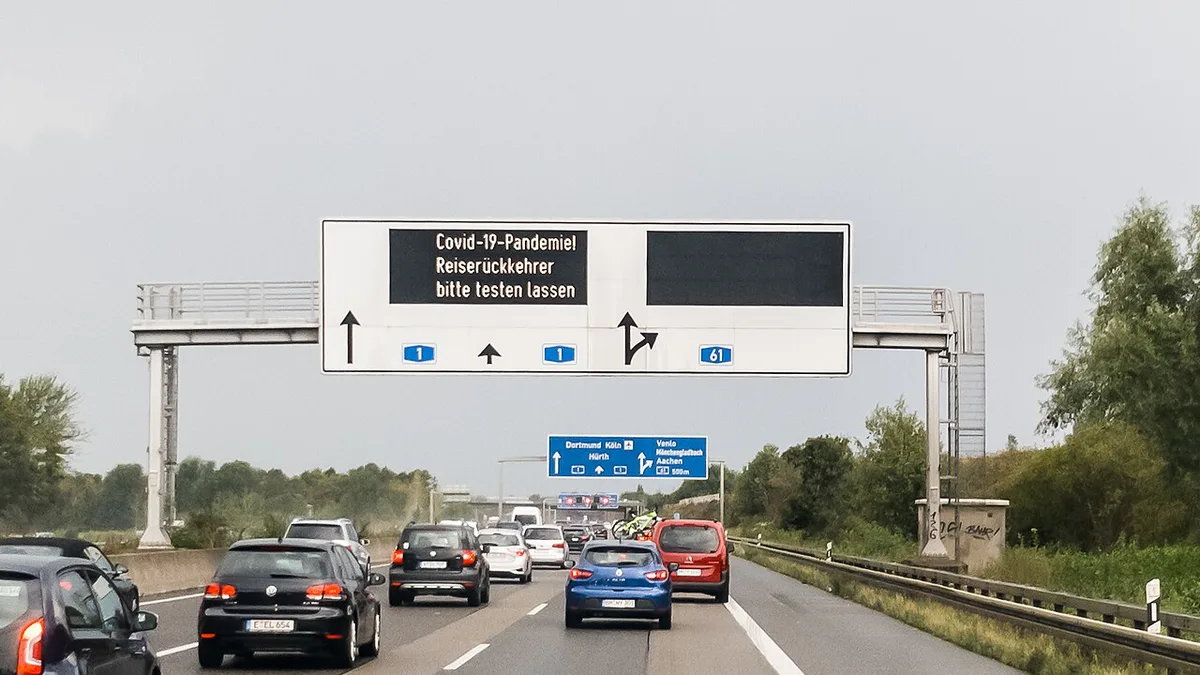
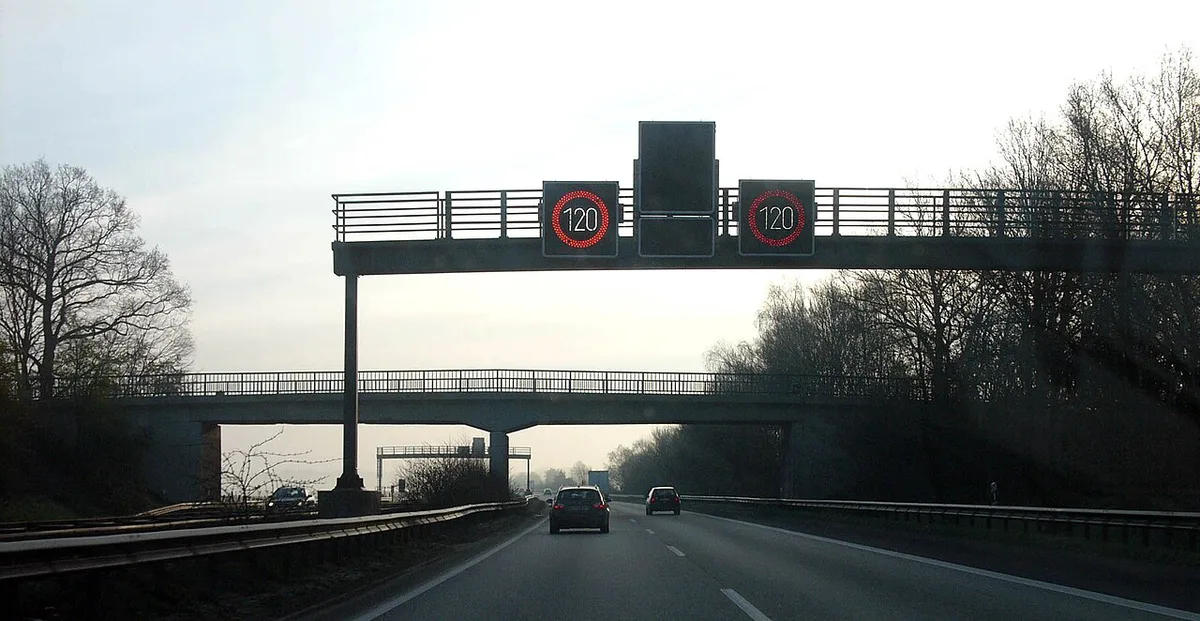
Signed limits show up on round signs with a red border, on overhead gantries and on temporary signs in work zones. Electronic gantries can change the limit with traffic, weather or incidents. Whatever the display says at that moment is what you must obey. A limit stays in force until a sign lifts it or a new number replaces it. Learn the shapes in our German road signs guide before you drive. The federal transport ministry publishes official road-traffic information at the Federal Ministry for Digital and Transport.
| Sign or display | Meaning | What to do |
|---|---|---|
| Round sign, red border, number | Binding maximum speed in km/h | Slow to that number by the sign |
| Same sign with a diagonal bar | Limit ends | Resume normal driving, advisory speed applies |
| Overhead gantry with a number | Variable limit set for current conditions | Obey it even if the road was unlimited a minute earlier |
| Gantry with a warning symbol | Hazard such as an incident, fog or congestion ahead | Reduce speed and watch for brake lights |
| Temporary sign in a work zone | Limit for lane shifts or narrow lanes | Hold the number until the work zone ends |
The advisory speed (Richtgeschwindigkeit) and why it matters
The advisory speed is 130 km/h, which is roughly 81 mph. It comes from a 1978 federal ordinance, the Autobahn-Richtgeschwindigkeits-Verordnung, and covers cars and other vehicles up to 3.5 t. No sign is needed for it to apply. You will not be fined for exceeding it on an unlimited stretch, because it is not an offence. It still matters if something goes wrong. In a 1992 ruling, Germany's Federal Court of Justice held that driving faster than 130 km/h raises the risk in a way that counts toward liability. After a crash at higher speed, courts and insurers can weigh your speed when deciding who carries more of the blame. Even a driver who was in the right can end up sharing liability. Many drivers on unlimited stretches choose a calm pace for exactly this reason. A steady speed also keeps stopping distances manageable when traffic ahead brakes suddenly.
Any red-bordered sign overrides the 130 km/h figure the moment you pass it, since that number is only a default.
- Unlimited does not mean unrestricted: the advisory speed, the left lane rules and safe following distance all still apply.
- Tailgating is the most common cause of conflict. Leave a large gap, because closing speeds between lanes can be very high.
- A posted limit overrides everything. If a gantry shows a number, the unlimited section is over for now.
Rules that differ by vehicle
Different vehicles follow different limits, and the autobahn is no exception. Cars towing a trailer are limited to 80 km/h (about 50 mph), or 100 km/h (62 mph) when the trailer is certified and plated for it. Vans, motorhomes and heavier vehicles can have their own lower ceilings based on weight, and the 130 km/h advisory covers only vehicles up to 3.5 t. The registration papers show the vehicle's weight class. Our guide to Renting a Car in Germany: Rules, Insurance, Costs explains what to ask at the counter. If you drive a rental motorhome or a van, ask the rental firm which category limit applies.
A car towing a trailer is limited to 80 km/h (about 50 mph), or 100 km/h with a certified trailer, well below the 130 km/h advisory.
| Choice for fast cruising | Upside | Trade-off |
|---|---|---|
| Powerful car | Easier to merge and overtake | Higher fuel use at speed |
| Smaller car | Cheaper to run, lower fuel use | Needs more road to overtake |
| Fully loaded car or trailer | Carries luggage and gear | Slower limits, longer stopping distance |
Fines, cameras and consequences for visitors
Germany enforces posted limits with fixed cameras, mobile units and police checks, and the penalties rise with how far over the limit you are. Serious cases add points on the Flensburg register and a driving ban. Fines follow the national catalogue (Bußgeldkatalog), and the autobahn uses the outside-town tiers below, as listed by the motoring club ADAC. A €28.50 processing fee is added to any fine of €60 or more. Foreign drivers can be pursued after they leave, and a rental company may forward the notice and charge an admin fee. If you dispute a charge from a rental firm, the European Consumer Centre Germany offers cross-border consumer advice. Never combine speed with alcohol, and read our drink-driving limit guide first.
| Over the limit (outside towns) | Fine | Points | Driving ban |
|---|---|---|---|
| Up to 10 km/h | €20 | None | None |
| 16 to 20 km/h | €60 | None | None |
| 21 to 25 km/h | €100 | 1 | None |
| 31 to 40 km/h | €200 | 1 | 1 month if repeated within 12 months |
| 41 to 50 km/h | €320 | 2 | 1 month |
| More than 70 km/h | €700 | 2 | 3 months |
Driving safely at high speed: left lane, weather and fuel
Keep right unless you are overtaking, and move back once you pass. Never overtake on the right. Fast traffic can approach in your mirror very quickly, so check twice before changing lanes. Rain, fog and snow reduce grip, so a posted limit or the gantry display often drops accordingly. In winter, check tyre rules in our winter tyres in Germany guide. Low-emission zones affect city entries, so see our low-emission zone sticker guide before driving into a city. Fuel use climbs sharply at high speed, so a calm pace stretches each tank and means fewer stops. Plan rest stops, because tired drivers misjudge closing speeds. Tolls differ for cars and trucks, so check Toll Roads in Germany: Do Cars Pay? (Visitor Guide) for current rules. Should you drive fast at all? Skip it if you are new to the road, traffic is dense, the weather is poor or the car is unfamiliar.
Quick checklist before you drive
US drivers should set the rental's display to km/h if it allows, because the speedometer may default to km/h. Use simple arithmetic: 100 km/h is about 62 mph, and 130 km/h is about 81 mph. US visitors will find the licence and translation rules in our US licence driving guide. Find out where the warning triangle and vest are stored. On a breakdown, move to the shoulder, switch on the hazard lights and call 112 for emergencies. Stand behind the guardrail, not on the carriageway. If a car is about to leave the road at speed, the most important rule is distance: leave more of it than feels necessary.
Frequently Asked Questions
What is the penalty for speeding in Germany?
Fines scale with how far over the limit you are. Outside towns and on the autobahn, 21 to 25 km/h over costs €100 and 1 point, 41 to 50 km/h over costs €320, 2 points and a 1-month ban, and more than 70 km/h over costs €700, 2 points and a 3-month ban. A €28.50 processing fee is added to fines of €60 or more.
What is the name of the system of national highways in Germany?
The national highway network is called the Autobahn. Signs for it use a blue background with an A and a number.
Road-rule changes worth knowing
Optional updates to our guides.
You might also like

Continue reading
More guides you'll find useful