Speed Limits in France: Motorway, Rural, Town & Rain (2026)
Current French speed limits by road type, wet-weather reductions, novice-driver rules, fines and camera tips. Written for visitors and hire-car drivers.
On this page
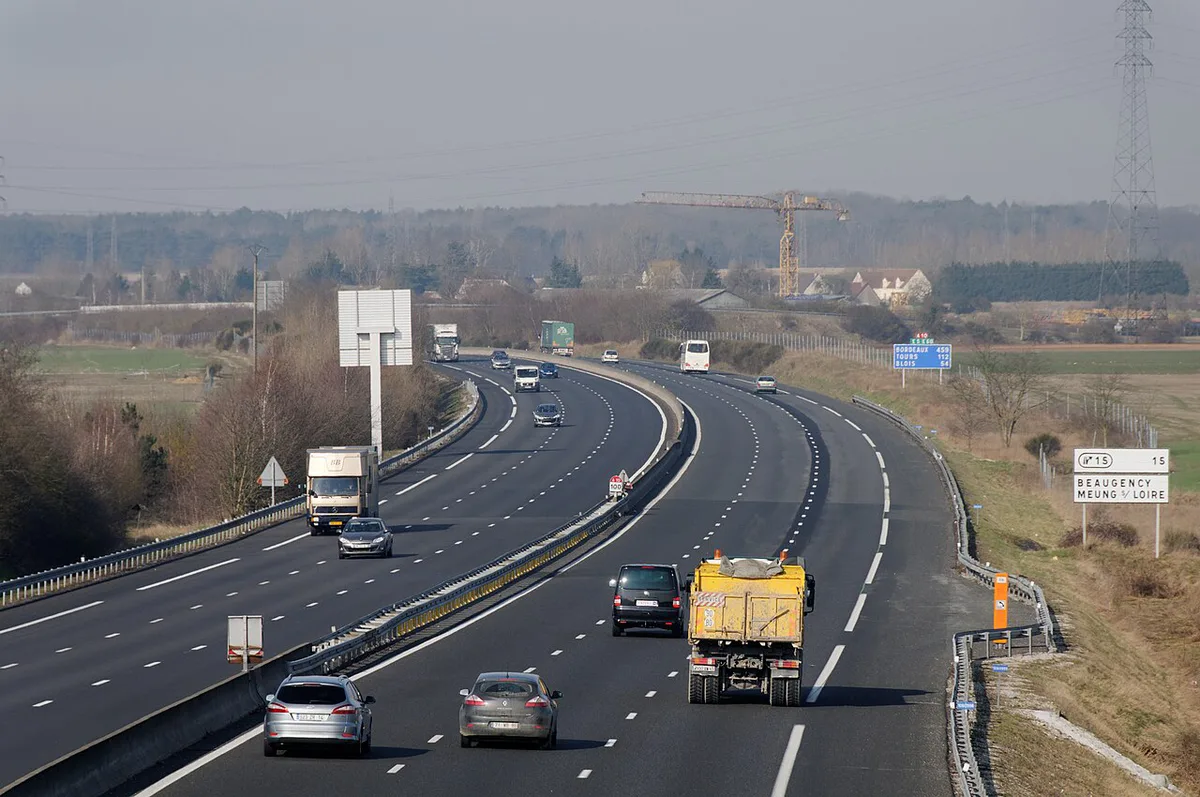
Last updated November 2026: speed limits in France are 130 km/h (81 mph) on motorways, 110 km/h on dual carriageways, 80 km/h on most rural roads and 50 km/h in towns. Rain cuts the motorway limit to 110 km/h, and any posted sign overrides these defaults. Read this alongside our complete France driving guide before you collect a hire car.
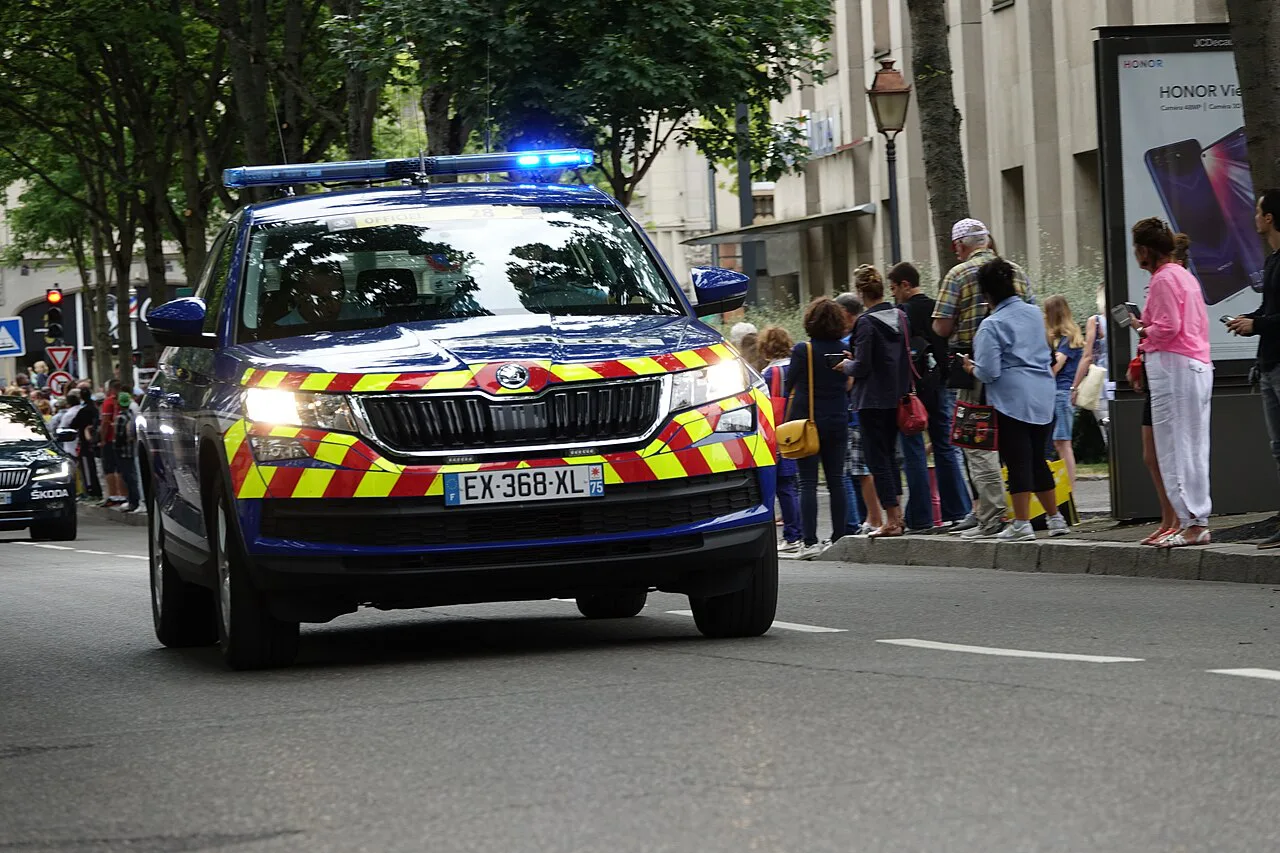
Featured image: Chabe01, CC BY-SA 4.0, via Wikimedia Commons.
Speed limits in France at a glance
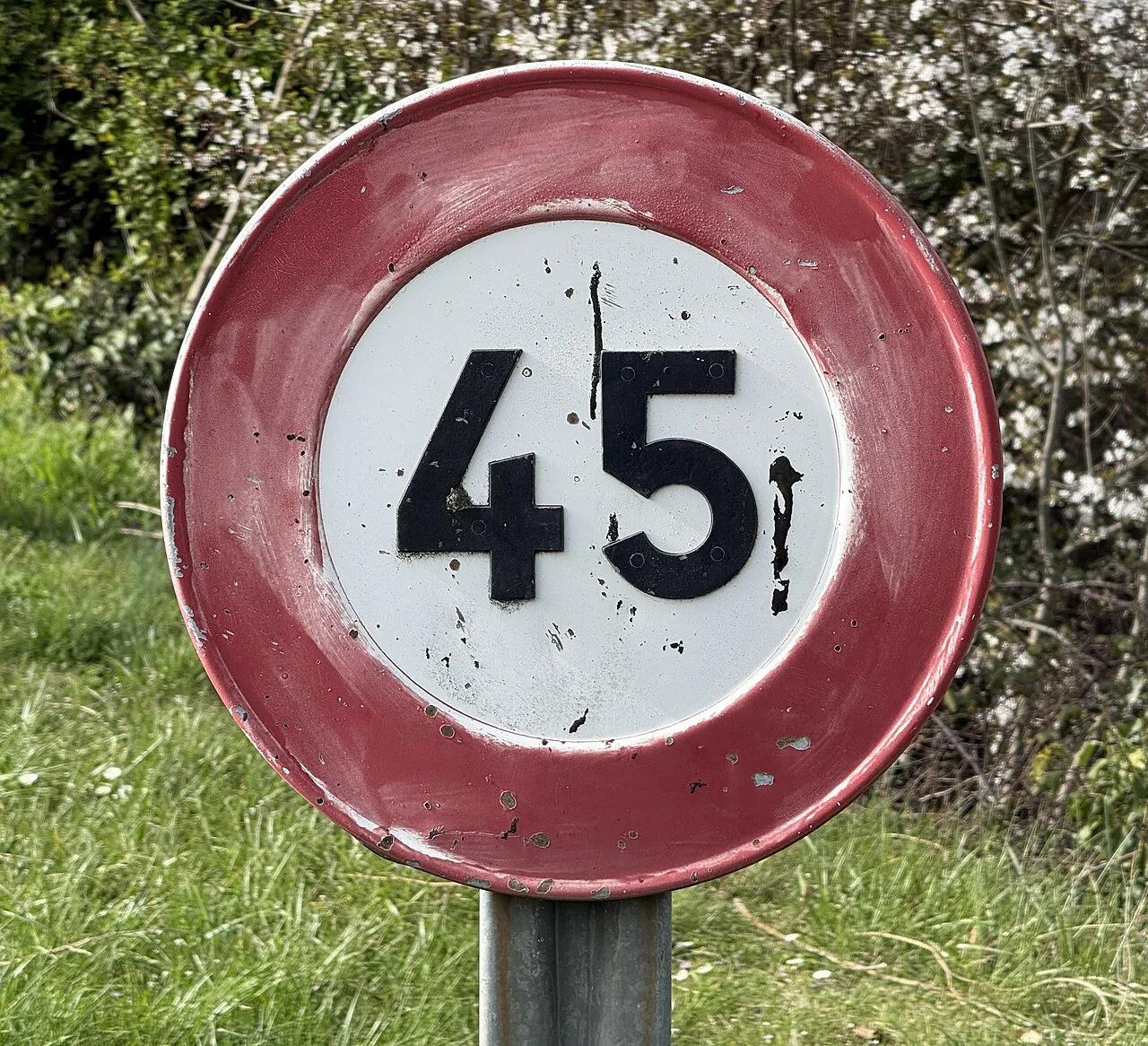
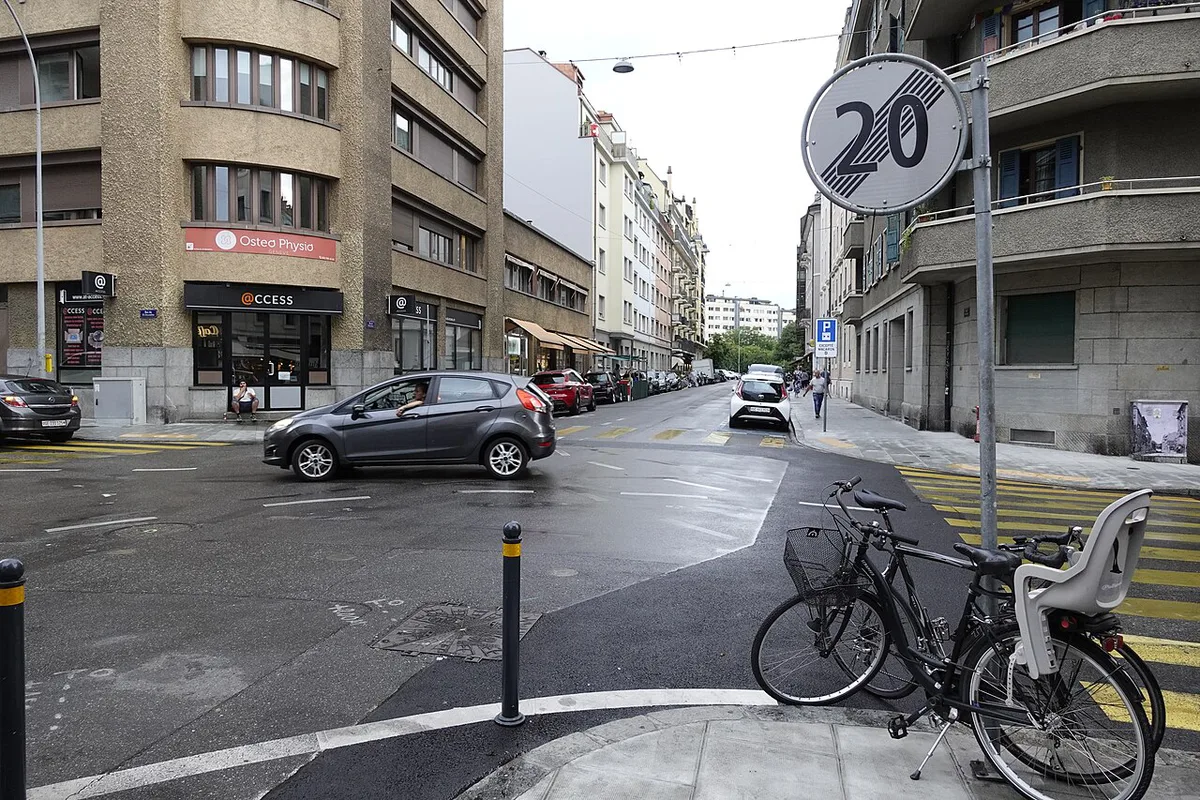
French speed limits are in km/h, and the car's speedometer will show the same unit. A rough conversion is to multiply by 0.62 to get mph. A posted sign always beats the default for that road type. A town-name sign marks the start of the 50 km/h zone, and the same name crossed out marks its end. Figures below follow the national road-safety rules published by Sécurité routière.
| Road type | Dry limit | Wet-weather limit | Dry limit in mph |
|---|---|---|---|
| Motorway (autoroute) | 130 km/h | 110 km/h | 81 mph |
| Dual carriageway / expressway | 110 km/h | 100 km/h | 68 mph |
| Rural road, two-way, no central barrier | 80 km/h (90 km/h where signed) | 80 km/h | 50 mph (56 mph where signed) |
| Built-up area | 50 km/h | 50 km/h | 31 mph |
| 30 km/h zone | 30 km/h | 30 km/h | 19 mph |
Rain and bad weather reductions
Wet roads lower the two fastest limits. Motorways drop from 130 km/h to 110 km/h, and dual carriageways drop from 110 km/h to 100 km/h. Rural roads signed at 90 km/h fall to 80 km/h in rain. Town limits stay at 50 km/h. In fog or heavy rain with visibility under 50 metres, the limit becomes 50 km/h on every road. In practice, treat any rain heavy enough to need your wipers as a wet-weather case. Slow down before the road looks glossy, not after.
With visibility under 50 metres, even a 130 km/h motorway falls to 50 km/h, well below the 110 km/h wet-weather limit.
Rural roads: the 80 vs 90 km/h question
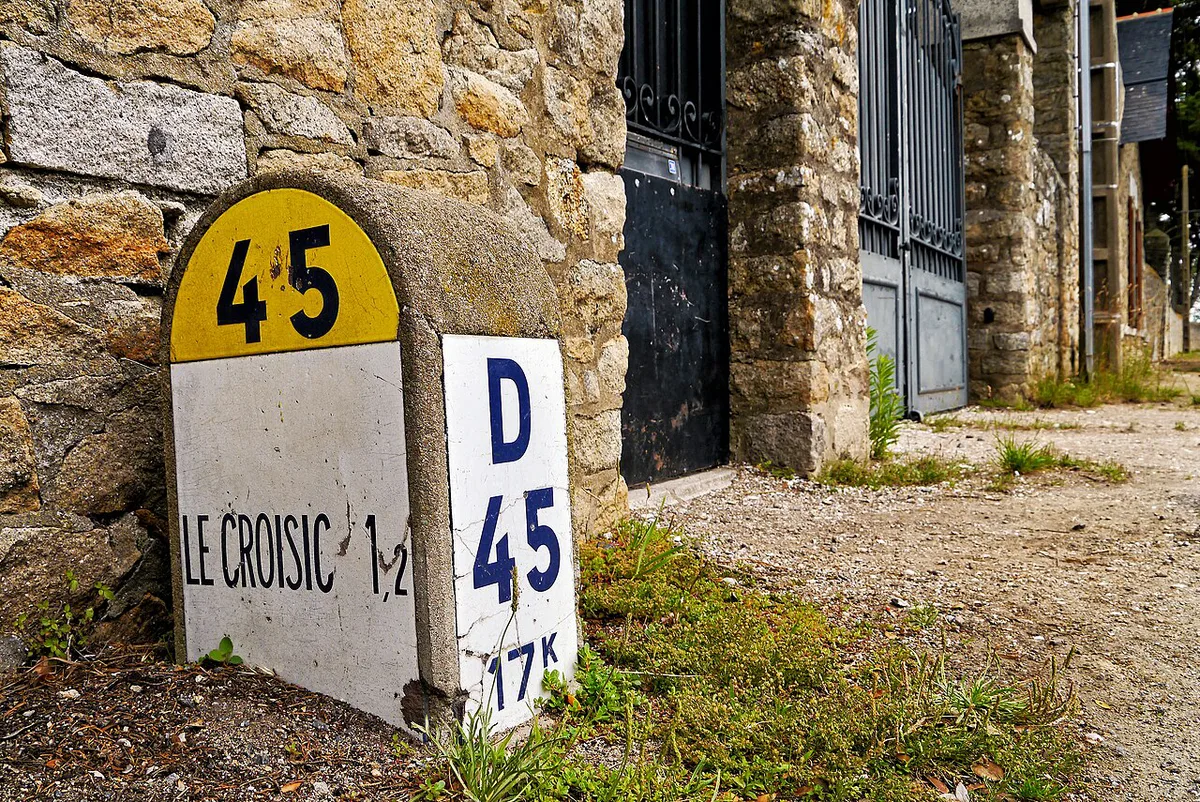
The default on two-way roads without a central barrier fell from 90 km/h to 80 km/h in July 2018. The local road authority, usually the département, can restore 90 km/h on selected stretches. The result is a patchwork. You can cross a département line and see the limit change with no other warning. Follow the sign, not an old article or memory of a previous trip. If you see no sign after a junction, assume 80 km/h. Ordinary rural speeding is the most common way visitors collect a fine, so watch each limit sign rather than assuming the last one still applies.
Towns, villages and 30 km/h zones
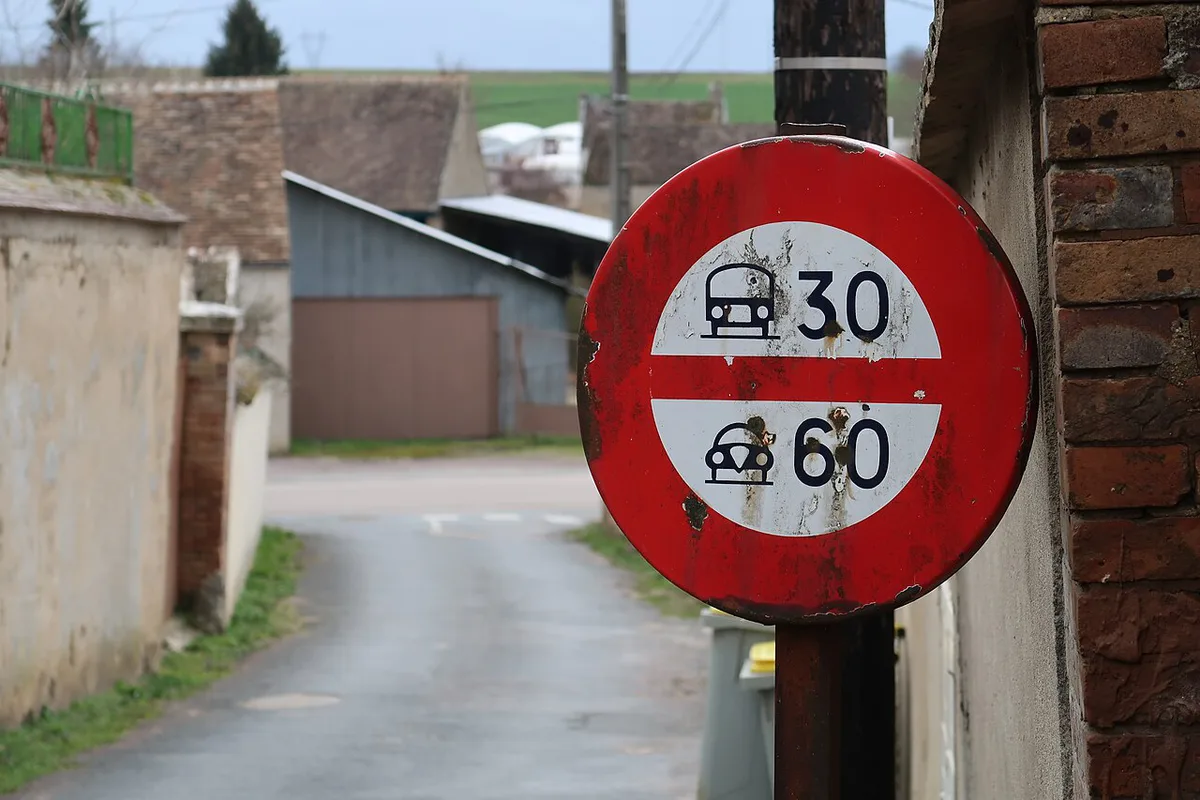
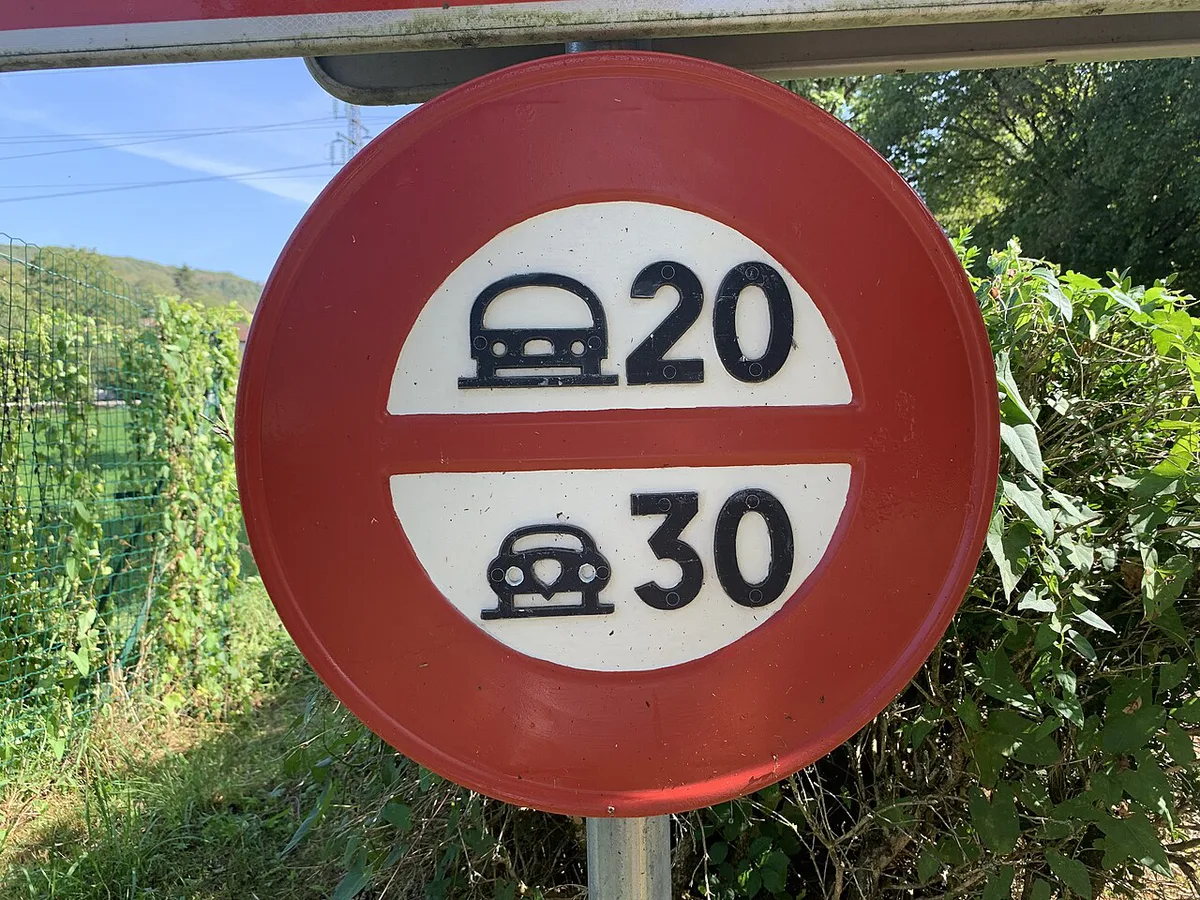
Built-up areas default to 50 km/h from the town-name sign to the crossed-out sign. Many streets carry a 30 km/h zone sign, a round red-bordered sign with 30 inside, and it applies until a matching end-of-zone sign. Villages often use chicanes, raised crossings and speed humps to enforce it. Big-city driving brings extra rules on top of speed, so read our guide to driving in Paris before you take a car into the centre. If you will also drive in low-emission areas, our Crit'Air sticker guide explains the windscreen label.
Novice (probationary) driver limits
France applies lower limits to drivers on a probationary licence (permis probatoire), which lasts three years, or two years after early accompanied driving. Novice limits are 110 km/h on motorways, 100 km/h on dual carriageways, 80 km/h on rural roads and 50 km/h in towns, as listed on Service-Public's speed page. That page ties the lower column to the French probationary licence and does not address foreign licences, so a visitor who passed the test recently loses nothing by driving to the novice figures. Our guide to driving with a US licence covers documents and eligibility.
Fines, points and what visitors face if caught speeding
Fines rise in bands with the excess speed. A small excess costs €68 where the limit is above 50 km/h and €135 where the limit is 50 km/h or less, so town speeding costs double. Since 29 December 2025, driving 50 km/h or more over the limit is a criminal offence (délit) even on a first offence, with a fine of up to €3,750 and up to three months in prison. Points come off French licences only, and an excess under 5 km/h costs no point. Foreign drivers still face the fine. Serious excess can bring a roadside licence suspension or vehicle immobilisation, even for visitors. Paying within 15 days cuts a €68 fine to €45 and a €135 fine to €90; late payment raises them to €180 and €375. Prices checked November 2026 on Service-Public.
Chicanes and speed humps slow villages, but a minor excess where the limit is 50 km/h still brings a €135 fine.
| Excess speed | Fine | Points (French licence) | Licence action |
|---|---|---|---|
| Under 20 km/h, limit 50 km/h or less | €135 | 1 (0 if under 5 km/h) | None |
| Under 20 km/h, limit above 50 km/h | €68 | 1 (0 if under 5 km/h) | None |
| 20 to 30 km/h over | €135 | 2 | None |
| 30 to 40 km/h over | €135 | 3 | Suspension of up to 3 years possible |
| 40 to 50 km/h over | €135 | 4 | Suspension of up to 3 years possible |
| 50 km/h or more over | Criminal offence: up to €3,750 and 3 months in prison | 6 | Suspension up to 3 years; immobilisation, impoundment or confiscation possible |
Cameras, average-speed checks and hire-car fines
France uses fixed cameras, mobile units and section radars that average your speed between two points. Locations change, so do not rely on memory of where you saw one. Our French speed cameras guide covers enforcement in detail. Automated fines are handled by ANTAI, the national traffic-offence agency. If you drive a rental, the company identifies you as the driver and forwards your details. Many rental firms add an admin fee, so read your contract. Our France car rental guide explains what to check at the desk. Assume a hire-car fine will reach your home address.
Towing, motorhomes, vans and other vehicle classes
The table above covers ordinary cars. Caravans, trailers, motorhomes and heavier vans can carry lower limits, and the figure depends on vehicle weight and category. Read your vehicle's category and weight off the registration document and the rental agreement, then look up the matching limit on the Sécurité routière site. Do not assume the car limits apply.
Which limit applies here? A quick checklist
Run through these steps whenever the limit is unclear.
- Look for a sign. A posted limit overrides every default.
- Identify the road type: motorway, dual carriageway, rural road or town.
- Check the weather. Rain lowers the motorway and dual-carriageway limits.
- Apply the novice limit if you hold a French probationary licence.
- If still unsure, use the lower figure and slow down.
Mistakes to avoid
A few errors cause most visitor fines.
- Relying on the old 90 km/h rural default.
- Forgetting the wet-weather reduction on motorways.
- Reading km/h as mph, so 130 on a sign is 81 mph, not 130 mph.
- Assuming a hire-car fine will never reach you.
Planning your drive: limits in context
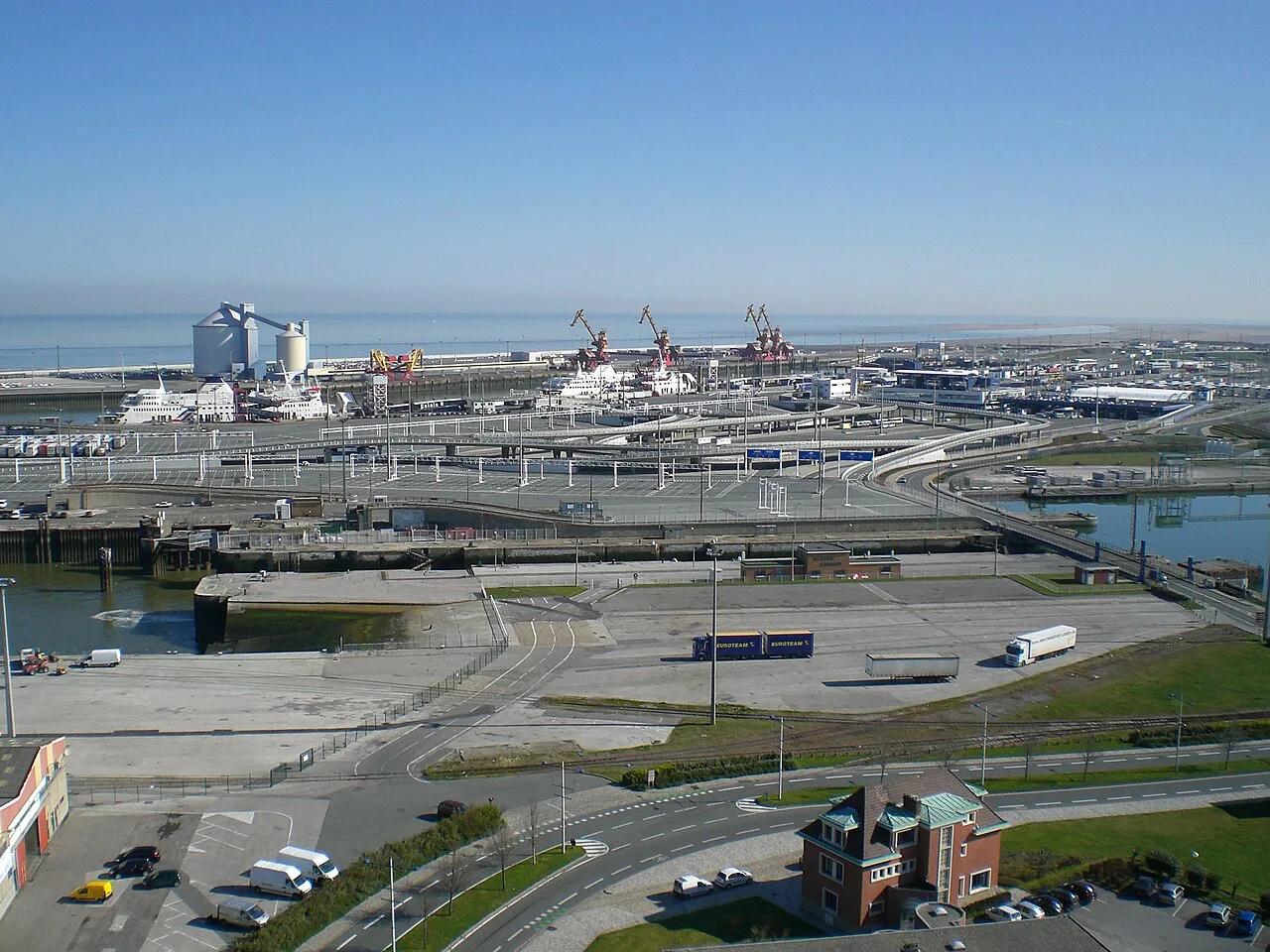
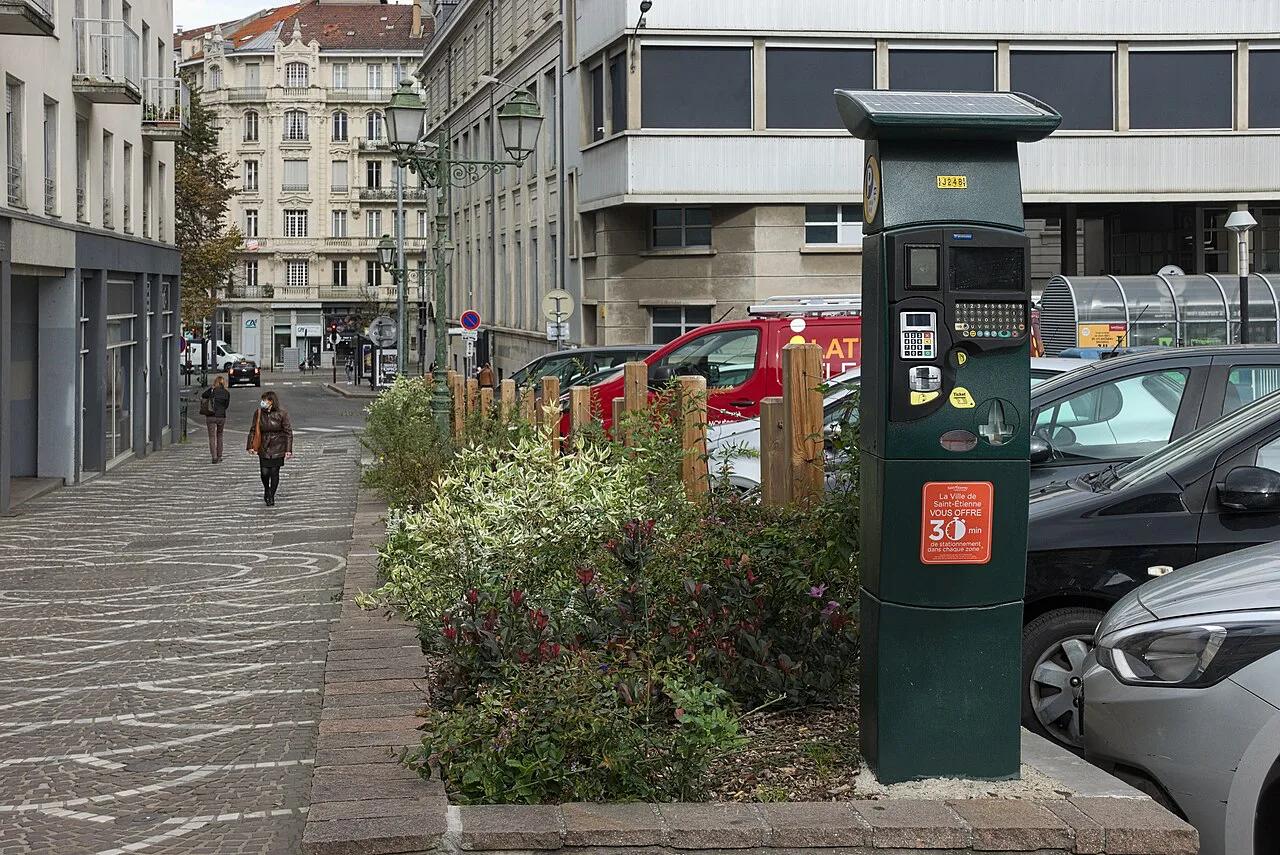
Limits change how a trip feels. Arriving by tunnel or ferry means switching from mph to km/h and from left to right-hand driving, so read our UK to France driving guide first. Our Eurotunnel Le Shuttle guide covers the terminal itself. Motorways at 130 km/h are faster but charge tolls, and our France toll roads guide explains the trade-off against slower N-roads. Mountain and coastal roads near Nice and in Corsica reward real driving speed over posted limits. See our Nice car hire guide or our Corsica car rental guide for pick-up advice. Alcohol rules are strict, so read our France drink-driving limit guide. For stopping, see Parking in France: Rules, Zone Bleue, Apps & Fines.
Frequently Asked Questions
What is the top speed limit in France?
The highest limit is 130 km/h (81 mph) on motorways in dry weather. In rain it drops to 110 km/h.
What happens if I'm caught speeding in France?
You face a fine of €68 or €135 for an excess under 50 km/h, depending on the limit and how far over it you were. Driving 50 km/h or more over the limit is a criminal offence with a fine of up to €3,750. Points come off French licences only, but visitors can still be fined, and serious excess can bring a roadside licence suspension.
Road-rule changes worth knowing
Optional updates to our guides.
You might also like
Continue reading
More guides you'll find useful