Parking in France: Rules, Zone Bleue, Apps & Fines
How parking works in France: street rules, blue-disc zones, payment machines, apps, car parks and fines, with tips for visitors and renters.
On this page
Last updated November 2026: parking in France is usually paid on the street, free but time-limited in a zone bleue, and easiest in a car park (un parking). You pay at a horodateur machine, in an app, or at a machine before the car park exit. Big-city drivers get the least stress from car parks, and the sections below cover the rest of the rules, in order of how often visitors meet them. For wider road rules, start with our France driving guide.
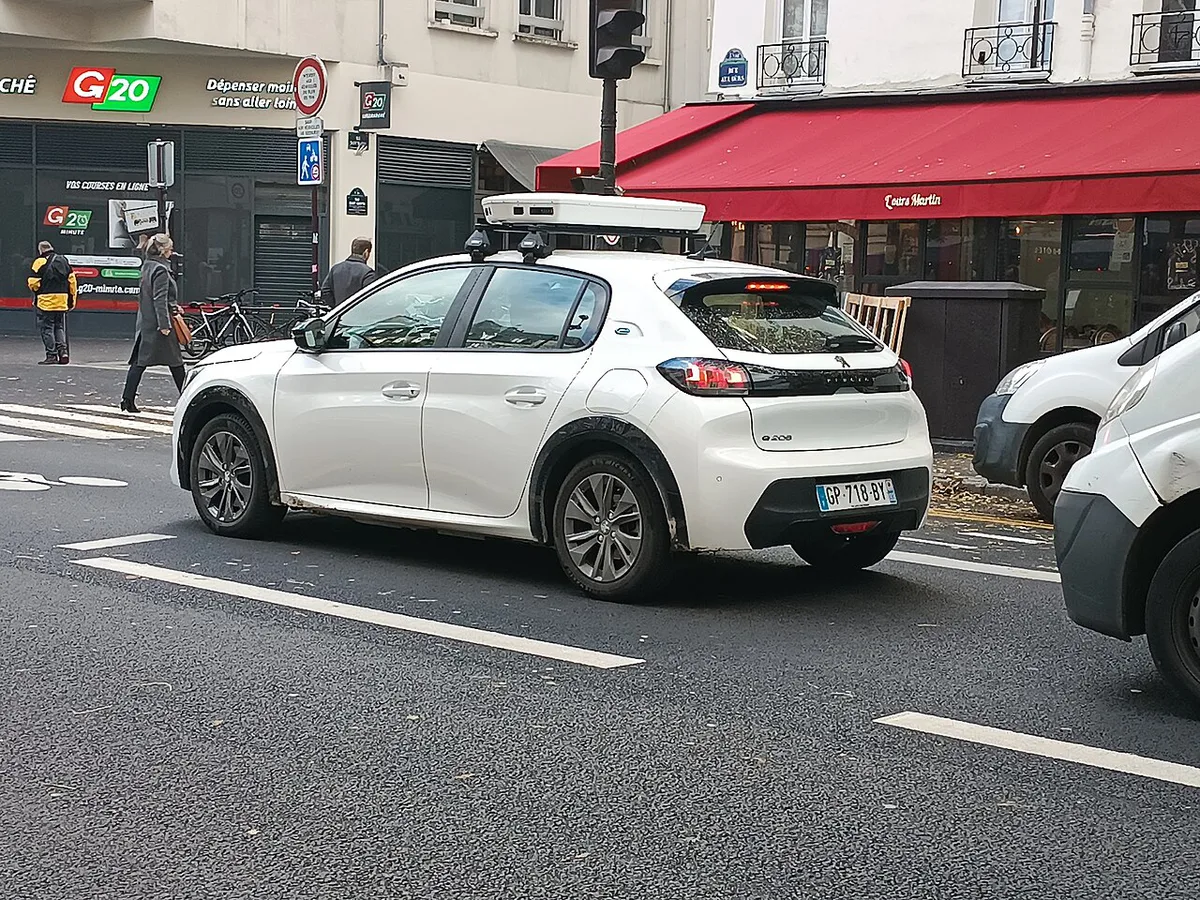
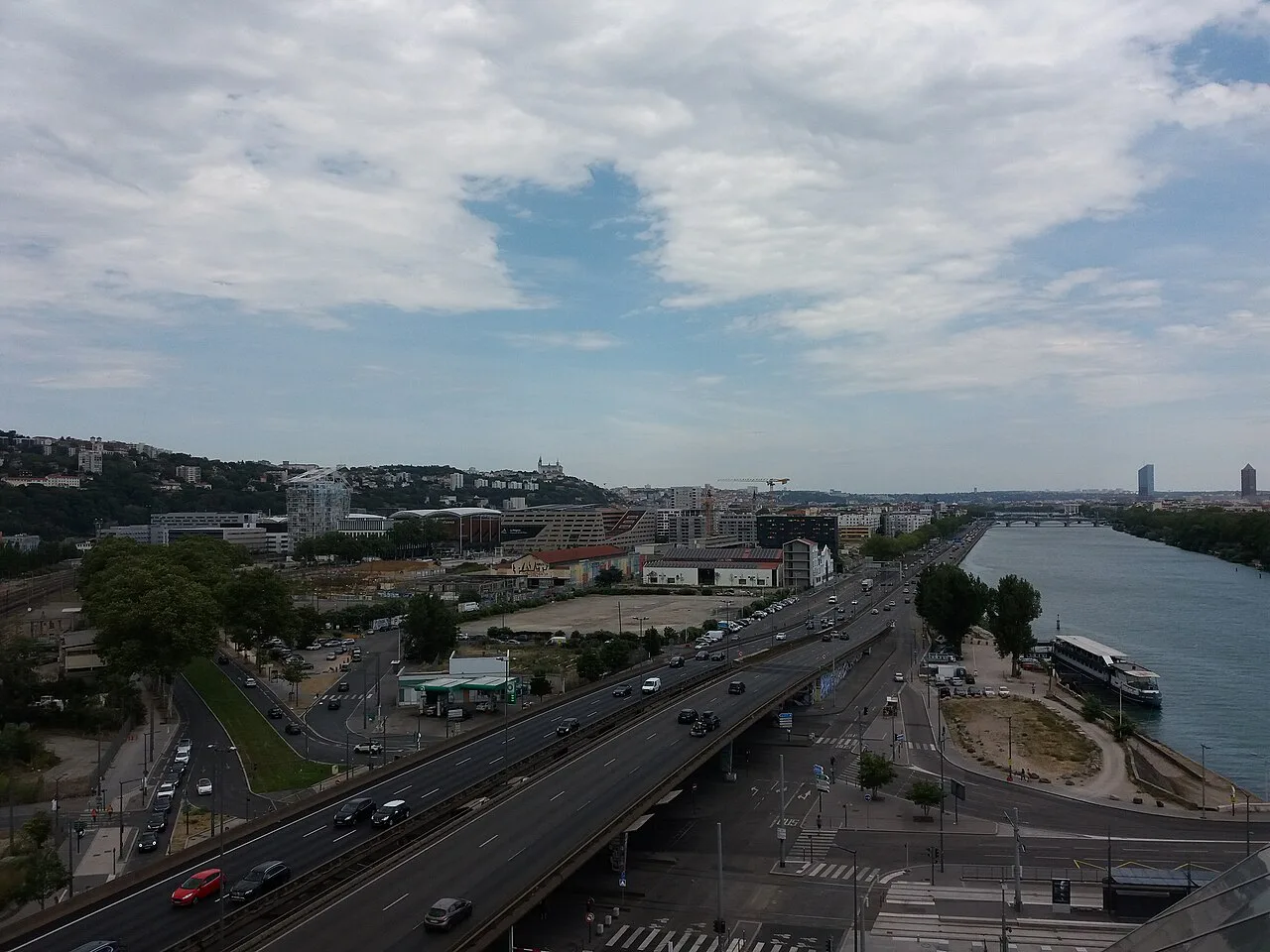
Featured image: Touam (Hervé Agnoux), CC BY-SA 4.0, via Wikimedia Commons.
Quick answer: how parking works in France
Most street spaces in towns and cities are payant, meaning you pay for a set time. Outside the smallest villages, assume a space costs money until a sign or machine says otherwise. Car parks are the low-stress choice in big cities, because you take a ticket on entry and pay before you leave.
- Payant: pay at a horodateur or in an app, and read the panel for free windows.
- Zone bleue: free but time-limited, with a blue disc (disque de stationnement) set to your arrival time.
- Car parks: take a ticket at the barrier and pay at a machine or at the exit.
- Apps: Flowbird, EasyPark and Zenpark are common, and each city accepts its own list.
- Fines: a flat fine is the usual result of overstaying, and it can reach you through a rental company.
Street parking: reading the signs and markings
Street parking is legal in most city and residential areas unless a sign says stationnement interdit (no parking). Spaces marked with white lines and the word PAYANT mean you must pay. A sign reading stationnement limité means a time cap applies. Never block a driveway, park on a yellow line, or stop close to a junction, because obstructive parking can bring a fine. Free windows are common but local. Many towns do not charge around lunchtime, in the evening, or on Sundays and holidays. Read the panel on the horodateur and follow it rather than assuming. Lots on the edge of town may be free (gratuit), while central ones are rarely free.
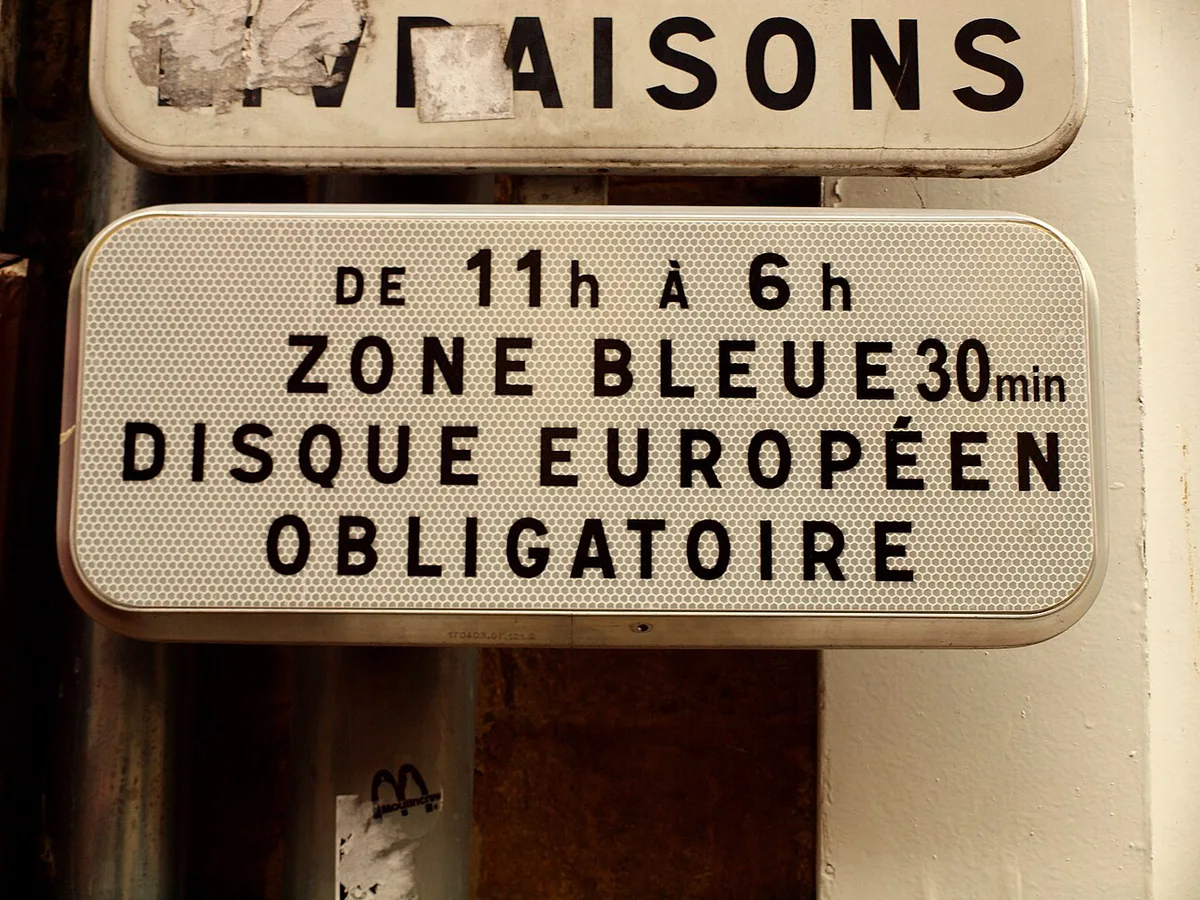
Free parking with a posted 1h30 limit only applies in a zone bleue, so read a stationnement limité sign as a time cap.
Zone bleue: the blue disc explained
A zone bleue is marked by signs or blue lines on the road surface. Parking is free, but only for a posted maximum such as 1h30. You must display a disque de stationnement behind the windscreen, with the clock set to your arrival time. Discs are sold at tabacs, small shops and tourist offices (Office de Tourisme), usually for a small fee. Buy one on your first day in France and keep it in the glovebox. A lunch exclusion can stretch your stay, so read the sign. If a zone allows one hour and noon to 1pm is not counted, arriving at 11:15 means you leave by 1:15pm. If the time limit does not fit your plans, use a car park outside the zone.
A lunch exclusion you miscount can leave you overstaying, and the usual result is the €35 flat fine.
How to pay: horodateur, app, or card
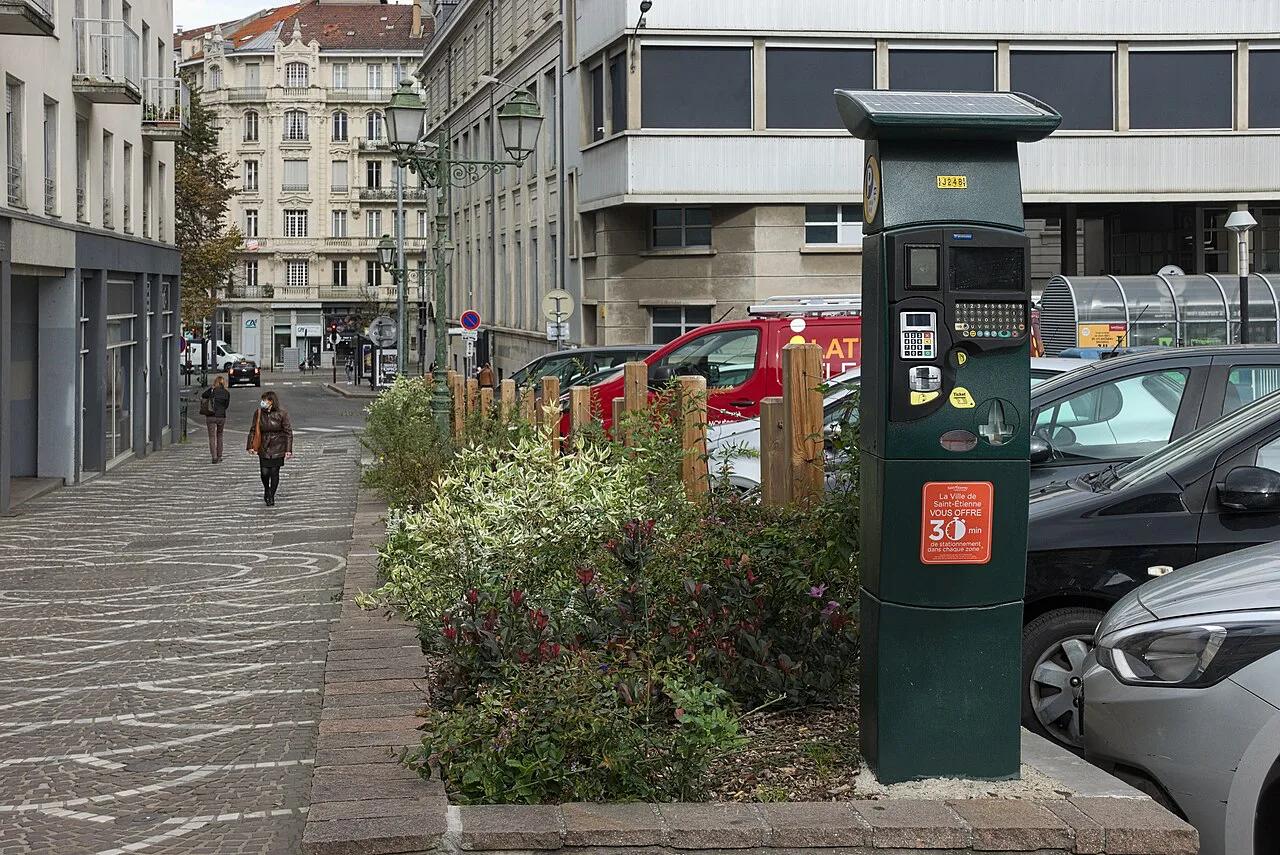
At a horodateur you press the power button, key in your licence plate, then pay for the time you want. The machine prints a ticket that you place inside the windscreen, visible from outside. Horodateurs give no change, so bring coins if your card is not chip-enabled. Photograph your rental car's plate at pickup, because you will need it at the machine. Photograph the printed ticket too, so you have a record of your end time. With an app you need no windscreen ticket, because enforcement staff check plates digitally.
| Method | Needs | Best for | Main risk |
|---|---|---|---|
| Coins at a machine | Euro coins, plate number | Short stops in towns | No change given; coins run short |
| Chip card or contactless at a machine | Chip card or tap-enabled phone, sometimes a PIN | Visitors without coins | Foreign cards can be refused |
| Parking app | Account, plate, phone signal | Multi-stop trips; extending time remotely | No signal or unsupported town |
| Car park, pay on exit | Ticket from the entrance barrier | City-centre and overnight stops | Lost ticket; height limit at the entrance |
Parking apps: Flowbird, EasyPark and Zenpark
Flowbird, EasyPark and Zenpark are the apps you will see named most often in France. Each city lists the apps it accepts on a sticker on the horodateur, so you cannot count on a single app everywhere. Set up your account, plate and payment card before you arrive, because setup in a crowded square on a slow connection is frustrating. Apps let you extend your time from a café table without walking back to the car. Small towns and villages may have weak signal or no app coverage, so keep a coin backup. Apps may add a service fee on top of the parking charge, so read the fee screen before you confirm. A roaming data plan or local SIM helps if your phone plan does not cover France.
Car parks (parkings): when they're worth it
Multi-storey and underground car parks are common in French cities. Operators such as Indigo run many of them. Take a ticket at the barrier and keep it with you, not in the car. Pay at the machine near the pedestrian exit before you return to your vehicle, or at the exit gate in some car parks. Chip-only card readers can reject foreign cards, so carry 1 € and 2 € coins. Rates are posted at the entrance. Read the height limit sign on the way in, because roof boxes, vans and large SUVs can exceed it. Leave no valuables visible in the car, particularly overnight.
| Option | Cost | Walking time | Security and overnight | Luggage with a rental car |
|---|---|---|---|---|
| Street (payant) | Charged by the hour; free windows vary | Shortest, right at the destination | Exposed; time limits can rule out overnight | Bags stay visible near the kerb |
| Central car park | Usually the highest hourly cost | Short walk | Better for overnight; barrier and staff | Easier to unload; check height limits |
| Edge-of-town or free lot | Lowest, sometimes free | Longest, may need a tram or bus | Varies by lot | Lots of room, but carry bags further |
Time-calculation traps
The classic mistake is counting paid hours as clock hours when a free window sits in the middle. Here is an original worked example. You arrive at 11:00 and buy two hours. If noon to 2pm is free, the clock stops at noon and restarts at 2pm. Your ticket then runs to 3pm, not 1pm. The trap works in reverse at closing time. Paid parking that ends at 7pm and resumes on Monday can carry your remaining minutes into the next working morning.
- Photograph the ticket and the free-window sign.
- Set a phone alarm 15 minutes before your end time.
- Read the panel for lunch, evening, Sunday and holiday rules.
- Never assume last town's free window applies in the next one.
Parking fines and what to do with one
A parking offence normally brings an avis de contravention, either left on the windscreen or sent to the registered address. The usual flat fine is €35, with a reduced rate for quick payment and a window of roughly 45 days to pay. Dangerous or obstructive parking can cost €135 and may add licence points. Rates and deadlines are set by national rules, so confirm current amounts with ANTAI before you pay. You can pay online with a bank card. With a rental car, the notice goes to the rental company, which forwards your details and may add an administration fee. Read your rental terms in our rental guide. US drivers can find more on permits and fines in our US licence guide. Speeding is a separate matter, covered in our speed camera guide.
Disabled parking
Bays marked with a wheelchair sign are reserved for holders of a disabled parking card. France accepts its own Carte mobilité inclusion (CMI) and the EU Disability Card. Rules for permits issued outside the EU, including UK and US badges, are not settled by general guidance, so ask the local town hall or read Service-Public.fr before you travel.
Parking by region and trip type
Match the option to your trip. For a city day trip, use a car park near the edge and walk or take transit. For an overnight in a city centre, book a hotel with parking or use a central car park. In villages, parking is often easier and sometimes free, but market days and central squares can restrict it. In Paris, read our Paris parking guide first. Add the Paris low-emission zone rules and our Crit'Air sticker guide before you drive in. On the Riviera, our Nice car hire guide covers pickup. For the island, see our Corsica car rental guide. UK drivers can plan the crossing with Eurotunnel Le Shuttle: Driver's Guide to Crossing to France and read our UK driver route guide.
Road-rule changes worth knowing
Optional updates to our guides.
You might also like
Continue reading
More guides you'll find useful