
Gotthard Tunnel: Road vs Rail vs Pass (Driving Guide)
Which Gotthard tunnel do you need? Compare the A2 road tunnel, the Base Tunnel by train and the old pass, with queue, toll and timing tips.
On this page
Last updated November 2026: the Gotthard tunnel most drivers need is the A2 road tunnel between Göschenen and Airolo, about 17 km long. Rail passengers ride the 57 km Base Tunnel instead, and the old Gotthard Pass is the scenic road over the top. This page, part of our Switzerland driving guide, helps you pick the right one.
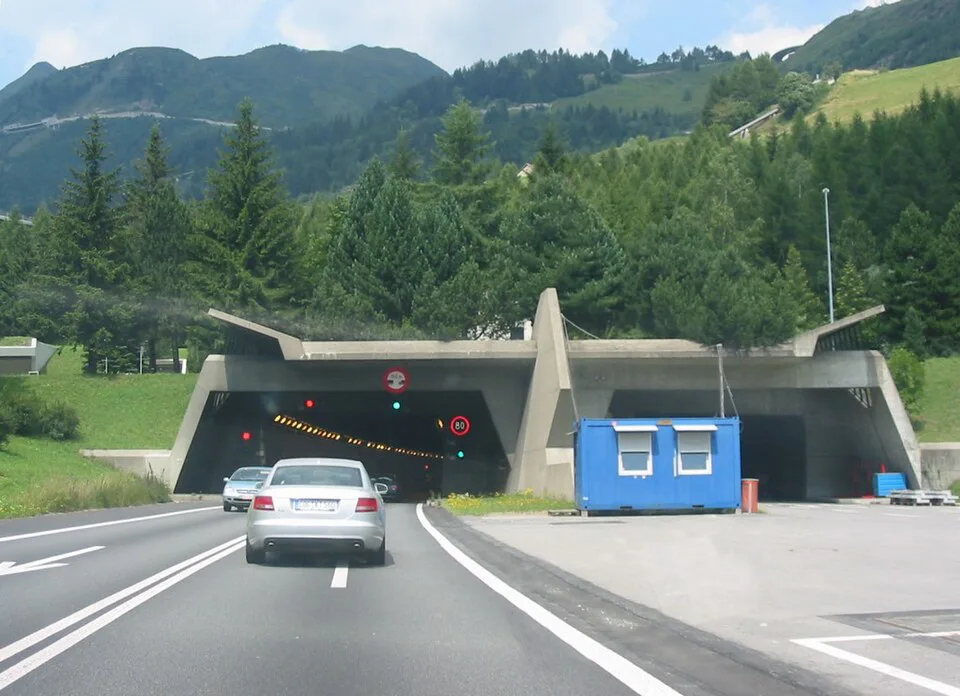
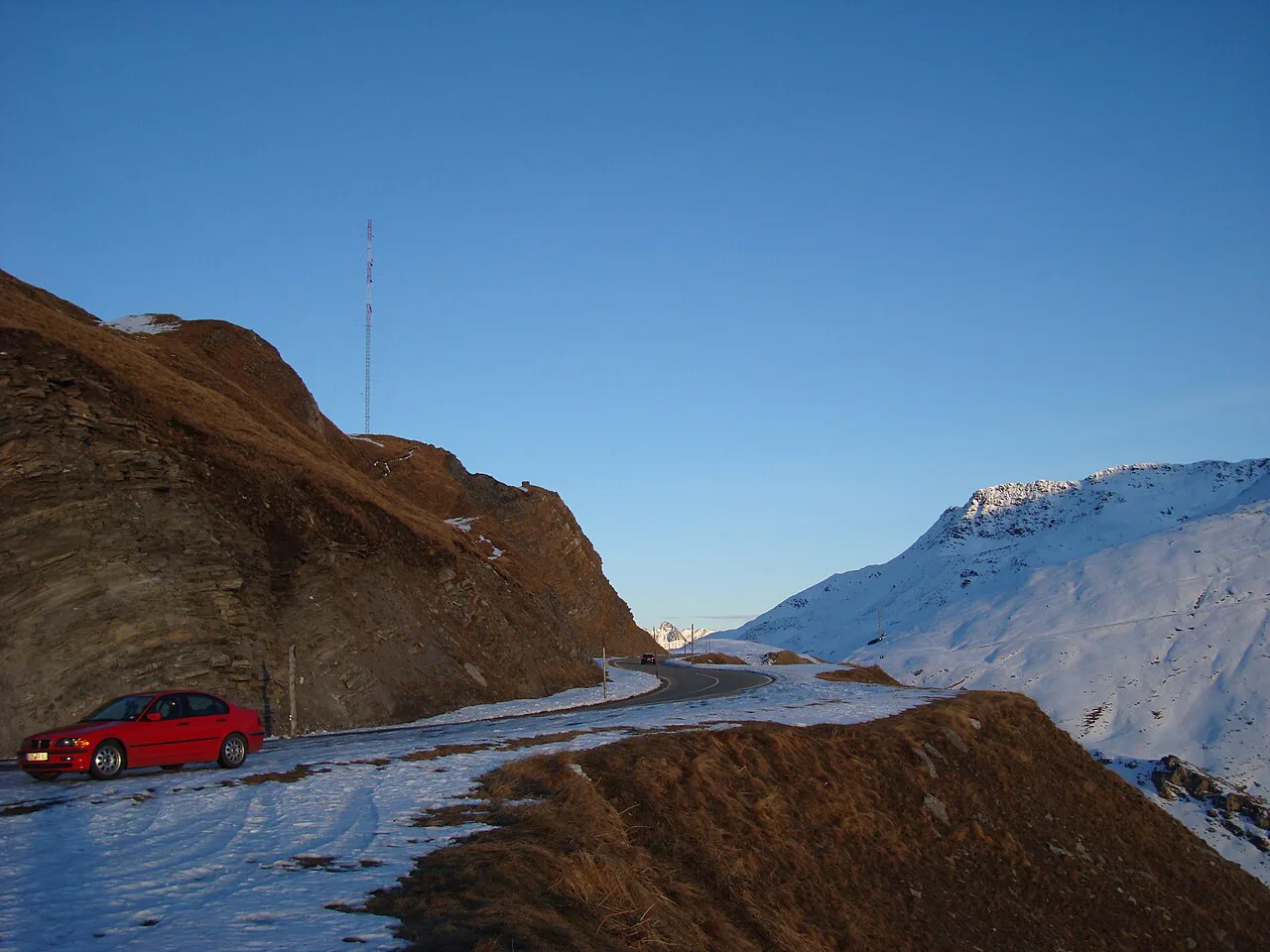
Featured image: Grzegorz Święch, CC BY 3.0, via Wikimedia Commons.
Which Gotthard Tunnel Do You Mean?
Three routes share the Gotthard name. Drivers use the road tunnel on the A2, which is about 17 km long. Train passengers use the Base Tunnel, a 57 km rail tunnel that opened in 2016. Anyone after views takes the Gotthard Pass over the mountain. Pick the road tunnel for speed by car, the train for a fixed timetable, and the pass for scenery.
| Option | What it is | Best for | Time | Cost | Access |
|---|---|---|---|---|---|
| Road tunnel (A2) | Single tube between Göschenen and Airolo, about 17 km | Time-pressed drivers | Fastest by car, subject to queues | Covered by the motorway vignette; no separate tunnel toll | Open all year; can close for incidents or maintenance |
| Base Tunnel (rail) | 57 km railway tunnel, opened 2016 | Non-drivers, rail and engineering fans | Cut Zurich–Milan by about an hour; fastest trains about 3h17 in 2022 | Rail fare, no vignette needed | Fixed timetable; book through SBB |
| Gotthard Pass | Old mountain road over the top | Scenery seekers with spare time | Slowest of the three | Extra fuel, no tunnel | Usually open June to October; closed in winter |
Driving Through the Gotthard Road Tunnel
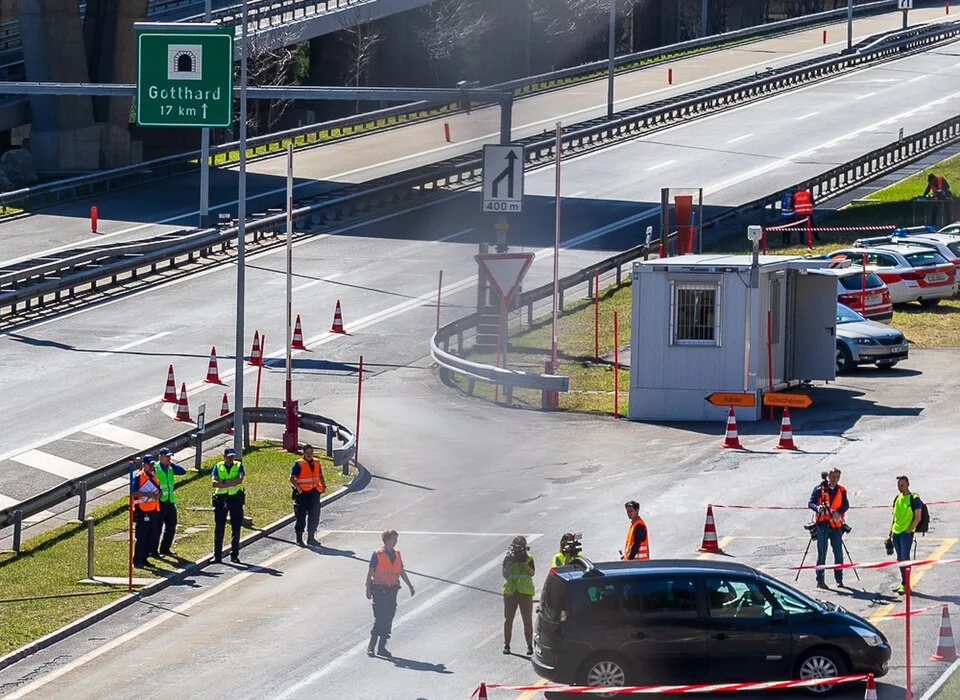
As FEDRO states, the road tunnel is a single tube with one lane in each direction. It carries the A2 between Göschenen at the north portal and Airolo at the south portal. Oncoming traffic passes close by, so hold your lane and keep a generous gap to the car ahead. The limit inside is 80 km/h and overtaking is prohibited. Since the 2001 fire, no more than 150 trucks an hour may enter, and in busy periods signals at the portals also meter cars, so follow them. Our Swiss speed limits guide covers the posted limits.
Queues, Peak Times and When to Go
Heavy flows build on Easter, Ascension and Pentecost weekends. Summer departure and return weekends are just as busy. Queues form before the portals at Göschenen and Airolo. Look at live conditions on TCS traffic information before you set off. Leave early or midweek if your dates are flexible. The tunnel can close for incidents and maintenance, so keep an alternative in mind.
At about 17 km long, the road tunnel is short, so portal queues set your drive time.
- Leaving at peak: a holiday-weekend departure puts you in the longest queue.
- No break plan: you cannot stop inside the tube, so rest before the portal.
- Low fuel: fill up before the portals, not in the queue.
- Ignoring closures: look at live traffic before you commit to the A2.
Costs: Vignette, Tolls and the Car Train
There is no separate toll for the road tunnel, because the motorway vignette covers the A2. Buy the current sticker at the official e-vignette shop and see our Switzerland vignette guide for how it works.
- Vignette: needed on the motorway, so it is already part of your trip cost.
- Tolls elsewhere: Toll Roads in Switzerland: Vignette Rules, Exceptions & Costs lists the exceptions.
- Car train: no car-carrying train runs through the Gotthard. The nearest car shuttles cross the Furka (Realp to Oberwald) and the Lötschberg (Kandersteg to Goppenstein), each with its own fare.
Gotthard Pass Instead: When the Old Road Is Worth It
The pass is the slowest option and it is seasonal: the road over the top is closed to traffic from about November to May, which is why the tunnel was built as the winter-safe route. Expect narrow switchbacks, changeable mountain weather and more fuel burned than on the A2. It pays off when you have spare daylight and want views the tunnel cannot give. Browse more Scenic Drives in Switzerland: Best Passes and Routes to combine it with other routes.
When the seasonal pass is closed, the 57 km Base Tunnel offers a rail alternative.
Riding the Gotthard Base Tunnel by Train
Inside the 57 km Base Tunnel there is no scenery, so the reward is time. Work started in 1999, the tunnel opened in June 2016 and regular trains began that December, at a final cost of about CHF 12.2 billion. It cut Zurich–Milan journeys by about an hour, and the fastest trains took about 3h17 in 2022. Book on SBB, which publishes the current timetable. A freight derailment in August 2023 disrupted service through the tunnel until full service resumed in September 2024, a reminder that rail plans can change too. If you start from a station outside town, see Parking in Switzerland: Blue Zones, Discs, Fines & Rules for park-and-ride options.
Quick History and Key Numbers
Keep the history short: the road tunnel and the Base Tunnel are different projects with different dates.
- Road tunnel: 16.9 km on the A2, Göschenen to Airolo, opened on 5 September 1980.
- Base Tunnel length: 57.1 km, the world's longest railway tunnel.
- Base Tunnel opening: 1 June 2016, with ceremonies at Erstfeld in the north and Bodio in the south.
- Base Tunnel cost: about CHF 12.2 billion.
- Road tunnel refurbishment: a second tube is being built first, so the A2 stays open; FEDRO runs the project.
The Second Road Tube: What Changes and When
The 1980 road tunnel needs a full refurbishment, and Switzerland chose to build a second tube first so the A2 never has to close for years. The Swiss government approved the plan in 2014, and voters backed it in a February 2016 referendum. Work on an access tunnel began in September 2021, and the main tunnel works were due to start in 2025.
| Stage | Timing | What it means for drivers |
|---|---|---|
| Second tube under construction | Scheduled to finish in 2029 | Old tube stays in use, one lane each way, 80 km/h |
| Old tube refurbished | After the new tube opens | Traffic moves into the new tube |
| Both tubes in service | Planned for 2032 | One lane in each tube, northbound in the new one and southbound in the renovated one, keeping capacity at today's level |
Single lanes in each direction will remain after 2032, so the holiday queues at Göschenen and Airolo are not expected to vanish. What changes is safety: traffic will no longer meet head-on in one tube. Closures still happen in the meantime. In September 2023 a crack in the ceiling shut the tunnel from 11 to 14 September, so keep the pass or another crossing in mind as a fallback.
Practical Logistics
Fuel up and charge before you reach Göschenen or Airolo, and plan a rest stop on either side. Winter tire and chain rules apply on approach roads and the pass.
- Hiring a car: Renting a Car in Switzerland: Requirements, Costs, Traps covers cross-border rules.
- Licence questions: driving with a US license explains what you need.
- Longer trips: the Gotthard fits into the Swiss Grand Tour: Route, Stages, Days Needed & Driving Tips route.
Frequently Asked Questions
How long does it take to go through Gotthard Tunnel?
The road tunnel is about 17 km long, so the drive itself is short. Queues at Göschenen and Airolo are what add time, especially on holiday weekends. At the 80 km/h limit, the 16.9 km tube itself takes about 13 minutes. By train, the 57 km Base Tunnel is part of a Zurich–Milan trip of about 3h17 on the fastest services in 2022.
What is the longest tunnel in the world?
The 57 km Gotthard Base Tunnel is described as the world's longest railway tunnel. It is rail only, so drivers use the shorter A2 road tunnel instead.
When was the Gotthard Tunnel ceremony?
The Base Tunnel opened officially in June 2016. Speeches ran from Erstfeld in the north and Bodio in the south, and two trains carrying guests then set off in opposite directions.
Road-rule changes worth knowing
Optional updates to our guides.
You might also like

Continue reading
More guides you'll find useful