Driving Rules in Italy: Speed, ZTL, Tolls & Documents
Italy's main driving rules for visitors: speed limits, ZTL zones, tolls, parking, child seats, alcohol limits and winter equipment, with how to avoid fines.
On this page
Last updated November 2026: the main driving rules in Italy are simple to state, but a few traps cost visitors real money. Drive on the right, carry your licence and documents, obey signed speed limits and stay out of ZTL zones unless your hotel has registered your plate. Tolls, parking and winter gear come below, and our parent guide to Italian roads covers route planning.
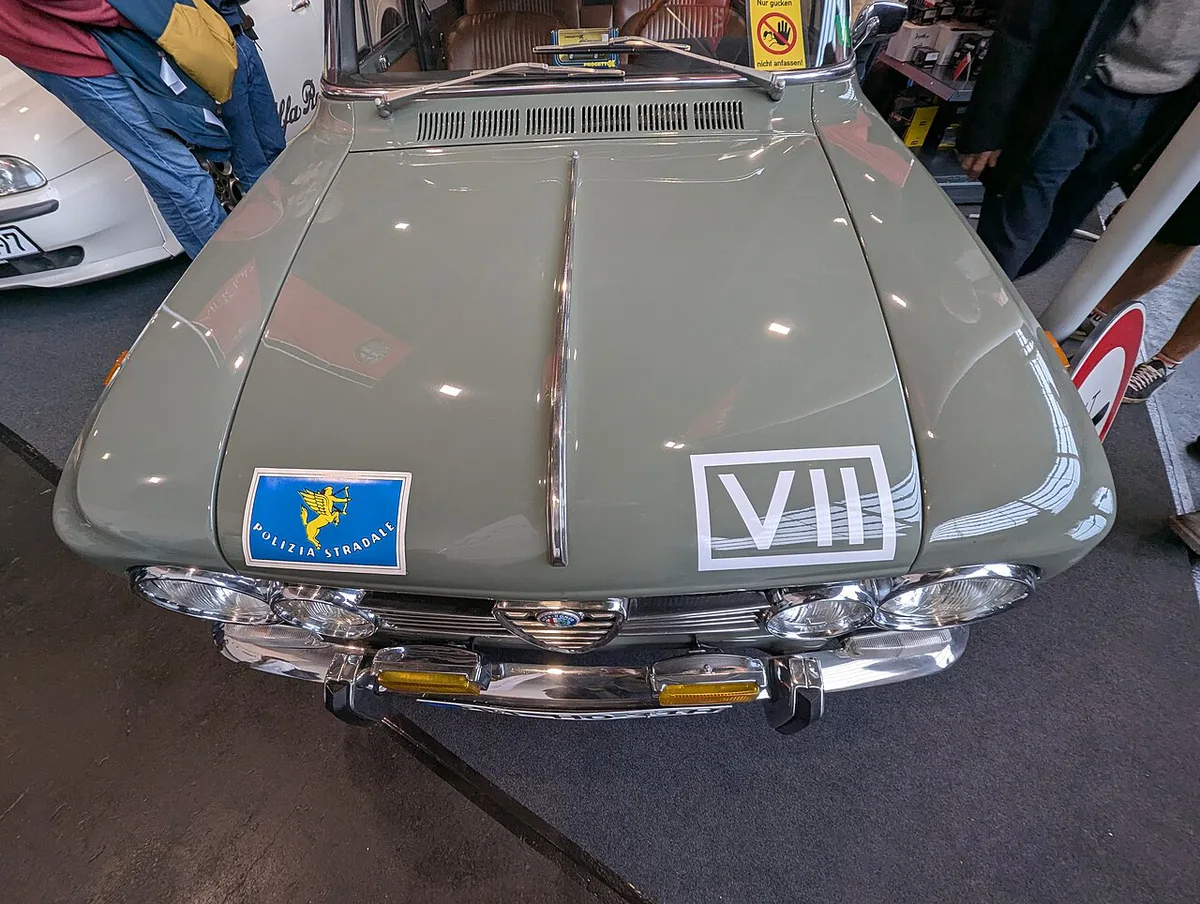
Featured image: International Driving Authority, CC BY-SA 4.0, via Wikimedia Commons.
Quick answer: driving rules in Italy that catch visitors out
A car pays off in the countryside. Tuscan hill towns and remote southern villages have thin public transport, so a rental lets you stop where you like. In Rome or Florence, traffic, scarce parking and restricted zones make a car a burden. Many visitors collect the rental only on the day they leave the city. Our rental pickup checklist covers what to inspect before you drive away. Eight rules cause most fines and roadside trouble for visitors.
- Drive on the right and overtake on the left.
- Keep dipped headlights on outside built-up areas.
- Wear a seat belt in every seat that has one.
- Stay under 0.5 g/l of alcohol, and at zero if you are under 21 or a new driver.
- Never hold a phone while driving; hands-free only.
- Do not enter a ZTL zone without authorisation.
- Take a ticket at the motorway entry and pay at the exit; there is no vignette.
- Keep a warning triangle and high-visibility vest in the car.
Documents and legal requirements
EU licences are recognised in Italy for the categories they cover, provided you meet the minimum age. Learner licences and temporary replacement certificates do not get the same automatic recognition. Drivers from outside the EU should read our guide to US licence rules before booking. Under article 135 of the code, a non-EU licence must be carried with an International Driving Permit or an official translation, and driving without one risks a fine of €408 to €1,634. Renters also need a credit card in the renter's name for the security deposit. Most rental companies set a minimum age of 21 and add a young-driver surcharge under 25.
| Driver origin | Licence | IDP | Extra points |
|---|---|---|---|
| EU | Own licence recognised | Not needed | Carry ID and insurance papers |
| UK | Own licence | Not needed with a photocard licence; paper licences need a 1968 IDP | Own car: UK identifier on the plate, or a UK sticker |
| US / non-EU | Own licence | IDP or official translation required | Rental firms may set their own document rules |
- Full driving licence, plus an IDP where required
- Passport or national ID
- Motor insurance certificate
- Rental agreement or vehicle registration document
- Warning triangle and high-visibility vest
Speed limits by road type
Italian speed limits depend on road type, and signs override the defaults. Built-up areas allow 50 km/h, and secondary roads outside towns allow 90 km/h. Main extra-urban roads allow 110 km/h, and motorways allow 130 km/h. In rain, motorways drop to 110 km/h and main extra-urban roads to 90 km/h. New drivers in their first three years are capped at 100 km/h on motorways and 90 km/h on main extra-urban roads. The code allows 150 km/h on some three-lane motorways, but no section has ever used it. Tutor average-speed cameras cover many motorway stretches, so hold the limit throughout. Our guide to speed limits by road goes deeper.
| Road type | Default limit | Variation |
|---|---|---|
| Built-up area | 50 km/h | Signed limits can be lower, or up to 70 km/h on suitable roads |
| Secondary road | 90 km/h | Unchanged in rain |
| Main extra-urban road | 110 km/h | 90 km/h in rain |
| Motorway | 130 km/h | 110 km/h in rain; 100 km/h for new drivers |
ZTL zones: the costliest mistake
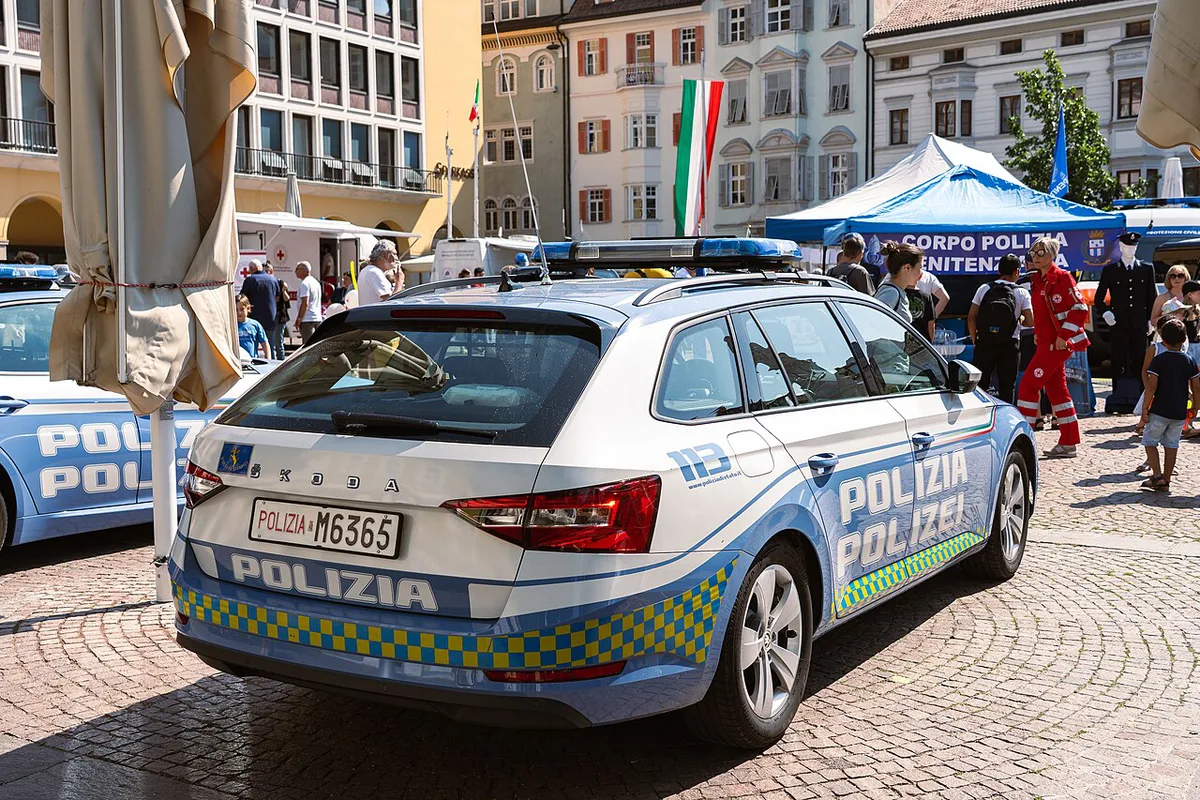
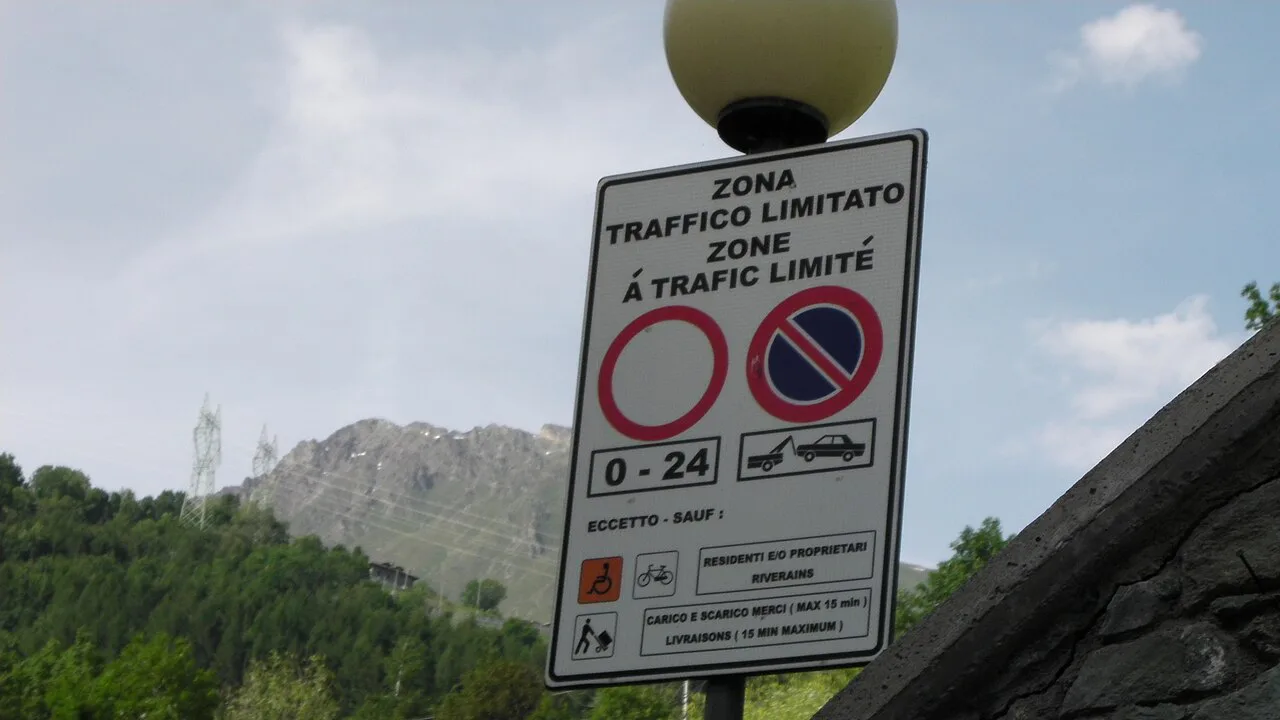
A ZTL (Zona a Traffico Limitato) is a restricted-traffic zone in a historic centre. Signs show a red circle on a white background, and a lit "varco attivo" panel means the gate is enforcing now. Cameras read plates automatically, so no officer will wave you off. The fine is €83 to €332 plus notification costs, and repeat entries into the same zone on one calendar day count once. Fines arrive by post, often months later, through the rental company, which can pass the charge on to you. Rules and hours vary by city: Florence, for example, sells day permits through Servizi alla Strada. Hotels inside a ZTL can often register your plate, so ask before you arrive.
| Risk | Likelihood for tourists | Consequence | How to avoid it |
|---|---|---|---|
| ZTL entry | High | Fine by post via the rental company | Park outside; register with your hotel |
| Parking | High | Fine and possible towing | Read bay colours and signs |
| Speeding | Medium to high | Fine, often camera-based | Follow signed limits |
| Bus lanes | Medium | Fine | Stay out of marked lanes |
| Handheld phone | Medium | Fine | Use hands-free or stop |
| Missing documents | Low if prepared | Trouble at a roadside check or rental desk | Use the in-car checklist above |
- Ask your hotel whether it can register your plate with the ZTL authority.
- Park outside the zone and walk or take a taxi in.
- Switch on your navigation app's ZTL warnings, but still read the signs.
Tolls, Telepass and motorway etiquette
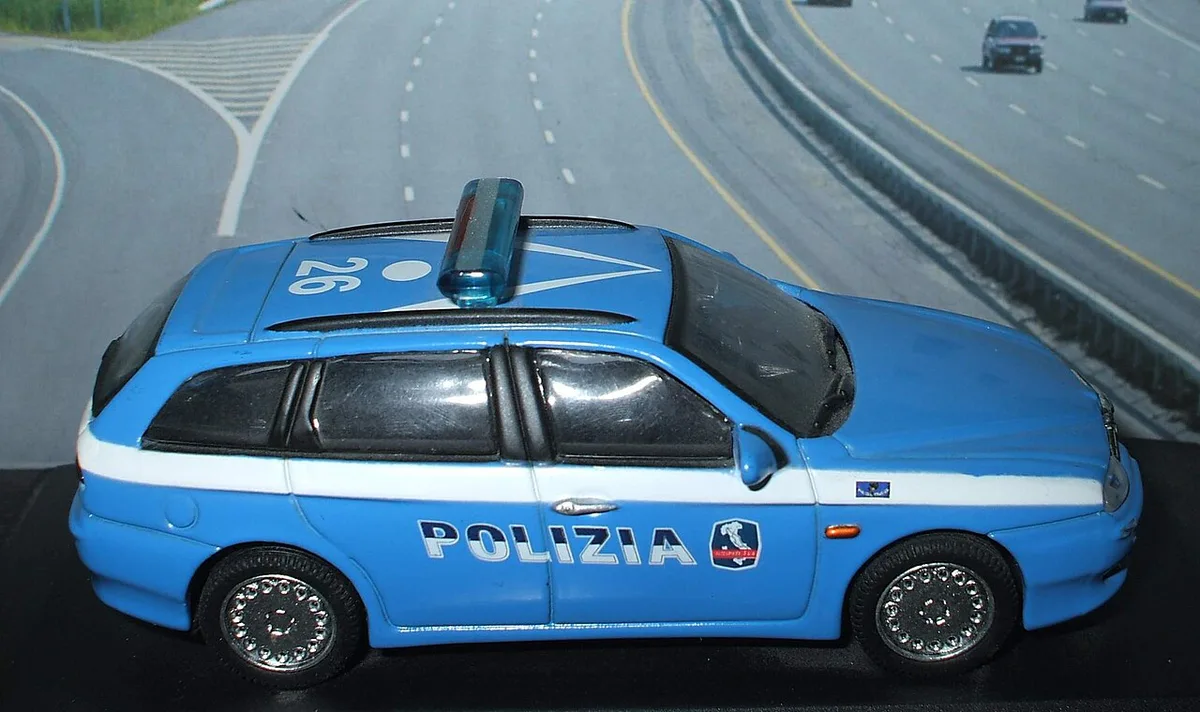
Most autostrade charge tolls, and Italy has no national vignette. Take a ticket at the entry gate and pay when you exit. Blue lanes take cards, white lanes take cash and yellow lanes are for Telepass transponders, so ask your rental company whether a unit is fitted. If a card fails, press the aiuto (help) button. The booth then prints a non-payment receipt, which you can settle online within 15 days with no surcharge. Rates are listed by Autostrade per l'Italia. Our toll road guide covers costs and payment. Stay in the right lane unless overtaking, and use the roadside SOS columns for help.
Parking rules and colour-coded lines
Blue-lined bays require payment, white-lined bays are free, and yellow-lined bays are reserved for specific users such as residents. Fines checked November 2026: an ordinary no-parking or unpaid-meter fine is €42 to €173, parking in a dangerous spot €87 to €344 and in a disabled bay €330 to €990, and illegally parked cars may be towed. Read the sign beside each bay for time limits and permit rules. Keep coins for meters, and ask your hotel about garage rates before you arrive. Our parking guide lists what to look for in city centres.
Missing winter gear outside built-up areas costs €87 to €344, about twice the €42 to €173 range for an ordinary parking fine.
Alcohol, phones and seat belts
Italy's general blood-alcohol limit is 0.5 g/l. Zero applies to drivers under 21, to drivers in the first three years after getting a category B licence, and to professional drivers. Seat belts are compulsory for the driver and every passenger on seats fitted with them. Handheld phone use is banned and costs €250 to €1,000 plus a licence suspension of 15 days to 2 months, even on a first offence. Hands-free kits are allowed only if both hands stay on the controls. Between 0.5 and 0.8 g/l, the fine is €543 to €2,170 with a 3 to 6 month suspension, and from 0.8 g/l drink driving is a criminal offence. Safest choice: do not drink at all before driving. Road-safety guidance is published by the Polizia di Stato.
Zero alcohol also applies in the first three years after a category B licence, when new drivers are capped at 100 km/h on motorways.
Child seats and safety rules
Children shorter than 150 cm must use an approved restraint suited to their size. Turning 12 does not remove the requirement on its own. A rear-facing seat in the front needs the passenger airbag switched off. For children under 4, an anti-abandonment alarm is required in Italian-registered cars and in foreign cars driven by Italian residents. A visitor from abroad in a foreign-registered car falls outside that rule, under article 172 of the Codice della Strada. A rental car is normally Italian-registered, so ask the desk whether the seat you collect has the alarm.
Required equipment and winter rules
Carry an approved warning triangle and keep a high-visibility vest accessible, not buried in the boot. You must wear it when you get out of a stopped car outside built-up areas at night or in poor visibility, including on the hard shoulder. On roads under a winter ordinance, vehicles need winter tyres fitted or snow chains aboard, from 15 November to 15 April unless a local order extends it. That season is already under way in November 2026. Speed with chains fitted is capped at 50 km/h. Outside built-up areas, the fine for missing winter gear is €87 to €344. Expect ordinance signs on mountain passes in South Tyrol, the Alps and the Apennines. Ask your rental company about winter kit before heading uphill.
Road signs and right-of-way that confuse foreigners
Sign colours help: green for autostrade, blue for other roads and brown for tourist sites. Circular signs give prohibitions or orders, and rectangular signs give information. At roundabouts, give way to traffic already circulating. At junctions without signs, vehicles from the right have priority. In South Tyrol, signs may be Italian-German, sometimes with Ladin. Parts of Friuli-Venezia Giulia use Italian-Slovene signs. Two city signs matter most: ZTL, and Zona pedonale for pedestrian areas. Emergency vehicles always have priority.
Breakdowns, accidents and emergencies
Call 112 for any emergency and give the operator your location. On motorways, SOS columns connect you to help. Put on your high-visibility vest before leaving the vehicle, then set the warning triangle. For breakdowns, call your rental company first. ACI roadside assistance answers on 803 116 from an Italian phone, and 800 116 800 is its toll-free number for foreign mobiles. After a damage-only accident, complete an international accident report form with the other driver. Photograph both vehicles and the scene.
Driving culture and regional realities
Expect tailgating, flexible use of indicators and drivers edging past stop lines. Leave a bigger gap, signal early and let faster cars pass. Narrow roads reward compact cars, and most rental fleets are manual, so book an automatic early. For island driving, see our Sicily car rental notes. Our Sicilian road guide covers conditions there. Sardinia is covered in Sardinia car hire advice. For hill towns, read about renting in Tuscany. Coastal drivers should see Amalfi Coast rentals.
| Region | Ease of driving | Main watch-out |
|---|---|---|
| Amalfi Coast | Demanding | Narrow coastal roads and tight bends |
| Sicily | Moderate | City traffic and ZTL zones |
| Sardinia | Moderate | Rural roads between towns |
| Tuscany | Easiest for rural touring | ZTL zones in historic centres |
| Dolomites | Moderate to demanding | Mountain passes and winter equipment rules |
Rule changes and last verified note
Last verified November 2026 against the text of the Codice della Strada and the official sources named above. The inflation update to fines was frozen for 2025 and 2026, so national fine amounts stay as listed until at least 2027. Local ZTL orders and winter ordinances change more often than the code, so the signs at each gate and pass road take priority over any guide.
Frequently Asked Questions
What do you need to drive in Italy?
Carry a valid licence, plus an International Driving Permit if your licence requires one, along with your passport or ID and insurance papers. Keep the rental agreement or registration document in the car, together with a warning triangle and high-visibility vest. Follow ZTL signs and signed speed limits.
Road-rule changes worth knowing
Optional updates to our guides.
You might also like
Continue reading
More guides you'll find useful