Toll Roads in Spain: Which Charge and How to Pay
Which roads in Spain charge tolls, how to pay at the booth, what a rental car needs, and when it's worth taking the free route instead.
On this page
Last updated November 2026: toll roads in Spain exist, but only on certain autopistas (AP- and some R- roads), while autovías (A- and N- roads) are free. Spain has no vignette sticker, so you pay at booths along the route. Below we explain which corridors charge, how to pay in a rental car, and when we'd take the free road instead.
Featured image: No machine-readable author provided. Flextron assumed (based on copyright claims)., CC BY-SA 3.0, via Wikimedia Commons.
Do Toll Roads in Spain Exist? Quick Answer
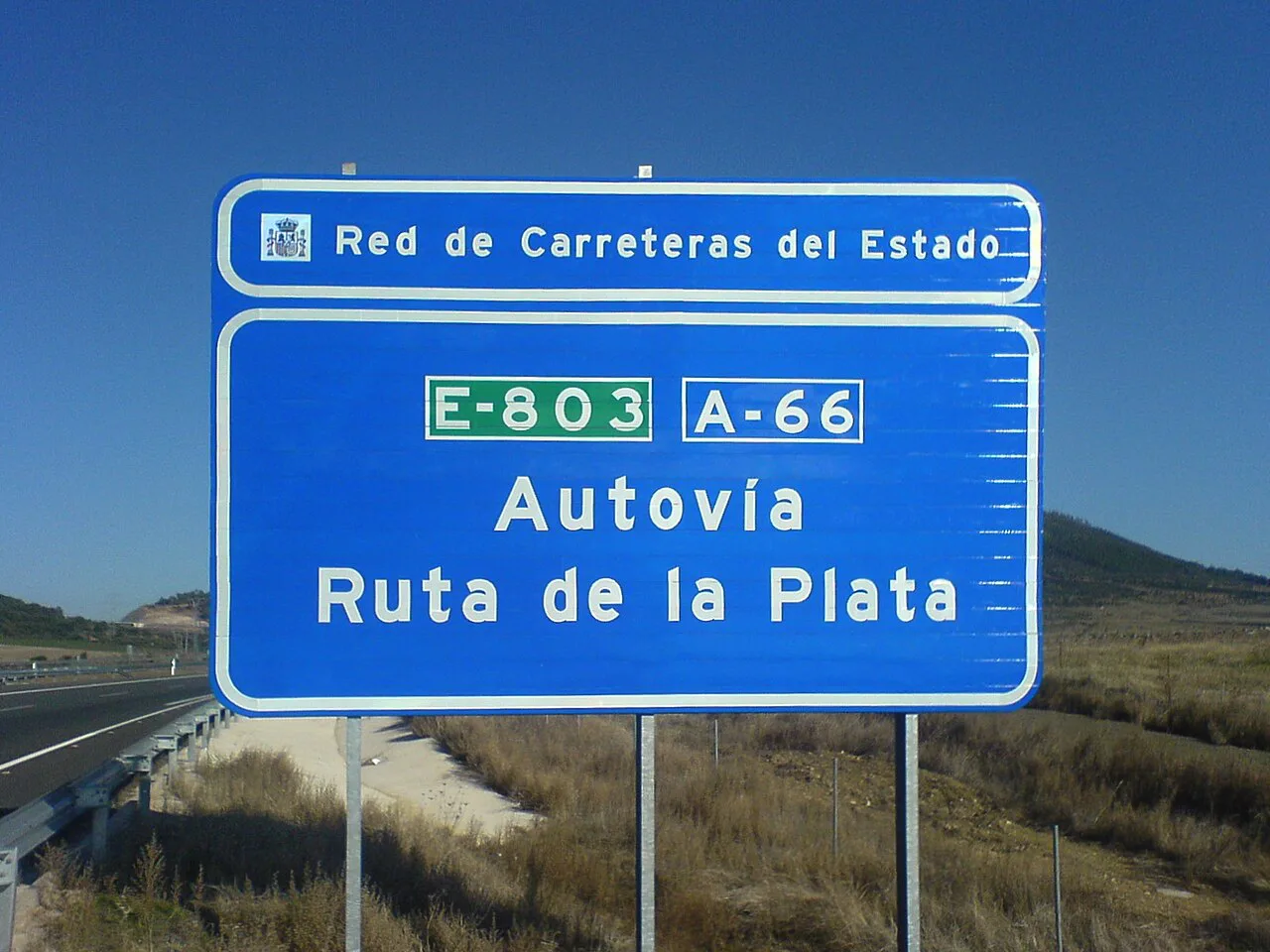
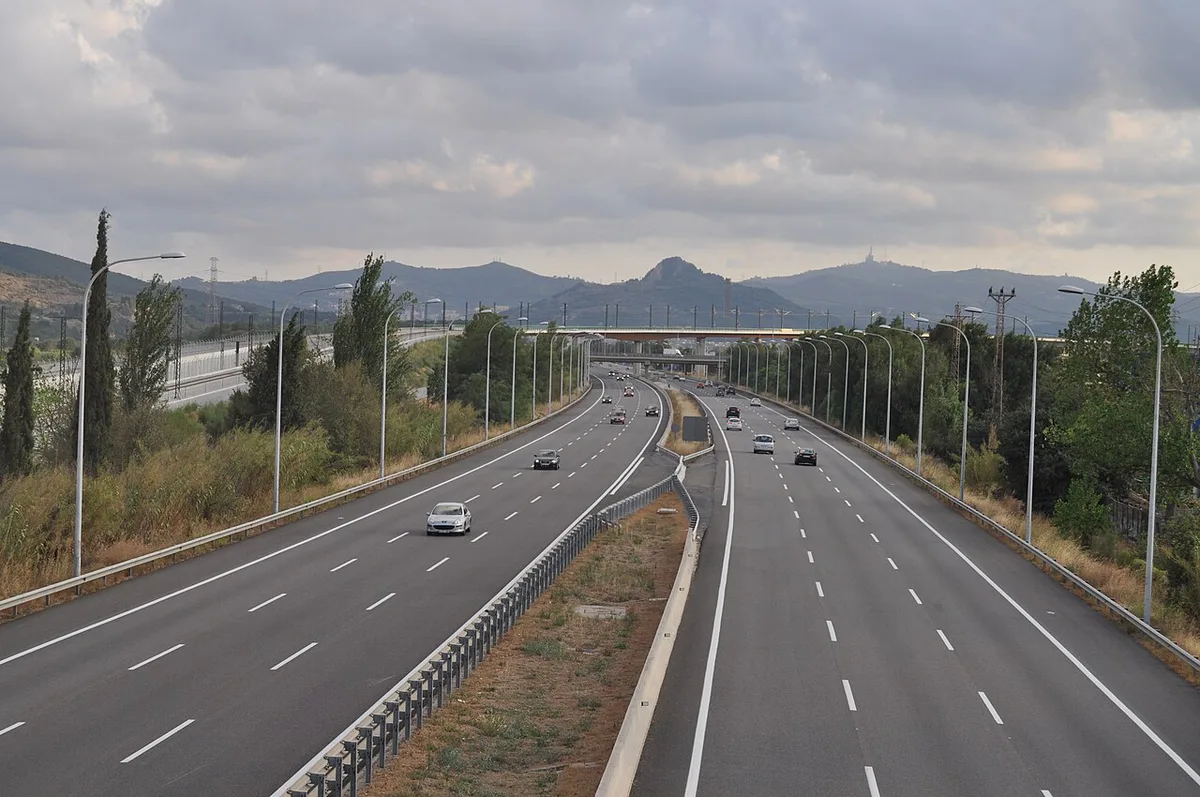
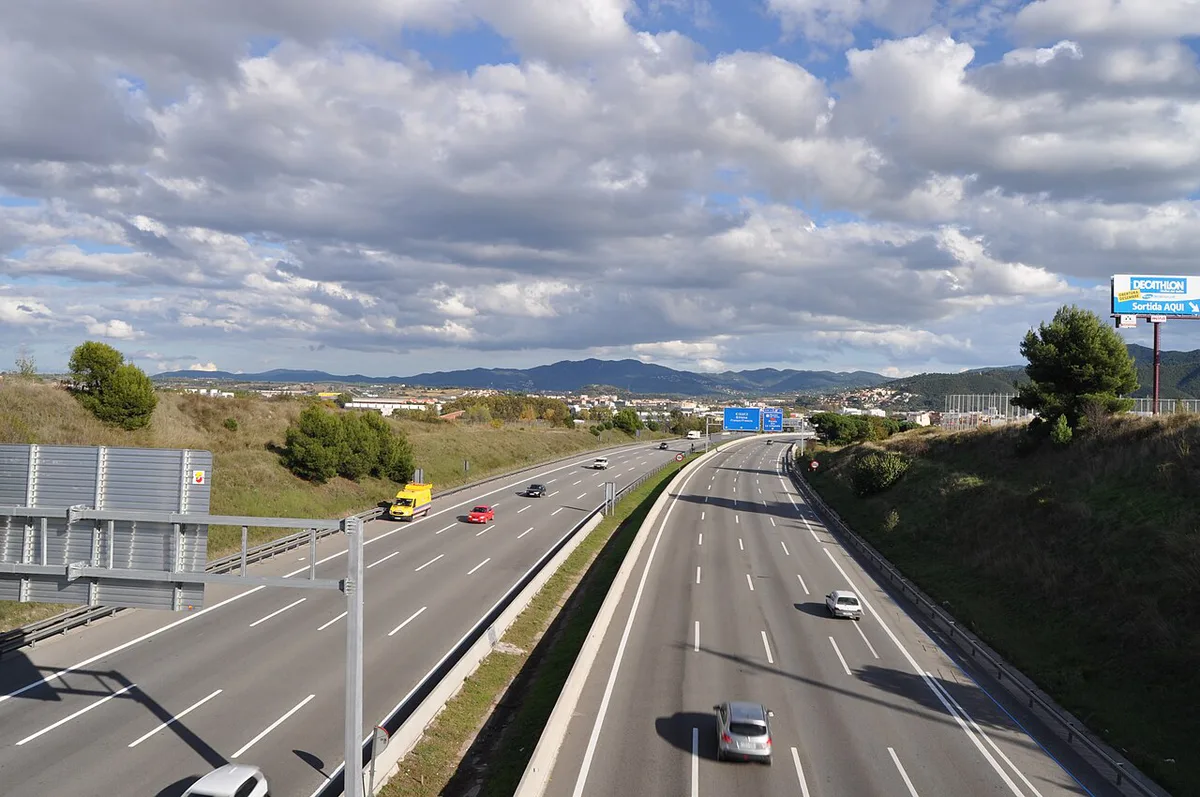
Autovías carry A- or N- numbers and have no booths. Autopistas carry AP- numbers, and some R- roads charge too. Autovías often clog at entrances and exits, while autopistas usually run freer and faster. The trend has been toward fewer tolls, not more: as concessions expire, the state has lifted tolls on long stretches, most recently on the AP-68 in Aragón, Navarra and La Rioja on 10 November 2026. Our Spain driving guide covers the wider rules for visitors.
Which Toll Roads in Spain Charge
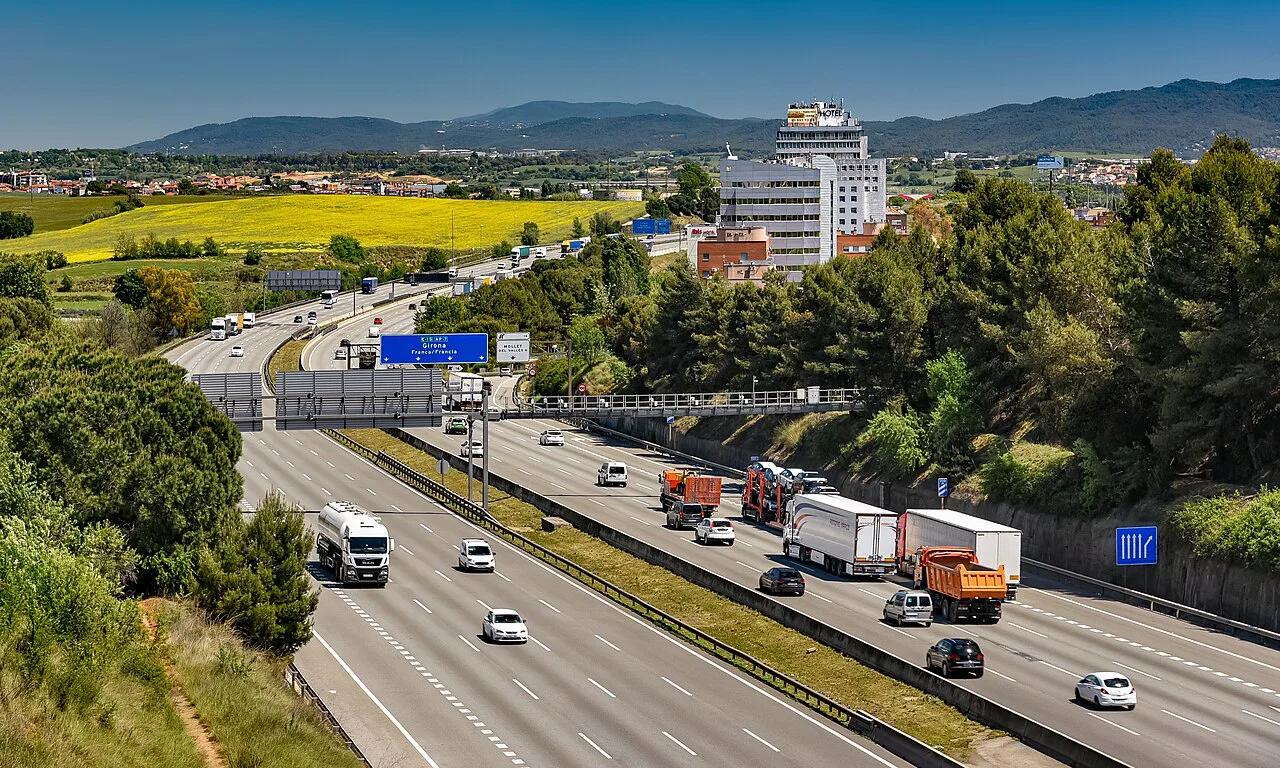
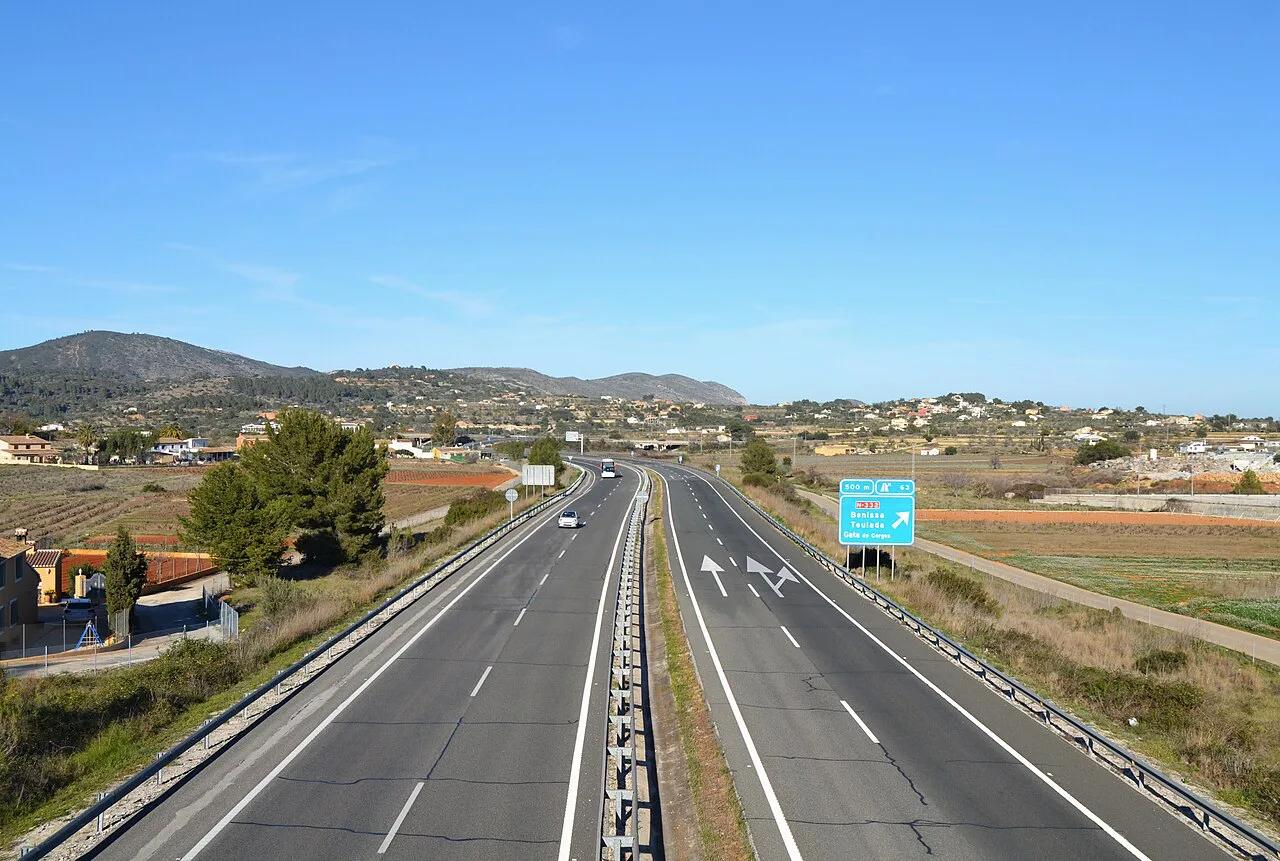
Most of the AP-7 Mediterranean corridor is now free. Tolls ended between Salou and Alicante on 1 January 2020 and between La Jonquera and Salou on 31 August 2021, and the Alicante ring road followed in December 2025, according to Spanish Wikipedia's AP-7 entry. Three AP-7 stretches still charge: Crevillente to Cartagena, Cartagena to Vera, and the Costa del Sol section from Torremolinos to Guadiaro. The AP-9 in Galicia and the AP-6 between Guadarrama and Adanero also charge; the AP-6 concession runs to November 2029. The table compares the main corridors with their free options.
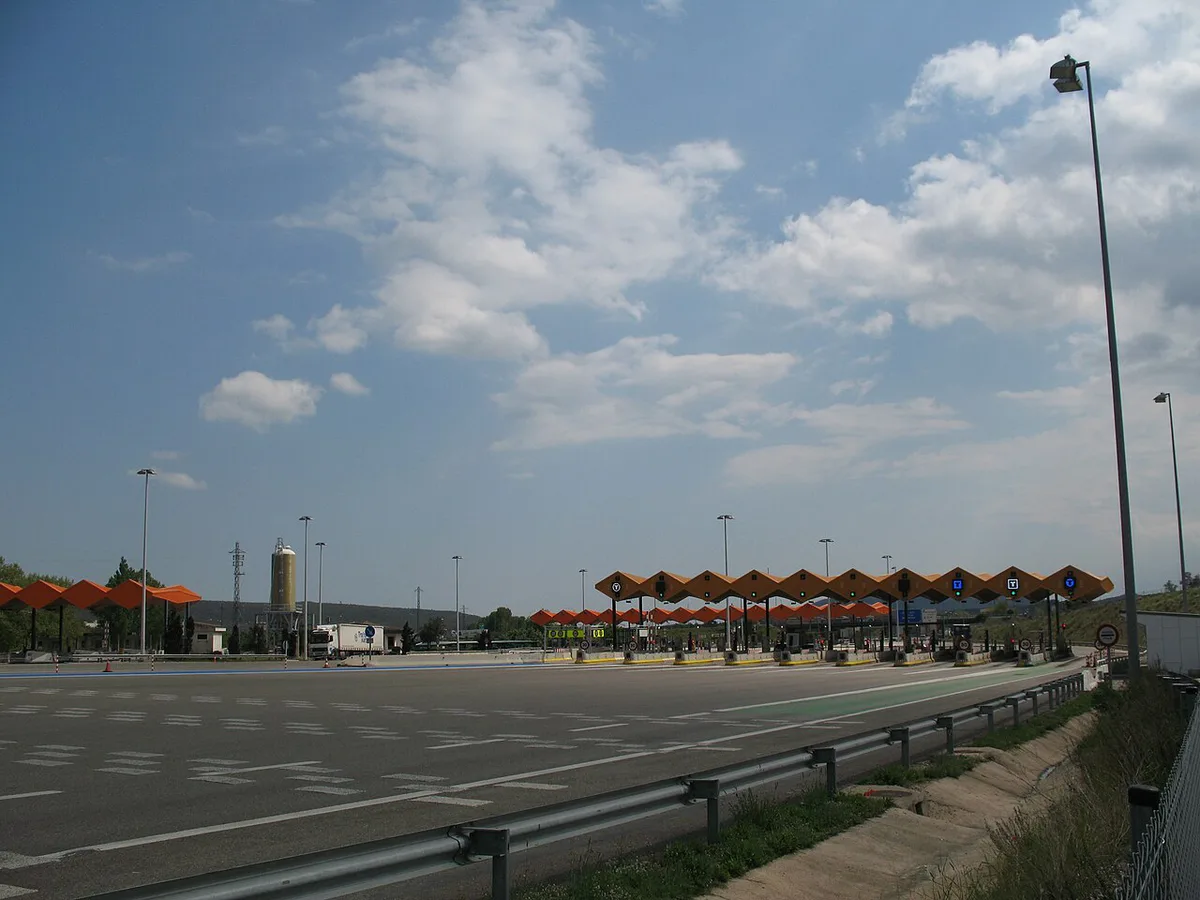
| Corridor | Free alternative | What changes |
|---|---|---|
| AP-7 Costa del Sol (Torremolinos–Guadiaro) | A-7 coast road | Toll bypasses resort traffic; the A-7 runs through the towns |
| AP-7 Crevillente–Cartagena and Cartagena–Vera | Parallel autovías | Toll saves time on long legs; free road adds junction congestion |
| AP-68 Bilbao–Zaragoza | The AP-68 itself, now toll-free outside the Basque Country | Free in Aragón, Navarra and La Rioja since 10 November 2026; Álava and Bizkaia sections still charge |
| AP-6 (Guadarrama–Adanero) and AP-9 | A-6 and parallel Galician autovías | Tolled; the AP-6 concession ends in November 2029 |
| Barcelona-area tunnels | Surface streets | Vallvidrera charges peak and off-peak rates; the free route is slower in traffic |
How to Pay on Spanish Toll Roads
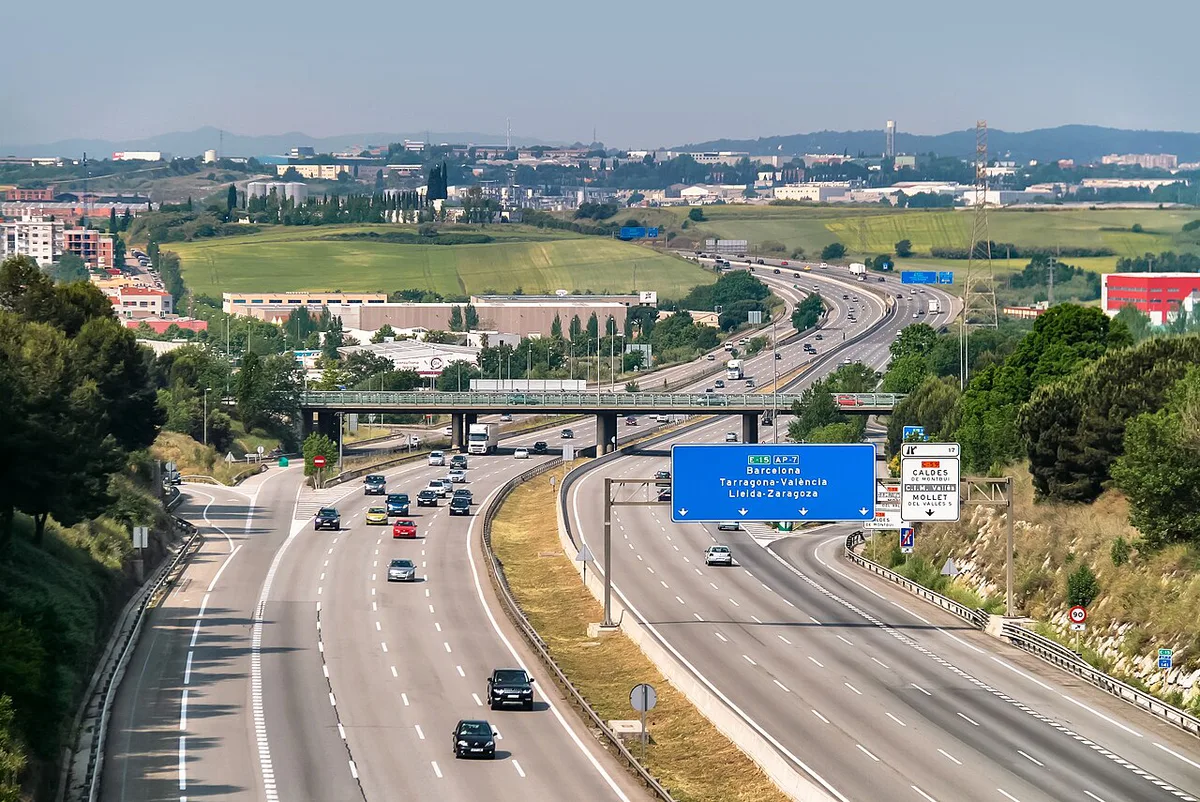
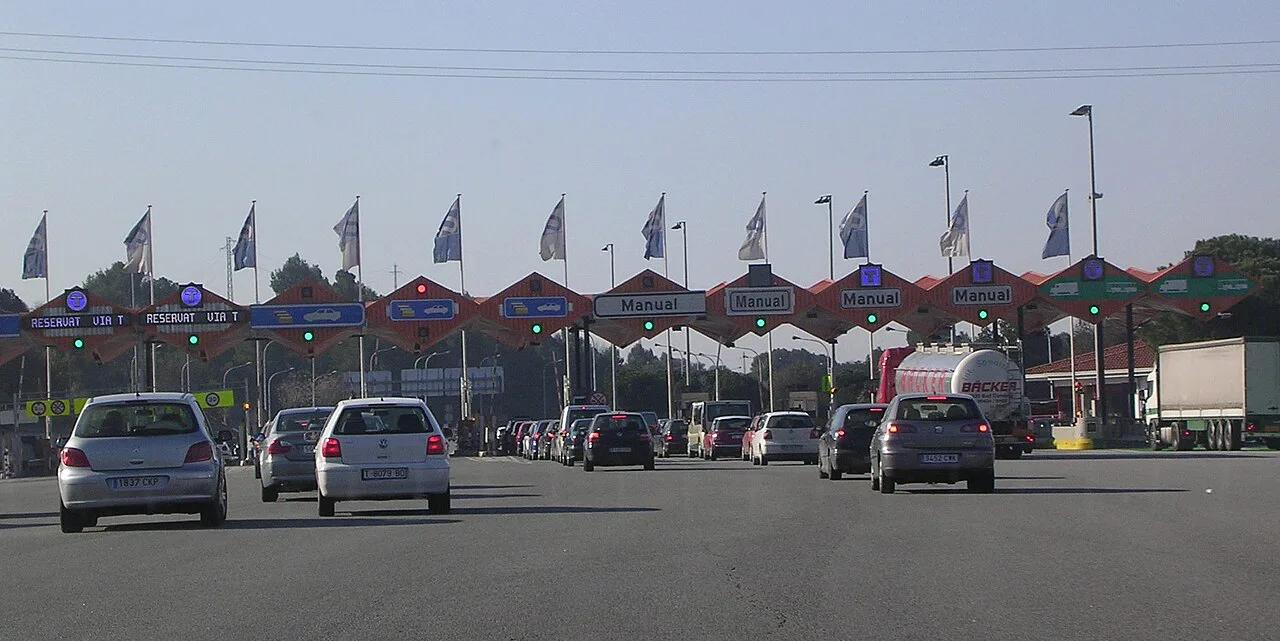
Take a ticket at the entry barrier and keep it safe. Pay when you leave the autopista. Some motorways charge by distance, while others charge a flat fee by vehicle category. A standard rental car falls in the light-vehicle category. Cards and cash both work at manned and automatic lanes. Contactless acceptance varies, so we'd carry some euro notes and coins as a backup. VIA-T lanes are electronic transponder lanes, so skip them unless your car has a device. If you end up in the wrong lane, use the lane's help intercom. For a rental, ask the desk whether the car has a transponder and how any charges reach your card. Our rental car guide for Spain covers pickup questions.
Keep the ticket from the entry barrier, because on distance-based roads it sets the fare you pay at the exit.
- Take the ticket on entry and keep it out of the luggage.
- Choose a lane marked for cards or cash, not VIA-T only.
- Keep a small cash reserve in case a card is declined.
- Pay at the exit booth, then keep the receipt until your card statement clears.
Are Toll Roads in Spain Worth It? How We Decide
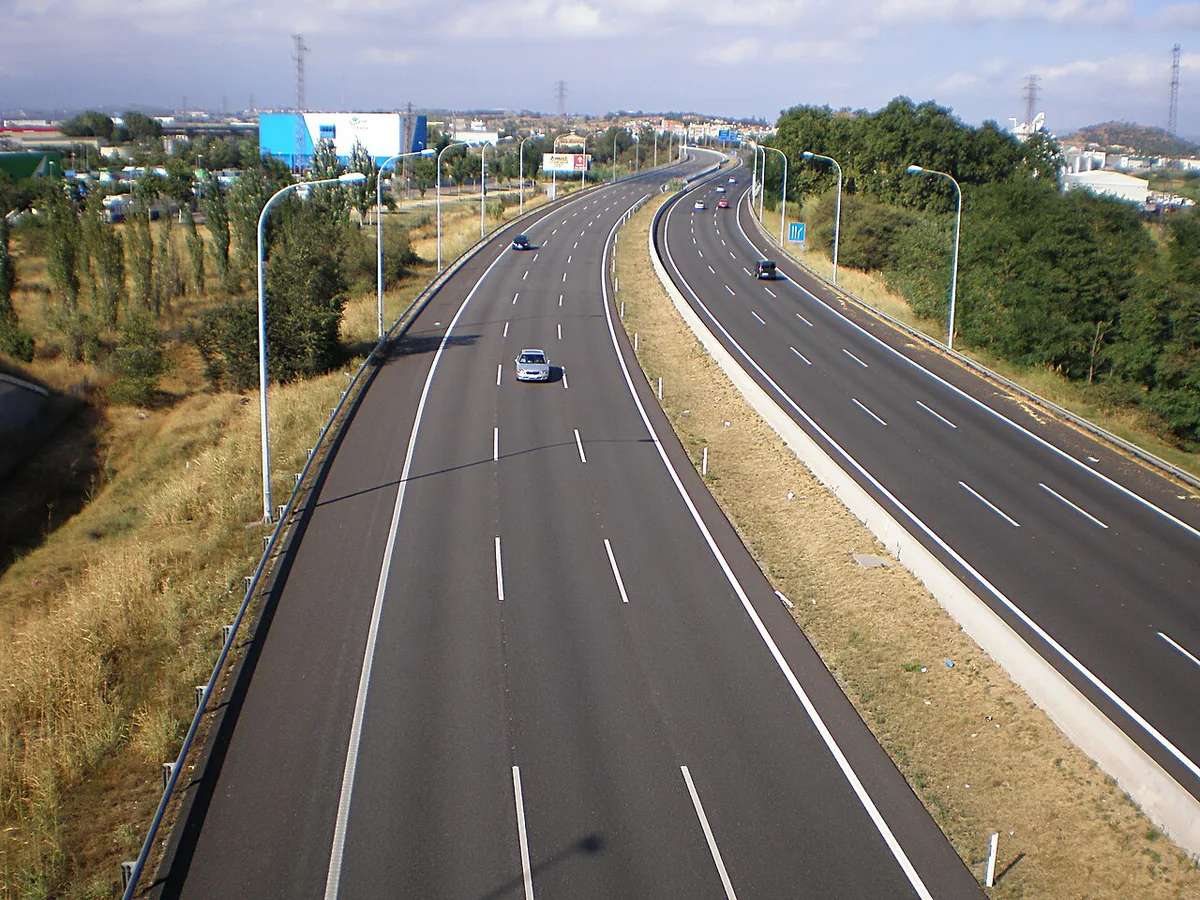
Long intercity legs are where we'd pay, and even then we'd compare the free route first, because Spanish rules require a toll-free alternative for every tolled autopista, though not always a motorway (see Wikipedia's overview of Spanish highways). Short hops, city approaches and scenic drives rarely justify a toll. Pay when you face a tight flight or ferry, heavy luggage, or a tired driver. Skip the toll when the free autovía runs close to the same line. Autovía driving follows the limits in our motorway speed limits guide.
A short hop rarely earns its fare, so keep tolls for long legs with a fixed arrival time.
- Pay: long leg, fixed arrival time, driver fatigue.
- Skip: under an hour of driving, scenic road, or a toll above your budget.
- Compare: run both routes in your navigation app before you set off.
Can You Avoid Tolls or Find Free Sections?
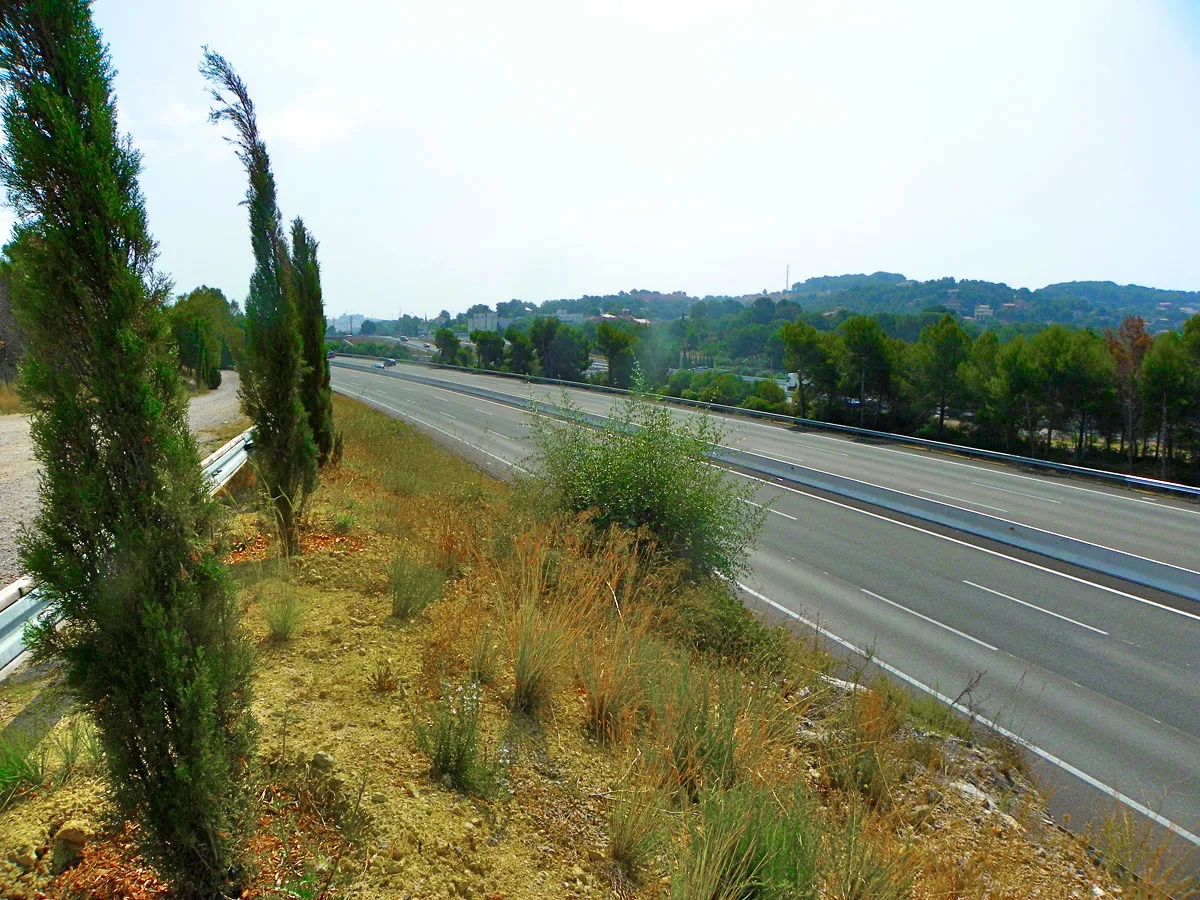
The easiest way to avoid tolls is to know which roads have already been freed. The AP-7 from La Jonquera through Barcelona, Valencia and Alicante, and the AP-68 between Logroño and Zaragoza, now cost nothing. Avoiding the remaining tolls has real costs: a longer drive, more fuel, slower speeds and queues at autovía junctions. In navigation apps, switch on "avoid tolls" or "show toll costs" in the route settings. Toll estimates in those apps can lag behind current tariffs.
Common Mistakes and What Happens If You Can't Pay
Never leave a toll road without paying. If your card is declined or you lose the ticket, press the intercom and explain. Do not reverse or wait in the lane.
- Wrong lane: use the intercom rather than backing up.
- Lost ticket: tell the booth operator at the exit.
- Declined card: offer a second card or cash.
- VIA-T-only lane: avoid it without a transponder.
Tolls Near Cities, Tunnels and Islands
Barcelona's Vallvidrera tunnels charge different peak and off-peak rates, and the Cadí tunnel in the Pyrenees also charges; a Catalan government concession runs both, with Vallvidrera's toll extended to 2037. Our Barcelona ring roads page covers the approaches. Madrid's R-2 to R-5 radials appear in tolled-motorway lists, and our Madrid radial roads page explains the approaches. Tolls and city access rules are separate. Low-emission zones apply whether or not you pay a toll. See city access rules across Spain for the overview, Madrid's central restrictions for the capital, and Barcelona's ZBE rules for Catalonia. The official ZBE Rondes de Barcelona site covers the zone itself. The tolled roads in this guide are all on the mainland. Finish the trip with parking at your destination, and sort out US licence rules before you collect the car.
Frequently Asked Questions
How much do tolls cost in Spain?
Costs vary by road and distance, and fewer roads charge each year. Most of the AP-7 and, since 10 November 2026, the AP-68 outside the Basque Country are free. The remaining tolls are mainly on three AP-7 stretches in the south-east and on the Costa del Sol, the AP-6, the AP-9 and Madrid's R- radials.
What is the easiest way to pay tolls?
Take a ticket on entry and pay by card or cash at the exit booth. Carry some cash, because contactless acceptance varies. VIA-T lanes need a transponder.
How much is the most expensive toll?
No official ranking exists. Fares on distance-based autopistas rise with the length of the trip, so a long run on the AP-9 or a remaining AP-7 stretch costs more than a single tunnel or radial-road toll.
Is the AP-7 in Spain now toll free?
Mostly. Tolls ended between Salou and Alicante on 1 January 2020 and between La Jonquera and Salou on 31 August 2021. Crevillente to Cartagena, Cartagena to Vera and Torremolinos to Guadiaro still charge.
Road-rule changes worth knowing
Optional updates to our guides.
You might also like
Continue reading
More guides you'll find useful