Driving Rules in Iceland: What Visitors Must Know
Drive on the right, headlights always on, 90 km/h max on paved rural roads. Iceland's key driving rules, one-lane bridges, F-roads and fines explained.
On this page
Last updated November 2026. The core driving rules in Iceland are simple: drive on the right, keep headlights on at all times, and belt every passenger. Off-road driving is illegal, and limits are 50 km/h (31 mph) in towns, 80 km/h (50 mph) on gravel and 90 km/h (56 mph) on paved rural roads. Visitors most often slip on one-lane bridge priority and on the difference between F-roads and off-road tracks, and both get a section below. For the wider trip picture, start with our guide to 7 Things to Know About Driving in Iceland (2026).
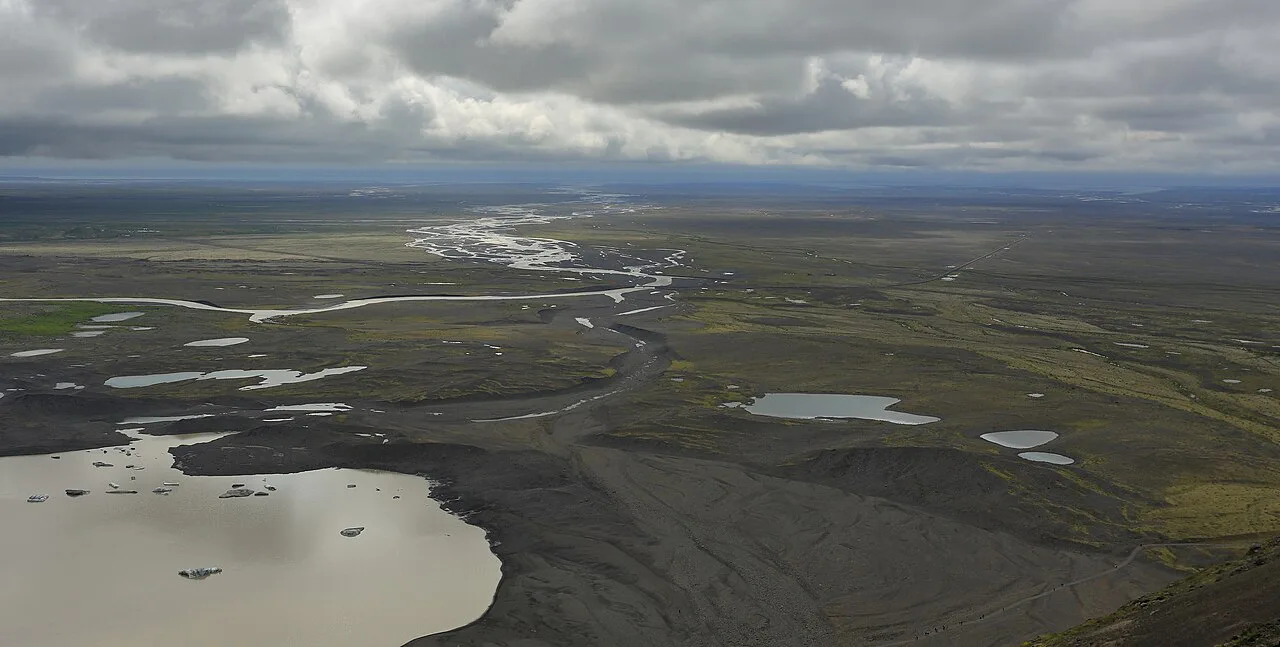
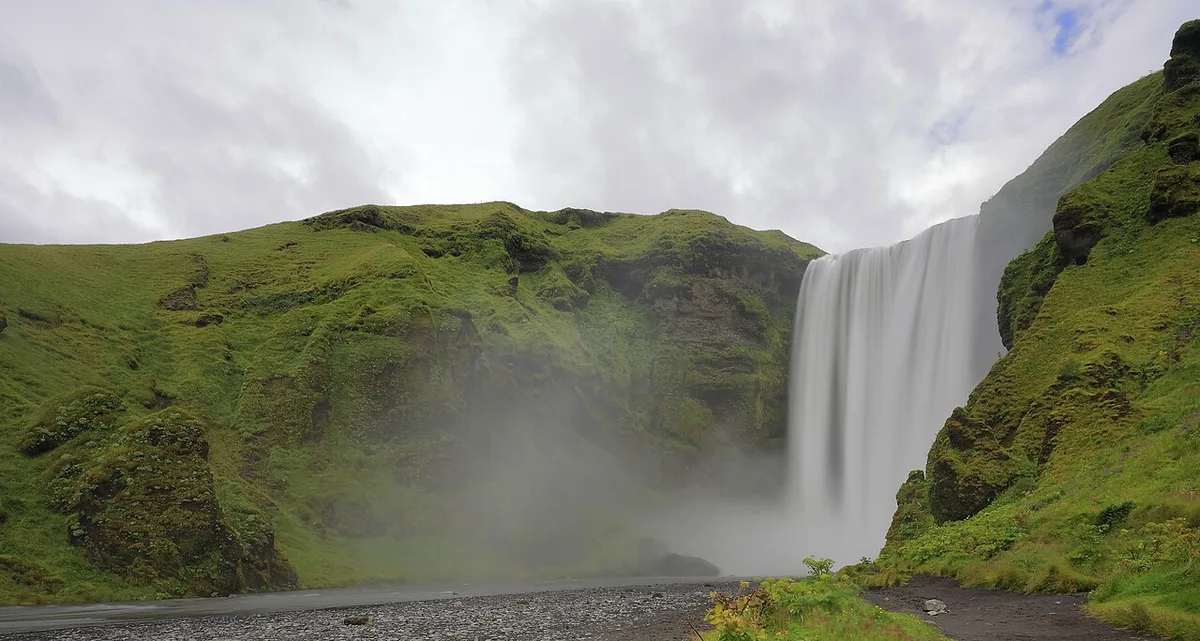
Featured image: Jakub Hałun, CC BY 4.0, via Wikimedia Commons.
Driving rules in Iceland at a glance
Use this table as a quick check before you leave the rental lot. Each row is expanded in a section below. Emergency services answer on 112, free from any phone.
| Rule | What to do | Common visitor mistake |
|---|---|---|
| Side of road | Drive on the right and overtake on the left | Drifting left on empty rural roads |
| Headlights | Keep dipped lights on day and night | Assuming daylight in summer means lights can be off |
| Seatbelts | Everyone in the car wears one | Back-seat passengers skipping the belt |
| Speed limits | 50 km/h in towns, 80 km/h gravel, 90 km/h paved rural | Holding 90 km/h on gravel |
| Off-road driving | Stay on marked roads and tracks | Following a wheel track onto moss or lava |
| One-lane bridges | Slow down and yield if the other car is closer | Speeding up to beat oncoming traffic |
| Drink driving | Limit is 0.2‰, so do not drive after any drink | Treating one drink as safe |
| Emergencies | Call 112 | Calling only the rental company after a crash with injuries |
Licence and who can drive
You need a valid driving licence from your home country. According to the Icelandic Transport Authority, EEA licences are valid in Iceland, and licences from outside the EEA, including US and UK cards, are valid for six months. An International Driving Permit is not mandatory, but it helps if your licence is not in English or does not use Latin script. Rental companies set their own minimum ages and licence-holding periods, so read your contract before you book. American drivers can find specifics in our guide to driving with a US licence. Insurance and contract terms are covered in our page on Renting a Car in Iceland: Requirements, Insurance & 4x4.
Speed limits and enforcement
Limits depend on road type, not on how empty the road looks. Towns are usually 50 km/h, gravel roads 80 km/h and paved rural roads 90 km/h. Some stretches post lower limits, so signs always override these defaults. Speed cameras operate across the country, including on remote stretches. A fine on a rental car is normally passed on to the renter, often with an admin charge. Current amounts sit in the Icelandic Police traffic fine calculator, and paying within 30 days cuts the fine by 25%. More detail sits in our page on Speed Limits in Iceland: Roads, Fines & Cameras.
Speed cameras cover remote stretches, and on gravel 80 km/h is a ceiling, not a target.
Headlights, seatbelts and everyday rules
Dipped headlights stay on at all times, even in bright summer light. Most modern rental cars switch them on automatically, but check the setting on day one. Seatbelts are compulsory for every occupant, in every seat, and children under 135 cm need a car seat that fits them. The blood alcohol limit is 0.2‰, which Safetravel says rules out driving even after one drink, so plan a taxi or a designated driver. A hand-held phone at the wheel costs ISK 40,000 in the police fine schedule, so use a hands-free mount for navigation.
One-lane bridges and tunnels
Iceland has many one-lane bridges and a few one-lane tunnels, and you will meet several on the Ring Road. A triangular sign with a bridge narrowing to one lane warns you ahead. The car closest to the bridge or tunnel goes first, and the limit across a single-lane bridge is 50 km/h. If you cannot tell who arrived first, slow down and yield rather than gamble. Visibility is often poor on approaches, so reduce speed early. Two road sections charge a toll: the Vaðlaheiðargöng tunnel near Akureyri (ISK 2,216 for a car) and, since 1 September 2026, the new Ring Road section at Hornafjörður (ISK 1,500). Read our page on Toll Roads in Iceland: Do You Pay, Where, and How for how to pay.
Gravel, F-roads and the off-road ban
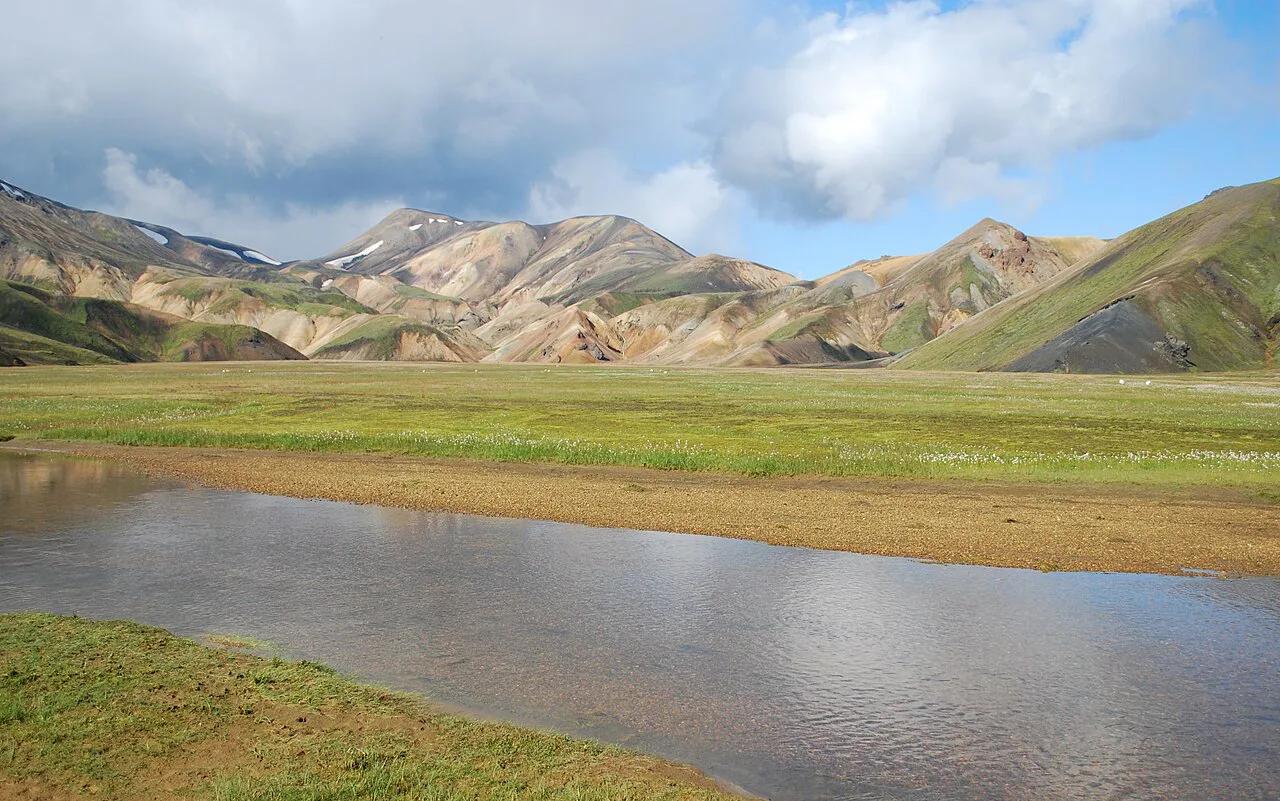
Gravel roads are legal on any rental car, but they demand a lower speed, and 80 km/h is a ceiling rather than a target. Loose stones throw chips at oncoming cars, so ease off as you pass. F-roads are different from off-road driving. They are marked mountain roads with an F before the number, such as F208 or F26. They lead to places like Landmannalaugar and Askja and usually include unbridged river crossings. A 4x4 is required, and most do not open until late June or early July. Driving anywhere else off marked roads is illegal and can bring heavy fines and lasting damage to fragile moss and soil. Check whether your insurance covers river crossings before you try one. Our F-roads guide covers routes and opening dates.
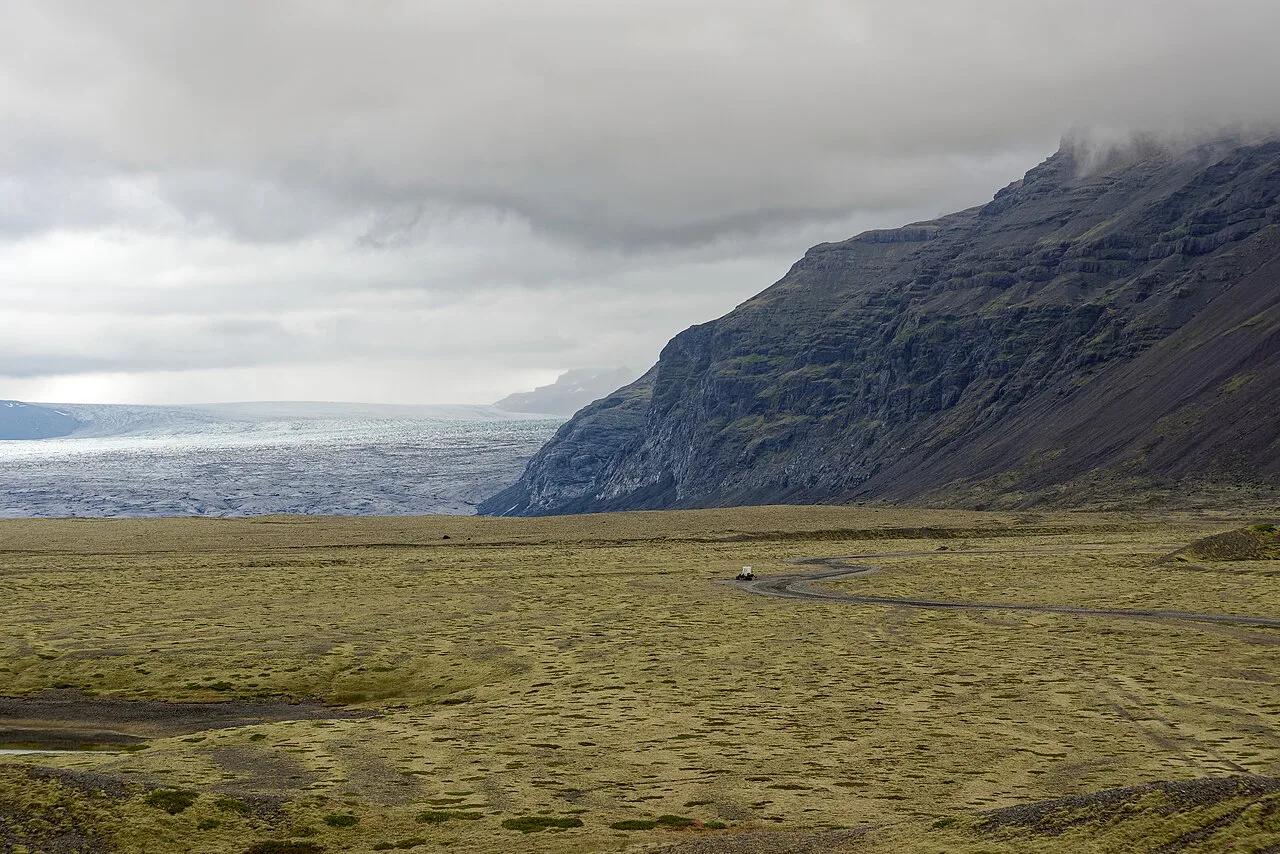
F208 or F26 are examples: an F before the number marks a legal mountain road. A wheel track beside one is off-road, which is illegal.
- Ring Road in summer: a standard 2WD car is enough.
- Gravel side roads: 2WD with extra caution and a lower speed.
- F-roads: 4x4 only, and only in the summer opening period.
- October to April: a winter-equipped car, since Safetravel notes winter conditions can also hit in spring and autumn.
Road signs worth knowing
Icelandic signs follow European conventions, but a few matter more for visitors. Learn these before you reach the first sheep.
| Sign | Meaning | What to do |
|---|---|---|
| Triangle with narrowing bridge | Single-lane bridge ahead | Slow down and yield if the other car is closer |
| Yellow diamond with gravel symbol | Paved surface turns to gravel | Reduce speed and increase following distance |
| Triangle with sheep | Animals may cross | Slow down and be ready to stop |
| Red and white closed-road sign | Road is closed | Turn back and find another route |
| Round sign with red border and number | Maximum speed in km/h | Stay at or below the number |
Winter and weather rules
Weather can close roads within hours, and ignoring a closure can bring fines and void insurance cover. Rental cars in winter are normally fitted with winter tyres, so ask at pickup whether yours are studded. Follow a fixed sequence each morning. First check closures and surface conditions on road.is. Then read the wind and storm forecast at the Icelandic Met Office. Only then decide the day's route. Our page on Iceland Road Conditions: How to Check Them and When Not to Drive explains how to read the maps. Log your trip plan at Safetravel Iceland if you head into remote areas.
Parking, fuel and charging rules
Never stop on the Ring Road for photos. Use a marked pull-off or parking area instead. Reykjavík has four paid parking zones, from ISK 660 an hour in central P1 to ISK 240 an hour in P2 to P4, and the city's parking rules page lists hours and payment apps. Our parking guide covers national options. Most fuel stations are self-service and accept cards with a PIN, so bring a chip-and-PIN card. Stations thin out in rural areas, so top up when you can. See our list of gas stations in Iceland for planning.
Mistakes that cost visitors the most
Most expensive errors are rule breaches and damage outside basic insurance. Avoid these first.
- Speeding past a camera, then receiving the fine weeks later through the rental company.
- Following a track off the road to reach a viewpoint.
- Entering a river on an F-road without a 4x4 or river-crossing cover.
- Gravel or wind damage that falls outside basic insurance.
- Pulling over in the road, or passing on a blind hill.
- Trusting GPS onto a closed F-road.
If something goes wrong
Call 112 for injuries, fire or danger. After a crash, a sheep collision or a breakdown, call your rental company next. Photograph the scene, the plates and any damage. If you hit a sheep, report it to 112 and slow down in the area, since others are likely close. Insurance often excludes gravel, sand, ash, water and undercarriage damage, so check your contract. On your first day, review those exclusions, learn the headlight and gearshift setup, and check road.is before leaving. Picking up near the airport? See car hire at Keflavík Airport. For city pickups, read about car hire in Reykjavík.
Road-rule changes worth knowing
Optional updates to our guides.
You might also like
Continue reading
More guides you'll find useful