Speed Limits in Ireland: km/h Guide for Drivers (2026)
Ireland's speed limits by road type in km/h and mph, what the signs mean, recent changes, and how speeding fines reach visitors in rental cars.
On this page
Last updated November 2026: speed limits in Ireland are posted in km/h, with default limits of 50 on built-up roads, 60 on rural local roads, 80 on regional roads, 100 on national roads and 120 on motorways. Those figures are roughly 31, 37, 50, 62 and 75 mph. Local-road and town-centre limits have been changing under the Road Traffic Act 2024, so follow the posted sign over any default, and read our general Irish rules of the road for everything beyond speed.
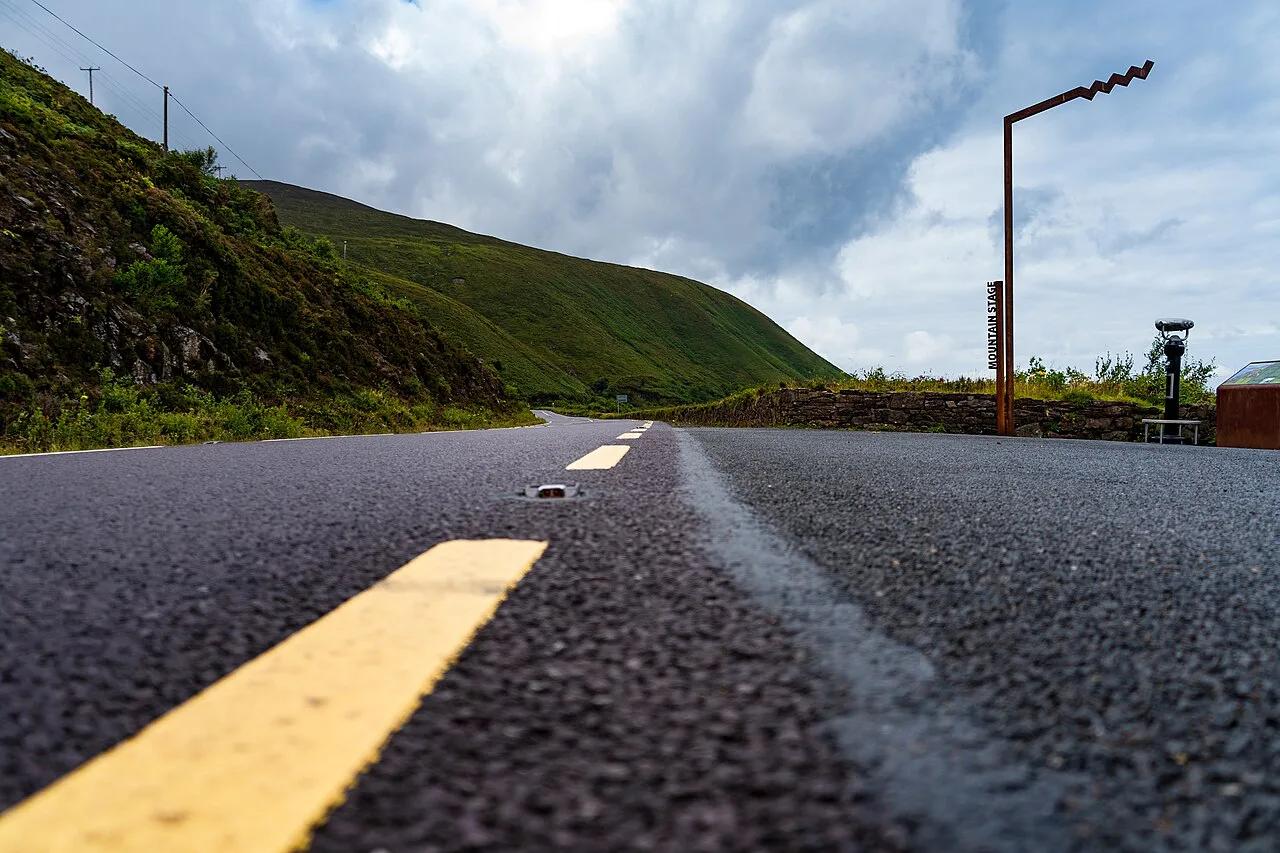
Featured image: Tibs foxxo, CC BY-SA 4.0, via Wikimedia Commons.
Speed limits in Ireland at a glance
Irish speed signs show kilometres per hour, and a limit of 100 is about 62 mph. The defaults below follow Citizens Information's speed limits page. Use the table as a starting point, then let the sign on the roadside overrule it.
Rural local roads dropped from 80 to 60 km/h on 7 February 2025, so reading the sign matters most there.
| Road type | Default km/h | Approx. mph | Note |
|---|---|---|---|
| Built-up areas (towns, lit roads) | 50 | 31 | Often lower near schools and in housing estates |
| Regional roads (R-roads) | 80 | 50 | Common roads between towns; often narrow and winding |
| National roads (N-roads) | 100 | 62 | A cut to 80 km/h on national secondary roads is planned but not yet in force |
| Motorways (M-roads) | 120 | 75 | Includes the M50 around Dublin |
| Rural local roads (L-roads) | 60 | 37 | Cut from 80 km/h on 7 February 2025 |
Recent changes: local roads and town centres
The Road Traffic Act 2024 sets out three changes. First, the default limit on rural local roads fell from 80 to 60 km/h on 7 February 2025. Those roads are marked with a white circle crossed by five black diagonal lines and a "Go Mall / Slow" plate, which now means 60 km/h. Second, local councils began reviewing built-up areas, housing estates and town centres in late 2025, with the aim of cutting many 50 km/h roads to 30 km/h by 31 March 2027 after public consultation. Arterial roads into towns may keep 50. Third, the default on national secondary roads (green-signed N-roads) is due to fall from 100 to 80 km/h, but that change had not been introduced when Citizens Information last updated its page in December 2025. Posted signs always win over any default you remember.
How to read Irish speed signs
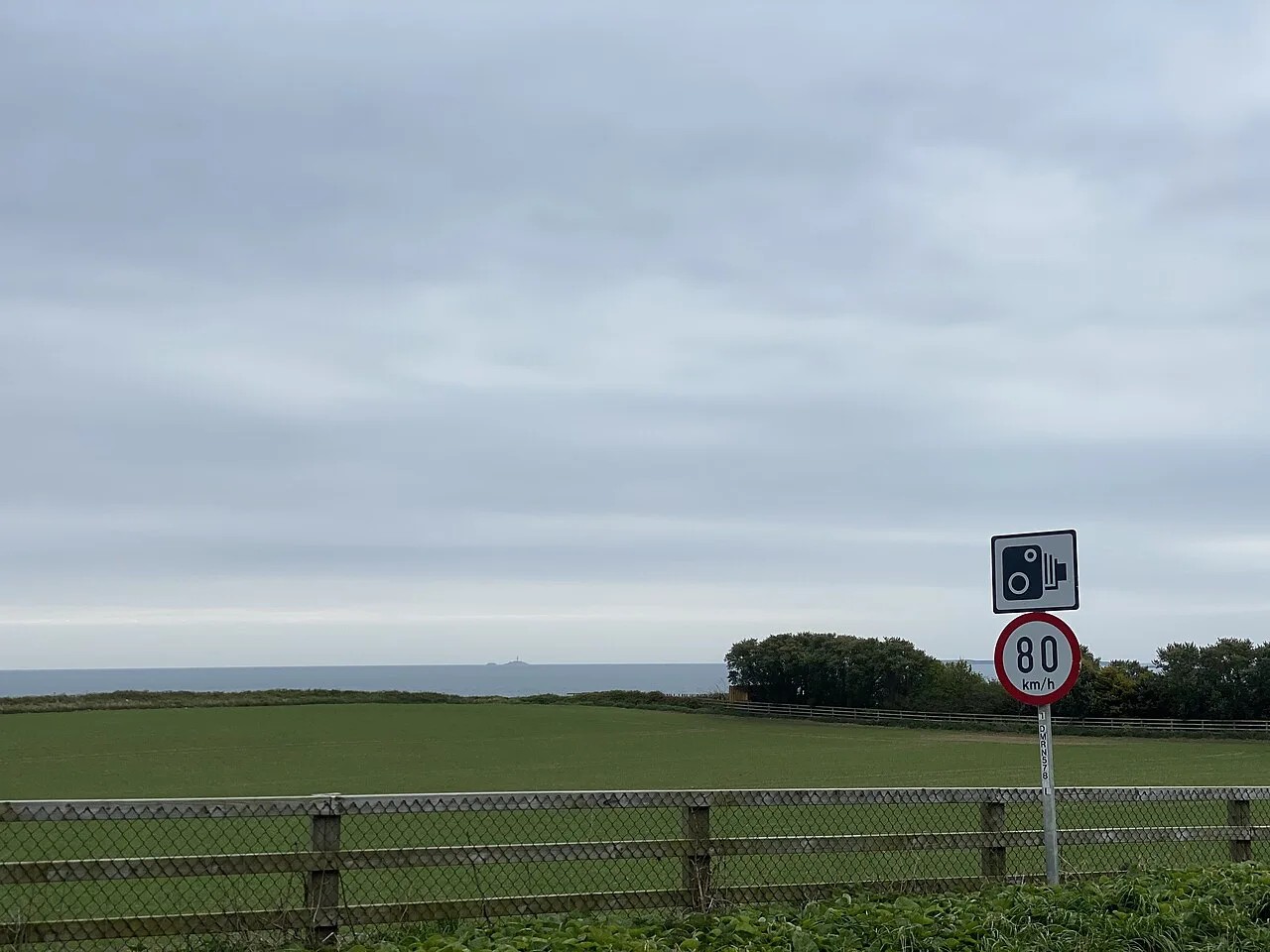
Irish limit signs are red-ringed circles with a number and no unit. A circle reading 80 means 80 km/h, which is about 50 mph. Visitors from the US often read it as a crawl, then find the road is narrow and walled. Your rental's speedometer usually shows both scales. The km/h figures are normally the larger or outer numbers, so find them before leaving the car park. Limits tend to drop at a town boundary with little warning, often from 80 or 100 down to 50. Start lifting off the accelerator when you see the first houses or a lit road ahead. Distance signs on newer roads are in km, and some older signs still show miles, so do not assume one unit for both speed and distance.
Why the posted limit isn't your real speed
Many Irish drivers cannot use the legal limit on rural roads. Single-track L-roads have passing places, and you pull in when the other car is closer to one. Tour buses use scenic routes such as the Conor Pass and the Gap of Dunloe, and the advice is to stop at the nearest wide spot and let them through. Tractors and sheep add more delays.
- Illustrative arithmetic only: 80 km at 80 km/h is 60 minutes with no stops.
- Illustrative arithmetic only: 80 km at an average of 60 km/h is 80 minutes.
- Add extra time for every town, roundabout and tour-bus pinch point on the route.
Cameras, fines and penalty points
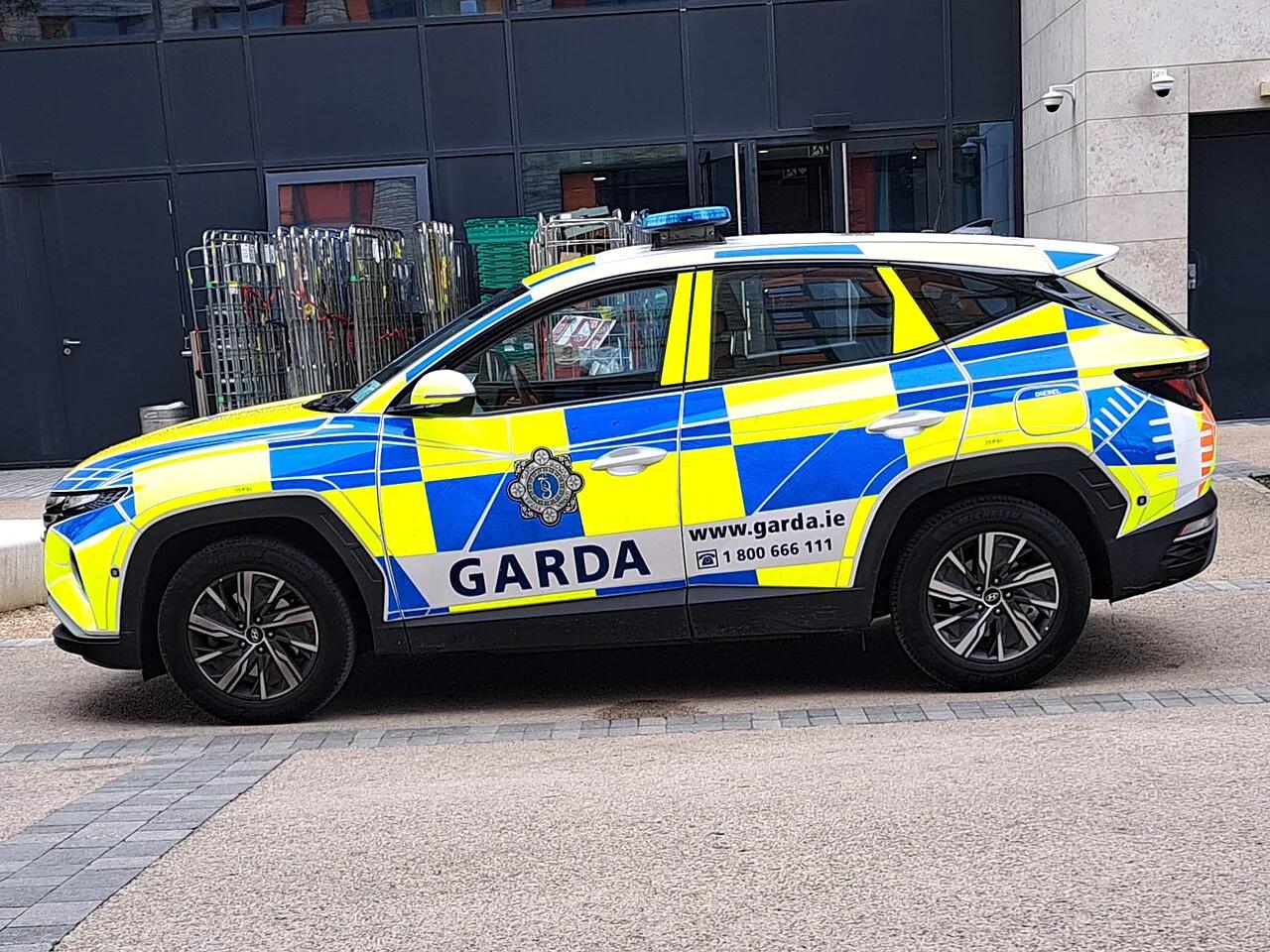
An Garda Síochána enforces limits with roadside checks, GoSafe camera vans run on its behalf, and average-speed cameras on the M7, the Dublin Port Tunnel, the N3 in Cavan, the N5 in Mayo and the N2 in Meath. A speeding fixed charge is €160 and 3 penalty points. It rises to €240 if paid after 28 days, and an unpaid notice goes to court, where a conviction can bring a fine of up to €1,000 and 5 penalty points. Speed detectors are illegal in Ireland, so leave one at home. If you speed in a rental, the company usually processes the notice and passes the fine to you, often with an admin fee. Read the rental terms for that fee before you sign. Our guide to Renting a Car in Ireland: Insurance, Costs & Tips covers the paperwork. If you collect at the airport, see car hire at Dublin Airport. Tolls interact with speed on the M50, where eFlow handles M50 tolls. Our toll roads guide explains payment, and Driving in Dublin: Do You Need a Car? Rules and Tolls covers the city. Parking fines are separate, covered in Parking in Ireland: Lines, Discs, Payment and Fines. Drink-driving rules are a different topic, handled in the Irish drink-driving limit.
Driving across the border into Northern Ireland
Northern Ireland posts limits in miles per hour, so the unit changes at the border. A sign reading 60 there means 60 mph, which is 97 km/h. There is often no border sign to remind you. Ask your rental company in writing whether cross-border travel is allowed and covered before you go. Switch your mental scale and your speedometer reading as soon as you cross.
Northern Ireland signs use mph, so a 60 sign there means 60 mph, which is 97 km/h, not the 60 km/h rural local-road default south of the border.
Speed limits for first-time and US drivers
Match your habits to your trip type. A licence holder from the US should read our US licence driving guide before booking. A nervous first-timer should choose an automatic. The first 45 minutes are often cited as the hardest while you adapt to the left side, so start on quieter roads. A rural-itinerary driver should plan around the slow roads rather than the posted maximum, particularly on N-roads managed by Transport Infrastructure Ireland. For a wider overview, our driving in Ireland hub collects the rest.
- Mistake: reading 80 as mph. It means 80 km/h, about 50 mph.
- Mistake: slowing too late at a town sign. Lift off early when houses appear.
- Mistake: assuming the Northern Ireland border keeps km/h. It switches to mph.
- Mistake: trusting sat-nav limit data over the roadside sign.
Frequently Asked Questions
What is the maximum speed limit in a town?
The default in built-up areas is 50 km/h, about 31 mph. Some town centres and housing estates are lower, so follow the sign.
Can you go above 70 mph on a motorway?
Irish motorways have a limit of 120 km/h, which is about 75 mph. That is above 70 mph, but only on motorways. Northern Ireland motorways use mph signs.
How strict is Ireland on speeding?
GoSafe camera vans, average-speed cameras and Garda checks enforce limits, and a speeding fixed charge is €160 plus 3 penalty points. Rental companies pass fines on to you, sometimes with an admin fee.
How do I find the speed limit on a road in Ireland?
Look for the red-ringed circular sign, which shows km/h without a unit. If you see none, the default for that road type applies. Do not rely only on sat-nav data.
Road-rule changes worth knowing
Optional updates to our guides.
You might also like
Continue reading
More guides you'll find useful