
One Way Car Rental in Europe: Fees, Rules & Routes
How one-way car rental in Europe works: drop-off fees, cross-border rules, return-branch tips and when a loop trip is cheaper.
On this page
Last updated November 2026: one way car rental europe is widely offered between cities and countries, but three things set the final price. Those are the drop-off charge, the cross-border rules and the return branch you pick. New to renting abroad? Start with our Europe car rental guide, then use the decision points below.
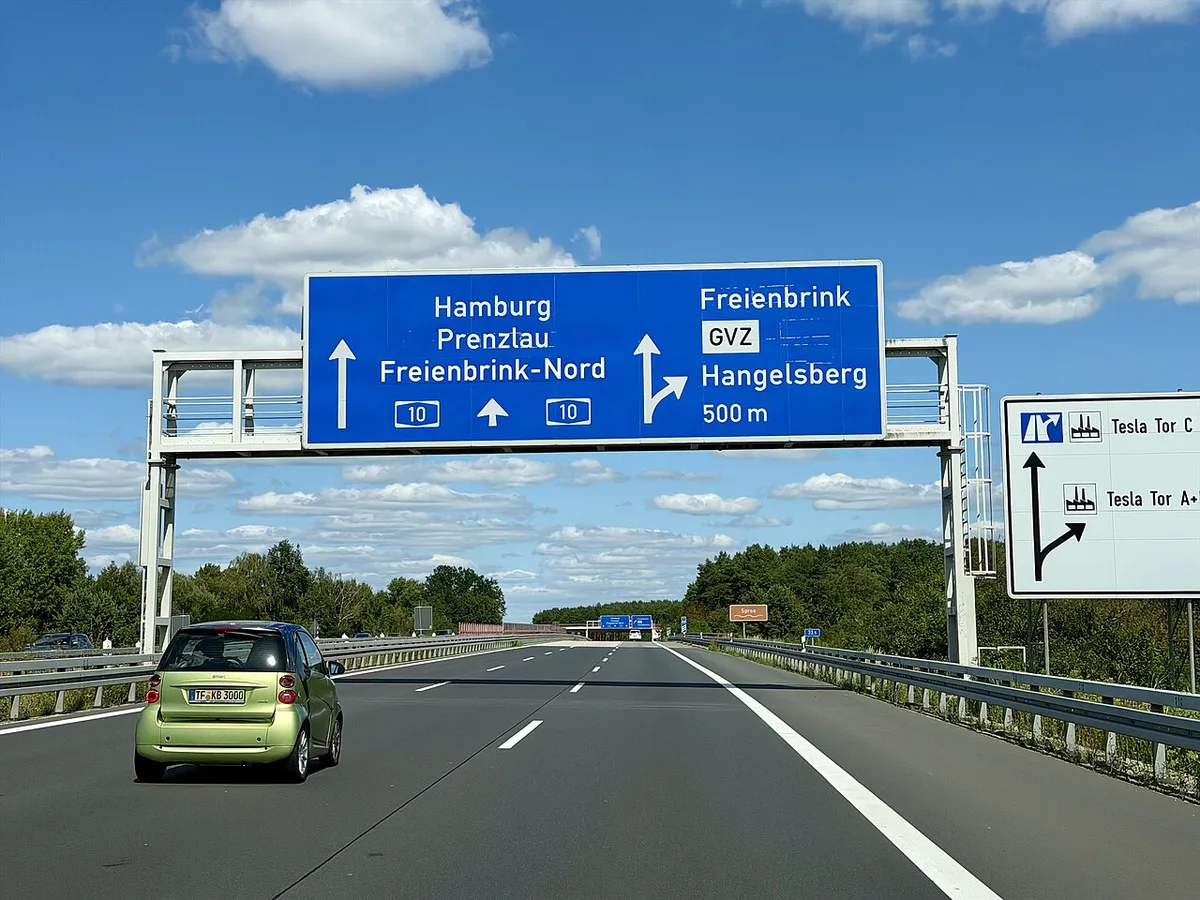
Featured image: Sönke Kraft aka Arnulf zu Linden, CC BY-SA 3.0, via Wikimedia Commons.
Can You Do a One Way Car Rental in Europe?
Yes, in most cases. You collect a car in one place and return it somewhere else, and the rental company decides whether that route is allowed and what it costs. Two types exist, and they behave differently. A domestic one-way keeps the car inside one country, such as a capital-to-coast drive. A cross-border one-way ends in another country, such as a capital-to-capital hop. Cross-border returns carry more restrictions, so treat them as a separate decision. Quotes show the answer quickly: if a drop-off city is unavailable, the booking engine will simply refuse it or add a surcharge.
How One-Way Fees Work
A one-way fee, also called a drop-off fee, pays for moving the car back to where the company needs it. Rental firms do not need a car sitting in the wrong city. The charge therefore depends on the route, the season and how badly each end needs vehicles. Some companies fold the fee into the quoted total. Others add it at checkout, so a low daily rate can mislead you. Compare the all-in total, never the daily figure. Brokers and company sites also present the fee differently, so line up two or three quotes for the same dates before you choose.
- Is the one-way fee inside the quoted total or added at checkout?
- Does the fee change if you move the drop-off to another branch in the same city?
- Does a longer rental dilute the fee? A 2-3 day hop often does not.
- Are taxes, airport surcharges and out-of-hours fees listed separately?
Domestic vs Cross-Border One-Way Rentals
Domestic one-ways usually involve a single fee and a single set of local rules. Cross-border drop-offs add layers. Some companies charge extra for returning in another country. Some restrict certain countries or vehicle classes. Others forbid the route entirely. Permission also matters during the trip: if you drive across a border, the company may need to know in advance. Our guide to cross-border car rental in Europe covers the permission step in detail. Non-EU stretches, such as the UK, Switzerland and parts of the Balkans, can bring extra insurance paperwork. Rules vary by company, so read that company's own terms and treat them as company policy, not law.
Choosing Pickup and Drop-Off Points
Branch type changes the deal as much as the route does. Airport, city and rail-station branches differ in opening hours, vehicle stock and out-of-hours key-drop rules. Airports tend to hold more cars, including automatics. City and station branches may close earlier and stock fewer vehicles. An evening arrival at a branch with no key-drop can leave you with a late-return fee or a missed train. Pick the return branch by its published hours first, then by price. If you want a quick drop at a rail station, read that branch's own listing before you book.
- Airport: longest hours, widest stock, often a surcharge.
- City centre: handy for hotels, but limited hours and parking.
- Rail station: good for onward train travel, smaller fleets.
- Out-of-hours drop: allowed only where the branch says so.
Costs Beyond the One-Way Fee
Fuel, tolls, parking and insurance all grow on a linear route. Motorway tolls apply in several countries, France and Italy among them. Others, such as Switzerland and Austria, sell a vignette, a sticker or digital permit, for motorway use instead. Ask the branch whether the car already carries one. Insurance deserves its own check: our Europe rental insurance guide explains the cover options. If your route leaves the EU, GOV.UK driving abroad lists the documents that UK drivers may need. Prices and terms were checked in November 2026, but fees change by company and season, so request a written total before paying.
One-Way vs Loop Trip vs Train Plus Local Rental
A one-way rental is not always the best answer. A loop trip returns the car to the pickup city and avoids the drop-off fee but costs you time. Train plus a local rental suits trips where the car is only needed for part of the route. Use the table to compare the three on cost, time and flexibility.
On a 2-3 day hop the drop-off fee often stays put, so price the train against the car before you book.
| Option | Main cost driver | Time | Flexibility | Best for |
|---|---|---|---|---|
| One-way rental | Drop-off fee plus cross-border charges | Shortest door to door | High, once the route is approved | Long point-to-point trips |
| Loop trip | Extra driving days, fuel and tolls | Longest, with backtracking | High, but fixed to one base | Short trips around one region |
| Train plus local rental | Train fare plus a shorter rental | Depends on timetables | Medium, set by rail links | City breaks with good rail links |
Vehicle Choices on One-Way Routes
Stock is tighter for special vehicles. Automatics, electric cars and campervans may be available on fewer one-way routes than standard manual cars. Charging also shapes an electric route, because you arrive at the return branch with a set battery level. Read our electric car rental guide before booking one. Campervans bring their own drop-off rules and cross-border limits, covered in the campervan rental guide. The European Alternative Fuels Observatory publishes data on charging infrastructure across the continent. Book special vehicle classes early, since fewer of them circulate between branches.
Booking Checklist and Mistakes to Avoid
Run through this list before you pay. Your rights as a renter are summarized on the Your Europe car hire page, which helps if a dispute arises. Most problems come from skipped terms rather than bad luck.
- Compare the all-in total, not the daily rate.
- Get written permission for every country on your route.
- Read the return branch's hours and key-drop rules.
- Check fuel, toll and vignette arrangements.
- Photograph the car at pickup and at drop-off.
- Mistake to avoid: crossing a border without telling the company.
- Mistake to avoid: choosing a rail-station return that closes before your train arrives.
- Mistake to avoid: booking a 2-3 day hop without pricing the train.
Your rights when you book a one-way rental
The EU has no rules written specifically for car hire, but general consumer law still applies when you rent in an EU country. The European Commission's Your Europe car hire page, last checked in May 2026, sets out what that means for a one-way booking.
- No cooling-off period: car hire is not covered by the EU's 14-day right to cancel, so a booking made online or by phone is refundable only if the company's own terms allow it.
- No nationality pricing: companies set their own prices by country, but EU rules ban charging you more because of your nationality or where you live.
- Third-party liability: every rental car must carry it, valid in all EU countries, and it should be included in the price.
- Border plans: if you will drive in several countries, tell the company when you book, so it can supply the right documents, insurance and breakdown cover.
- Switzerland: EU residents who rent there and drive into the EU must tell the company in advance, and most Swiss branches supply EU-plated cars for that reason.
- Brokers: an intermediary books the car in your name, but the rental company is normally responsible for the contract itself.
Disputes with a company based in another EU country can go to the European Consumer Centre in your country of residence.
Frequently Asked Questions
Can I rent a car in Europe as an American?
Yes. Bring your US license and, where the country requires one, an International Driving Permit: Austria, Spain and Poland do, for example, while Germany accepts a US license alone for the first 6 months. Age limits and permit demands sit in each company's terms, so read them before booking a cross-border route.
What is the cheapest car rental in Europe?
No single company wins every route. Compare the all-in total for your exact dates and drop-off city. A low daily rate can hide a one-way fee.
Can I drop a rental car in another country?
Usually, if the company allows that route. Cross-border one-way drop-offs often cost more than domestic ones, and some routes or car classes are barred. Tell the company at booking which countries you will drive through, as Your Europe advises, and get the drop-off approved in writing.
Road-rule changes worth knowing
Optional updates to our guides.
You might also like

Continue reading
More guides you'll find useful