Campervan Rental Europe: Costs, Rules & How to Choose
Planning campervan rental in Europe? Compare what hire really costs, who can rent, how early to book, and the cross-border rules to check first.
On this page
Last updated November 2026. Campervan rental Europe style means choosing a vehicle, a pickup point and a contract, and the real cost sits in the terms rather than the nightly rate. Fees, age rules and border permissions differ by operator, season and country. This guide shows how to decide, what to ask before you pay, and who should skip a motorhome altogether.
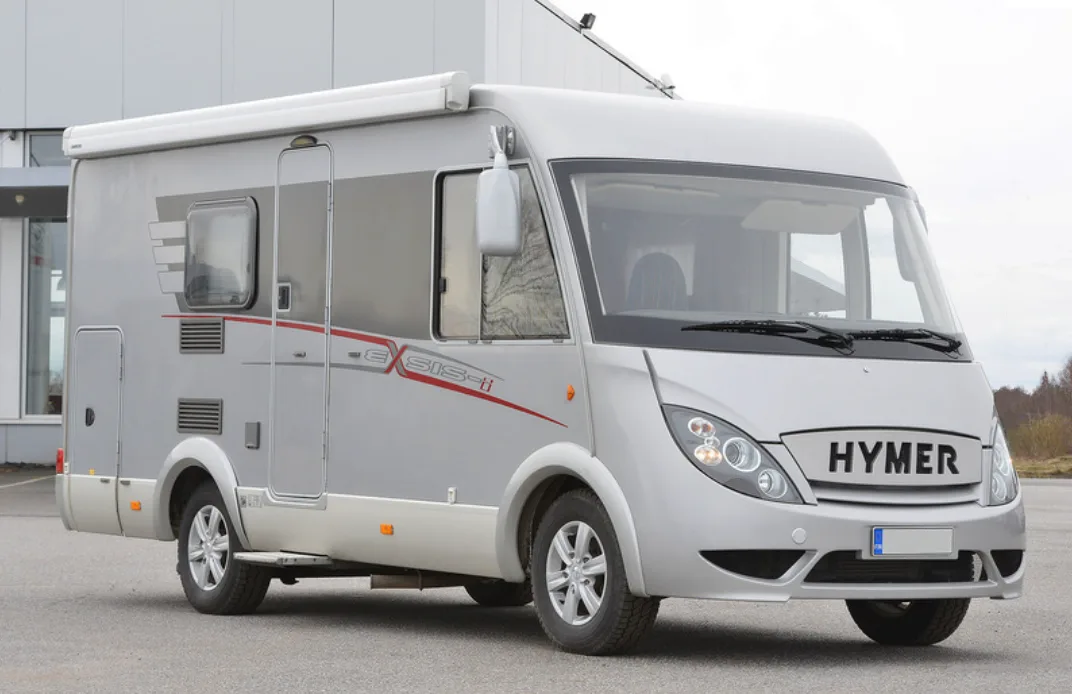
Featured image: ComradeUranium, CC BY-SA 4.0, via Wikimedia Commons.
Quick answer: is campervan rental in Europe right for you?
A campervan (or motorhome, or RV in US usage) pays off on road trips that stay on the road for a week or more. It works well for coastal routes, multi-stop countryside loops and family trips where hotel rooms would multiply. It works badly for short city-hopping itineraries, where parking a large vehicle becomes the daily chore. If your plan is mostly cities, a rental car plus hotels is usually simpler and cheaper. Use the table below as a first filter.
| Trip type | Campervan fit | Why |
|---|---|---|
| Coastal road trip, 7+ nights | Strong | Your bed and kitchen travel with you |
| Family of four, one region | Strong | One vehicle replaces two hotel rooms |
| City-hopping, 3-4 nights each | Weak | Old-town streets and car parks punish big vehicles |
| Couple, first time driving large vehicles | Medium | Choose a compact van, not a long motorhome |
| Cross-border loop through several countries | Medium | Permission is a contract term, so check it first |
| Winter trip in cold regions | Check | Some operators close or restrict off-season hire |
What campervan hire costs in Europe, and what the headline rate leaves out
Nightly rates move with season, vehicle size and minimum stay. The bigger swings come from extras charged outside the rate. As an example, Slovakia-based operator Flying Dog publishes these terms for its motorhomes (operator terms checked November 2026): €1 per km over the mileage allowance, €50 per weekend pickup or return, €30 for a second driver, and €15 per extra hour at handover or return. Its returnable deposit is €1,000 for Slovak and Austrian citizens and €2,000 for other nationalities. Treat these as examples of fee types, not as market prices. Your own contract will differ, and insurance excess and deposit rules deserve a separate read.
| Fee type | What to ask | Typical trap |
|---|---|---|
| Mileage cap | Is mileage unlimited in my season, and what is the per-km overage? | Caps often apply in shoulder season, and overage adds up fast on long routes |
| Weekend pickup/return | Is there a surcharge for Saturday or Sunday handover? | A flat fee that arrives at checkout |
| Extra driver | What does a second driver cost, and who must be named? | Unregistered drivers can void cover |
| Handover window | What are the pickup and return hours, and what is the late fee? | Hourly late charges after a missed ferry or traffic jam |
| Delivery | Is delivery to an airport or city possible, and at what price? | Delivery priced per trip or per distance |
| Deposit | How much, by what method, and when is it refunded? | Higher deposits can apply by nationality, and cash or card-hold limits vary |
| Minimum nights | How many nights in my travel month? | High season can require a full week |
Choosing a vehicle: campervan vs. motorhome, size and transmission
Start with berths, bathroom and kitchen needs, then check length. One sample Italian fleet list runs from a 5.41 m campervan (and a pop-top of the same length) to an 8.71 m Class A motorhome. In that list, Class B models run 5.99 m to 6.95 m and Class C models 6.51 m to 8.60 m. Every vehicle on it is a manual diesel. Longer vehicles struggle on narrow old-town roads, coastal switchbacks and small car parks. US and Australian drivers should confirm automatic availability early, because manual-only fleets are common and some operators do offer automatics. Couples can manage with a compact van, while families usually want a motorhome with separate sleeping areas.
- Campervan: panel-van size, easiest to park, basic kitchen
- Class B and Class C motorhome: more sleeping space, longer and heavier
- Class A motorhome: most room, hardest on narrow roads
Who can rent: age, licence and documents
Many providers set the minimum age at 21, the same as for cars, and some limit under-21 renters to certain vehicles. You need a full, valid licence, because provisional and learner licences are generally refused. If your licence is not in English, carry an International Driving Permit alongside it. Weight matters too. A standard car licence (category B) covers vehicles up to 3,500 kg, and heavier motorhomes may need a different category. The GOV.UK licence category list explains the weight limits for UK licences. For EU rules, see Your Europe on driving licences. Ask the operator for the vehicle's maximum authorised mass before you book.
Category B covers vehicles up to 3,500 kg, so a motorhome's weight decides the licence, whatever its length.
When and how to book
Campervans are booked further ahead than cars, because supply is limited and travellers have specific berth and kitchen needs. Bookings are also not instant, since the provider must approve your request. Do not leave it until the airport lounge. One operator's published terms give a useful picture of handover timing: pickup between 15:00 and 18:00, return between 08:00 and 10:00. Its minimum stay is 3 nights in low and medium season and 7 nights in high season. Plan around windows like these when you book flights.
Peak-months trips at that operator require 7 nights in high season, which rules out short loops in those months.
- Several months out: pick your vehicle class and send the request
- After approval: pay the deposit and confirm the handover time
- Before departure: send licence details and any second-driver names
- Pickup day: photograph the vehicle and note fuel, gas and water levels
- Return day: arrive inside the return window to avoid hourly late fees
Driving and logistics across Europe
Cross-border permission is a contract term, not a given. The same operator allows moves within the EU and forbids leaving EU borders, so read your terms before planning a loop. Our guide to cross-border car rental rules covers the common restrictions. Drop-offs in a different city usually carry a fee, which is explained in our one-way rental guide. Ask whether motorway vignettes are included, since some operators include them and others do not. French motorways are tolled, and campervans often pay a higher class, so see VINCI Autoroutes' vehicle classes before a long run. Wild camping rules differ by country, so use campsites unless local rules clearly allow otherwise. City low-emission zones can restrict older diesels, and our electric rental guide covers the car-only alternative.
- Mistake: booking a long motorhome for narrow coastal roads
- Mistake: ignoring the mileage cap and paying overage per km
- Mistake: returning late and paying hourly fees
- Mistake: booking late in high season
- Mistake: assuming every border crossing is allowed
Regional starting points
Italy offers many campsites, and free roads can replace paid motorways for countryside stretches. Coastal and island trips suit it, from Tuscany down to Sardinia and Sicily. South West France, around Biscarrosse-plage near Bordeaux, and northern Spain suit smaller vintage-style campers. Andalusia, around Malaga, has local operators that rent fully equipped vans. Match the region to vehicle length first, then compare operators in that area.
Road-rule changes worth knowing
Optional updates to our guides.
You might also like

Continue reading
More guides you'll find useful