Fréjus Road Tunnel: Toll, Second Tube and Route Guide
Driving the Fréjus road tunnel between France and Italy? See what the second tube changes, how tolls work, and how it compares with Mont Blanc.
On this page
Last updated November 2026: the frejus tunnel is the Alpine road tunnel that links Modane in France with Bardonecchia in Italy. A second tube was inaugurated on 28 July 2025, so each direction now has its own tunnel. In 2026 a car pays €56.40 one way or €70.40 return on the Italian side. This guide covers the tolls, the safety layout and how the crossing compares with Mont Blanc, and it is about the Alpine tunnel, not the Riviera town of Fréjus.
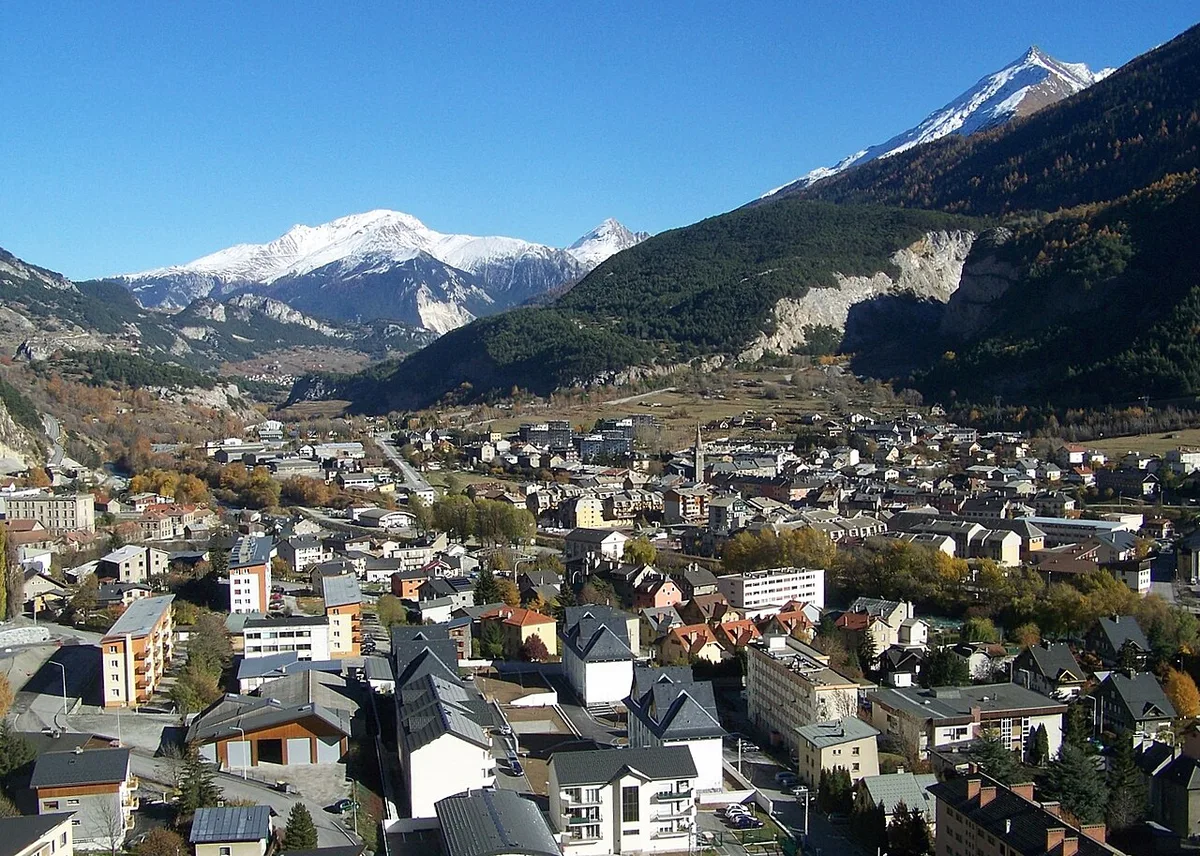
Featured image: Florian Pépellin, CC BY-SA 3.0, via Wikimedia Commons.
Fréjus Road Tunnel at a Glance
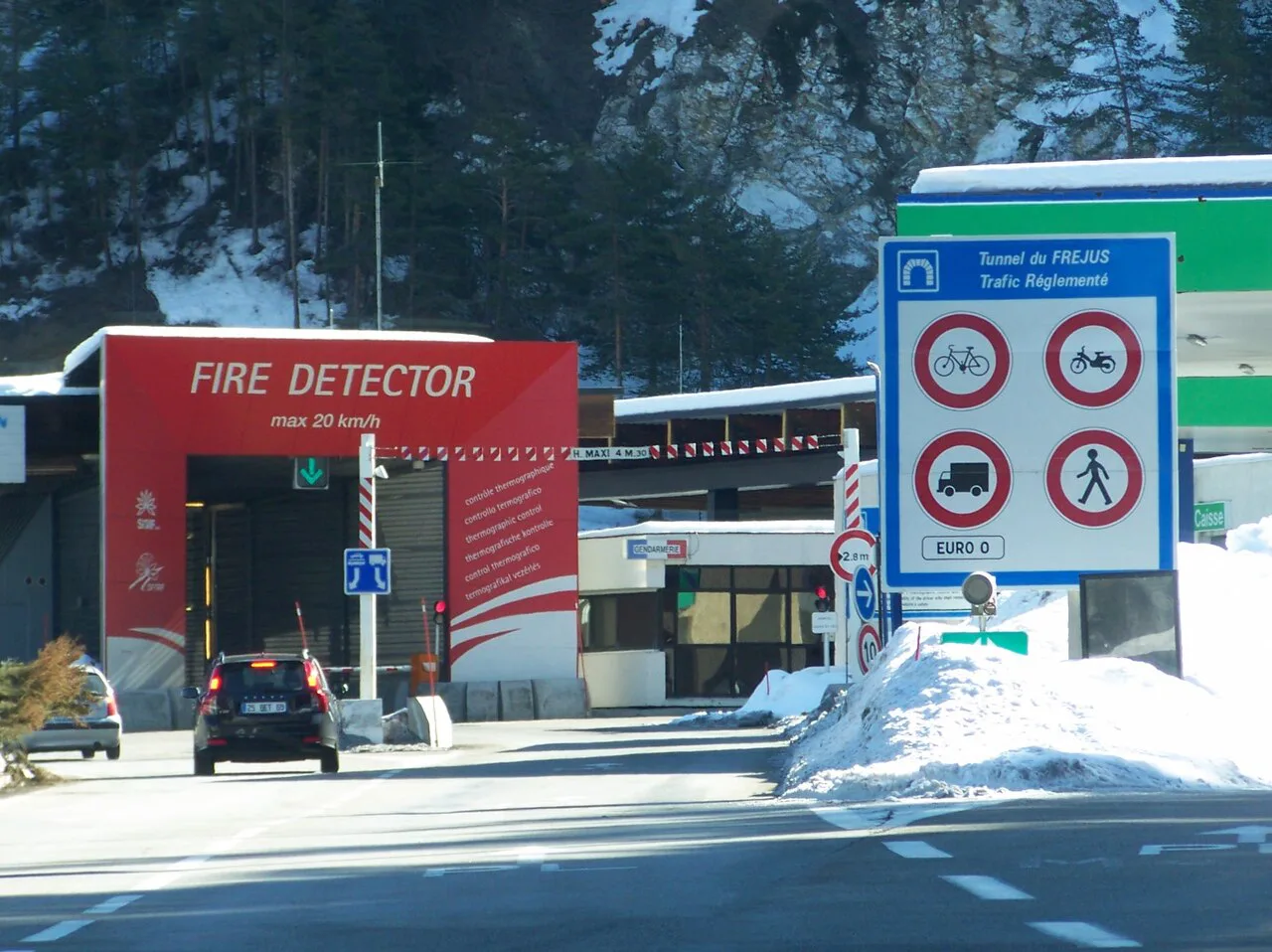
Fréjus is a motorway tunnel under the Alps between Modane (France) and Bardonecchia (Italy). The second tube, a €700 million project funded by the two concession companies, was inaugurated on 28 July 2025 and runs about 50 m from the original bore. The new tube is 12.85 km long, 6.5 km in France and 6.35 km in Italy. Traffic now flows one way in each tube. Two operators share the crossing, with SFTRF on the French side and SITAF on the Italian side.
| Item | Detail |
|---|---|
| Route | Modane (France) to Bardonecchia (Italy) |
| Tubes | Two, with one-way traffic in each |
| Original tube (1980) | France to Italy |
| New tube | Italy to France |
| Second tube inaugurated | 28 July 2025 |
| Investment | €700 million |
| Length | About 12.9 km |
| Speed and spacing | 50 to 70 km/h, 150 m between vehicles |
| Car toll, 2026 (Italian side) | €56.40 one way, €70.40 return |
| French operator | SFTRF |
| Italian operator | SITAF |
What the Second Tube Changes for Drivers
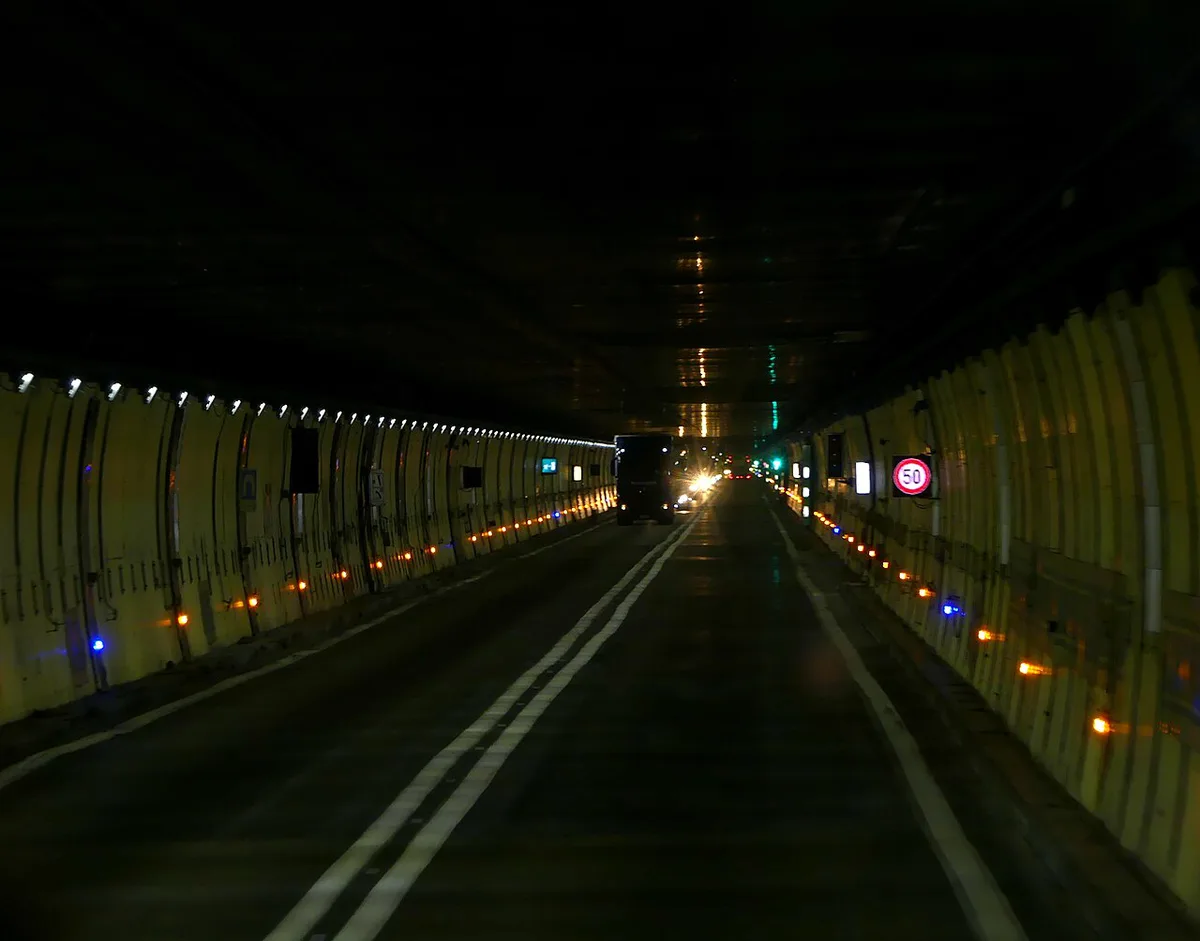
Before July 2025, vehicles in both directions shared one bore. Now the original tube carries France-to-Italy traffic and the new tube carries Italy-to-France traffic. One-way flow removes the risk of head-on collisions, which is the main safety gain. It also doubles capacity, so traffic should move more smoothly. If an incident closes one tube, the other stays available for evacuation and rescue. It can also carry traffic in alternating directions. Expect occasional single-tube working in that case, with signs and staff directing you.
With one-way traffic in each tube, nine cross-passages link the two, so the unaffected tube is the escape and rescue route if one closes.
Frejus Tunnel Toll and How to Pay
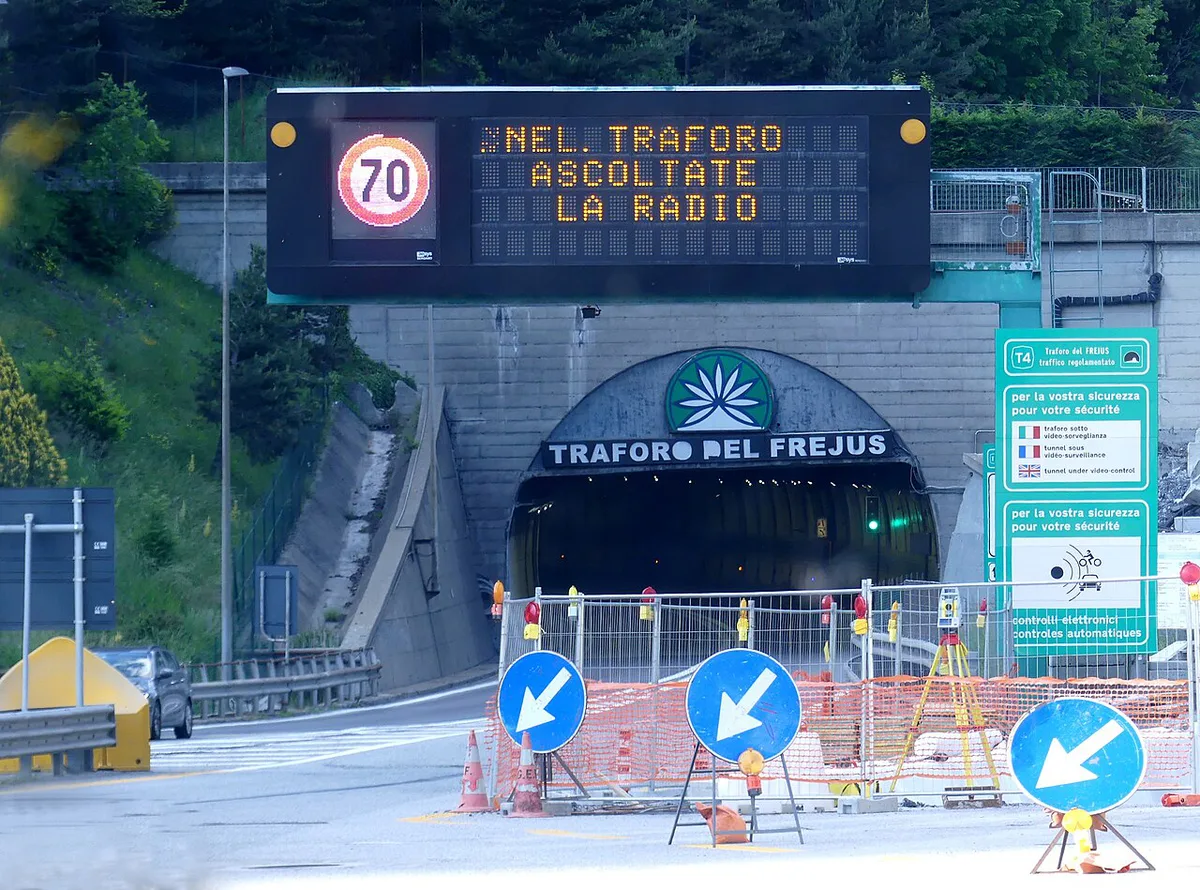
The toll depends on vehicle class, on one-way or return, and on the side where you pay. SITAF's tariff from 1 January 2026, VAT included, is below; on the French side a car pays €55.50 one way, the same as at Mont Blanc. A return ticket for classes 1, 2 and 5 expires at midnight on the seventh day after issue, so it suits a week-long trip to Italy.
| Class | Vehicle | One way | Return |
|---|---|---|---|
| 5 | Motorcycle, including with sidecar or trailer | €37.30 | €46.90 |
| 1 | Car: two or more axles, front axle under 1.30 m, total height up to 2 m | €56.40 | €70.40 |
| 2 | Other two-axle vehicles up to 3 m tall, such as vans and campers | €74.70 | €93.80 |
Tunnel tolls are separate from the vignettes that some countries sell, and France and Italy charge by motorway. Our guide to 7 Things to Know About Toll Roads in Europe covers the wider picture.
Fréjus vs Mont Blanc vs Great St Bernard
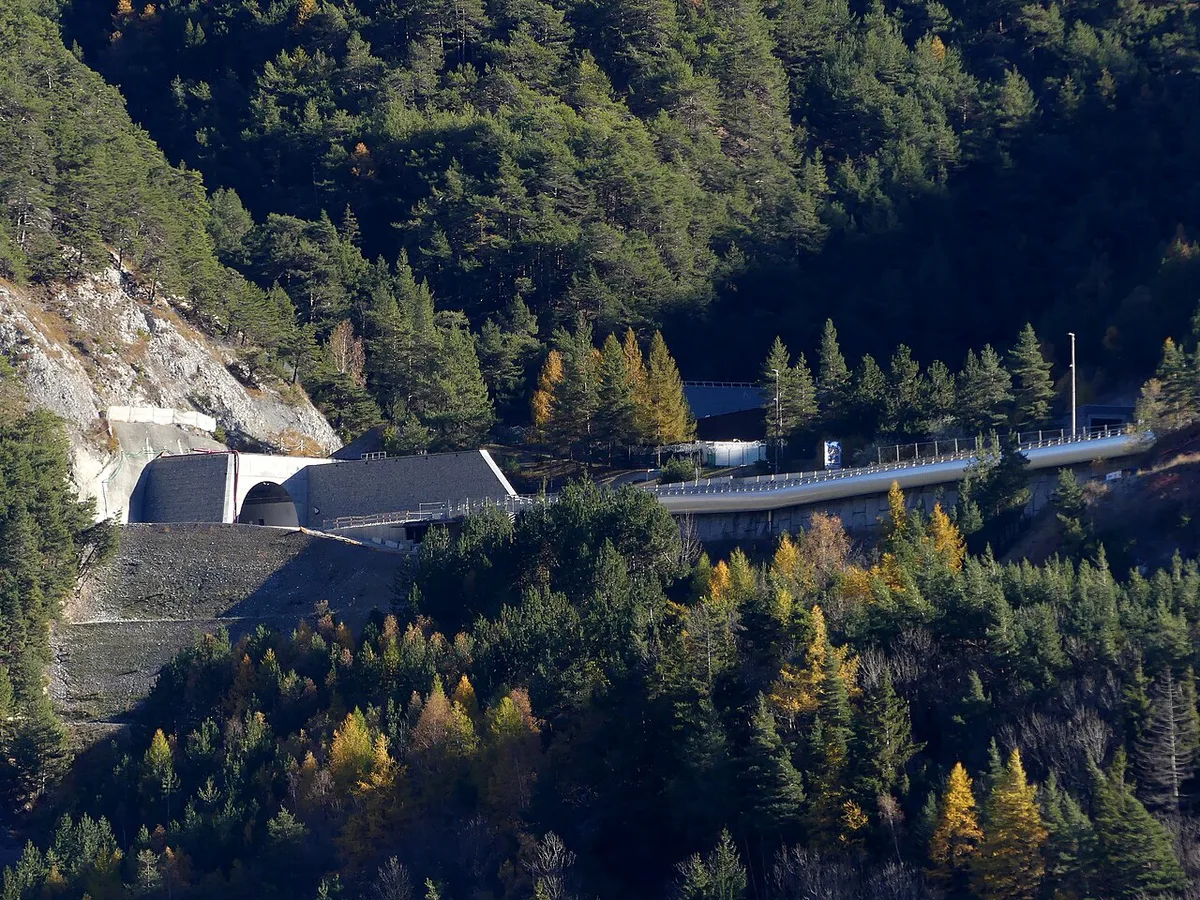
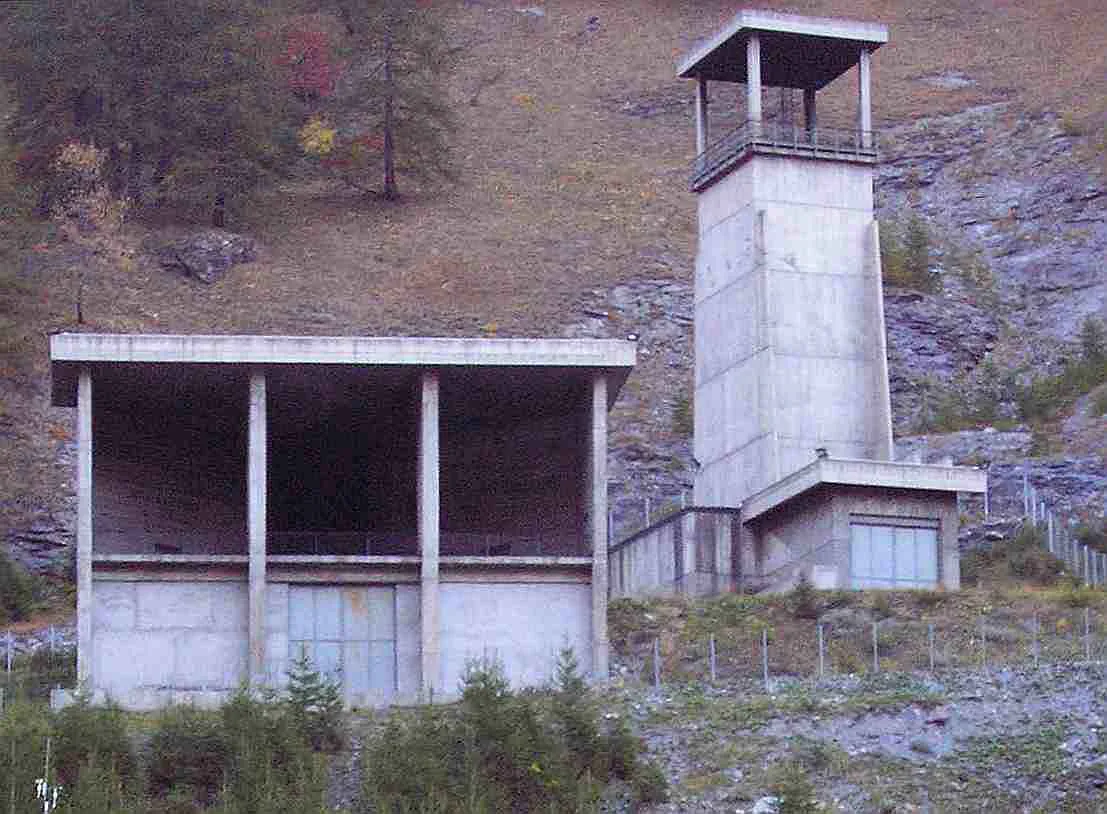
Choose the crossing by your start point, your destination and live conditions, not by habit. Fréjus and Mont Blanc charge the same 2026 car toll, while Great St Bernard costs €33.50 or CHF 32 one way and adds Swiss roads. Our guides cover the Mont Blanc Tunnel: Tolls, Closures & Alternatives (France–Italy) and the Great St Bernard Tunnel: Status, Tolls and Alternatives in detail. Other Alpine options include the Tauern Tunnel: Toll, Route and Driving Tips and the Karawanks Tunnel: Tolls, Rules, Delays and Alternatives further east.
| Crossing | Best known for | Car toll, one way (2026) |
|---|---|---|
| Fréjus | Modane–Bardonecchia link, two tubes since July 2025 | €55.50 (France) / €56.40 (Italy) |
| Mont Blanc | Chamonix–Courmayeur, single bore, autumn closures in 2024 and 2025 | €55.50 (France) / €56.40 (Italy) |
| Great St Bernard | Valais–Aosta Valley, 5.8 km | €33.50 or CHF 32 |
Planning Your Drive
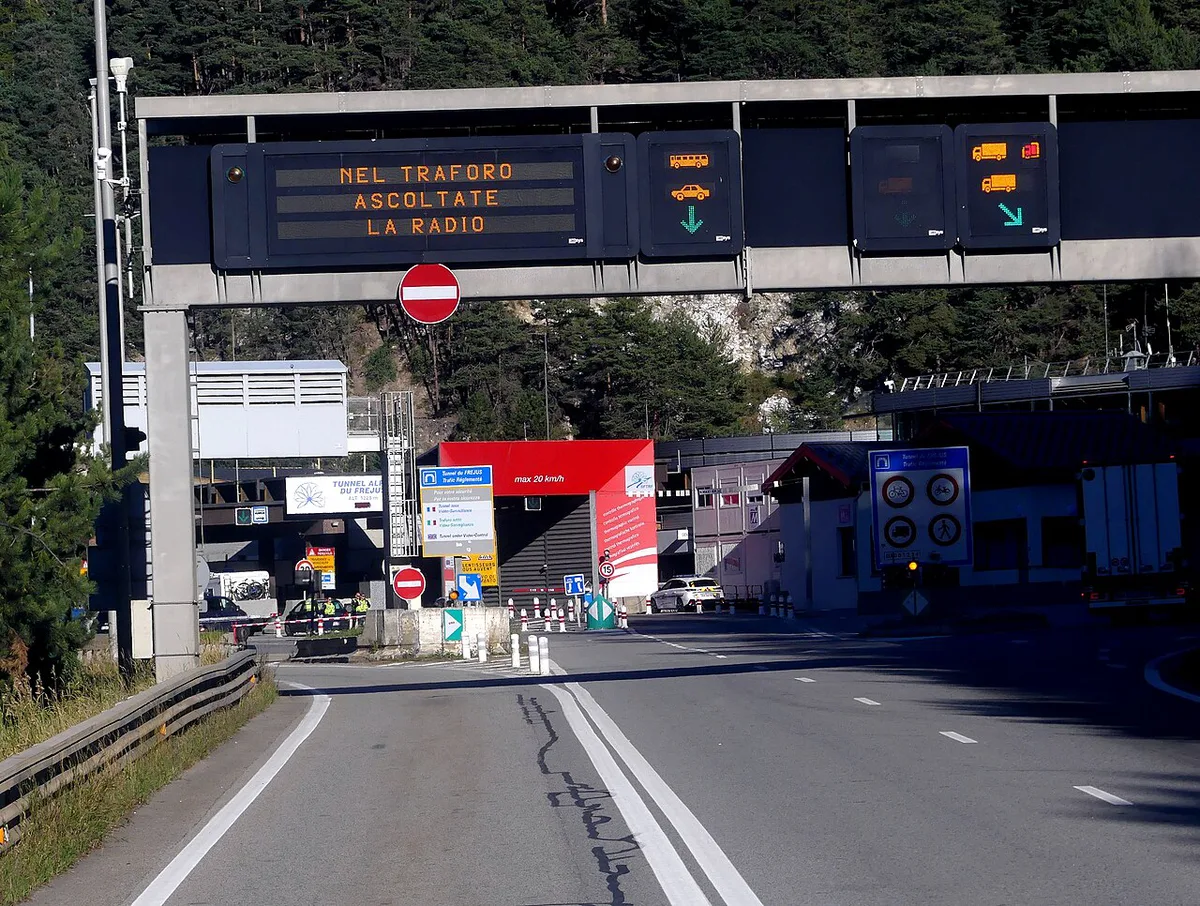
Look at the live traffic and closure status before you leave, because Alpine weather can change approach conditions quickly, and the operators close one direction overnight for maintenance; SITAF listed a France-to-Italy closure from 22:00 on 20 November to 06:00 on 22 November 2026, for example. Winter equipment rules on the approach roads are set by French and Italian authorities. Look them up for your travel date, along with any caravan, trailer or dangerous-goods restrictions. Fill the tank and take a rest stop before the Modane or Bardonecchia approach, since there is no stopping inside the tubes. Operator sites show tunnel status and any single-tube working.
Safety Features and What to Do in an Incident
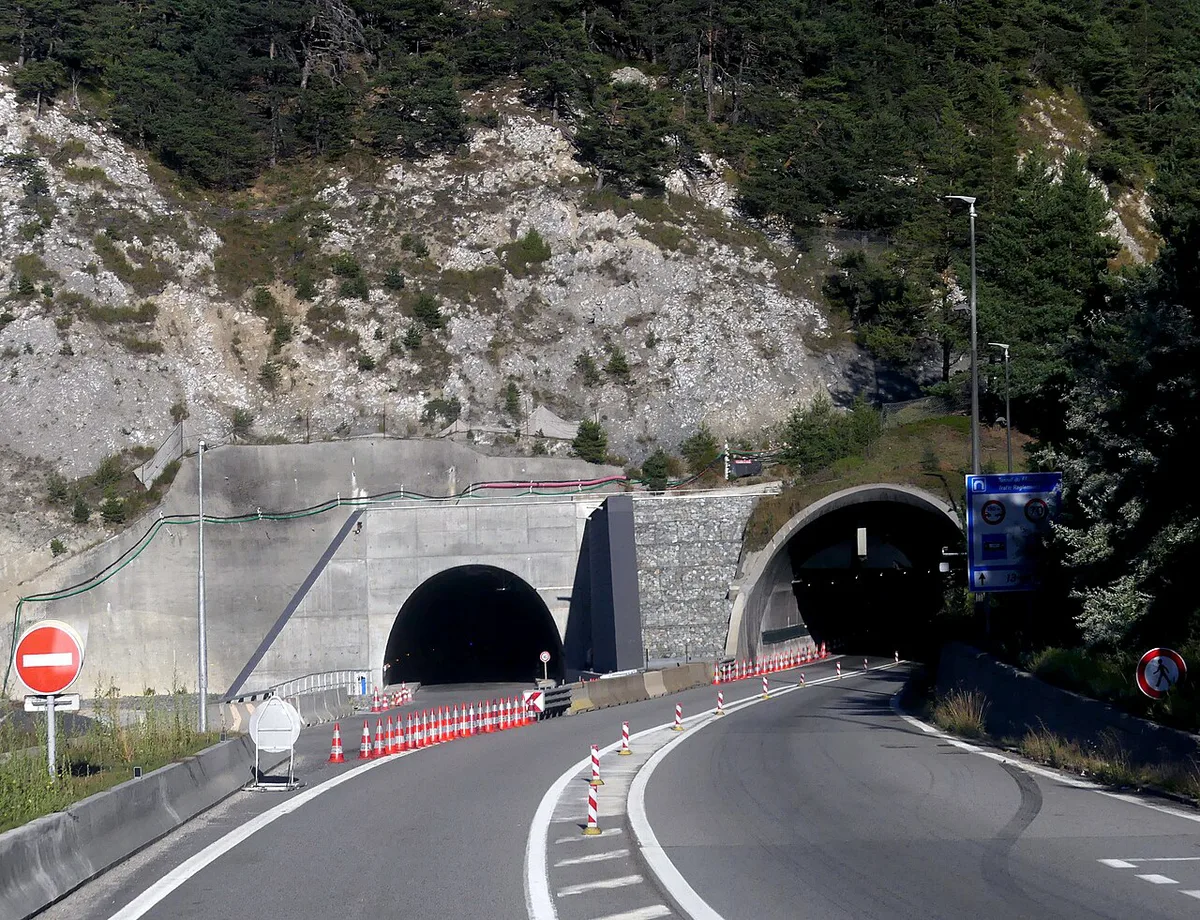
Nine cross-passages give rescue teams fast access between the tubes, and the new tube has a fire hydrant every 130 metres. Speed stays between 50 and 70 km/h, with at least 150 m to the vehicle ahead while moving. SITAF's tunnel safety rules ban stopping inside except in an emergency and set out what to do, summarized below. The emergency number is 112.
- Breakdown: pull into the nearest lay-by, switch on hazard lights, switch off the engine, and call from an SOS phone.
- Queue: switch on hazard lights, leave 100 m to the vehicle ahead, and stay in the car with the engine off.
- Fire: stop on the right if you can, leave the keys in the car, walk away from the smoke, and follow the green arrows on the wall to a safe place.
- Signals: a red cross over both lanes at the portal means the tunnel is closed to entry.
Mistakes to Avoid and Who Should Choose Another Route
Do not rely on information from before July 2025, because the layout and traffic flow have changed. Do not assume a vignette covers the tunnel, since it does not. Do not ignore closure notices on the approach roads or at the portals. Drivers with restricted loads, or anyone unsure about winter conditions, should check the operators first. In that case, consider the Mont Blanc or Great St Bernard routes on the dates you travel.
- Old guides that describe a single shared tube.
- Treating a vignette as a tunnel pass.
- Skipping live status checks before departure.
Frequently Asked Questions
How long is the Fréjus road tunnel?
About 12.9 km. The new tube measures 12.85 km, 6.5 km in France and 6.35 km in Italy, and both tubes run between Modane and Bardonecchia.
How much does it cost to cross the Mont Blanc Tunnel?
In 2026 a car pays €55.50 one way or €69.20 return on the French side, and €56.40 or €70.40 on the Italian side, the same as Fréjus. Our guide to the Mont Blanc Tunnel: Tolls, Closures & Alternatives (France–Italy) has the full table.
Road-rule changes worth knowing
Optional updates to our guides.
You might also like
Continue reading
More guides you'll find useful