Great St Bernard Tunnel: Status, Tolls and Alternatives
The Great St Bernard Tunnel's status, 2026 tolls, route logistics and alternatives between Italy and Switzerland, with links to official sources.
On this page
Last updated November 2026: the Great St Bernard Tunnel links the Aosta Valley in Italy with the Valais side of Switzerland, and its live status is the first thing to settle before you plan a drive. The tunnel was open when this page was updated, and since 1 February 2026 a car pays €33.50 or CHF 32 one way and €53.50 or CHF 51 return. Status can change at short notice, so read the operator's own notice rather than a forum post or a video. This guide covers status, the tariff and which routes to fall back on.
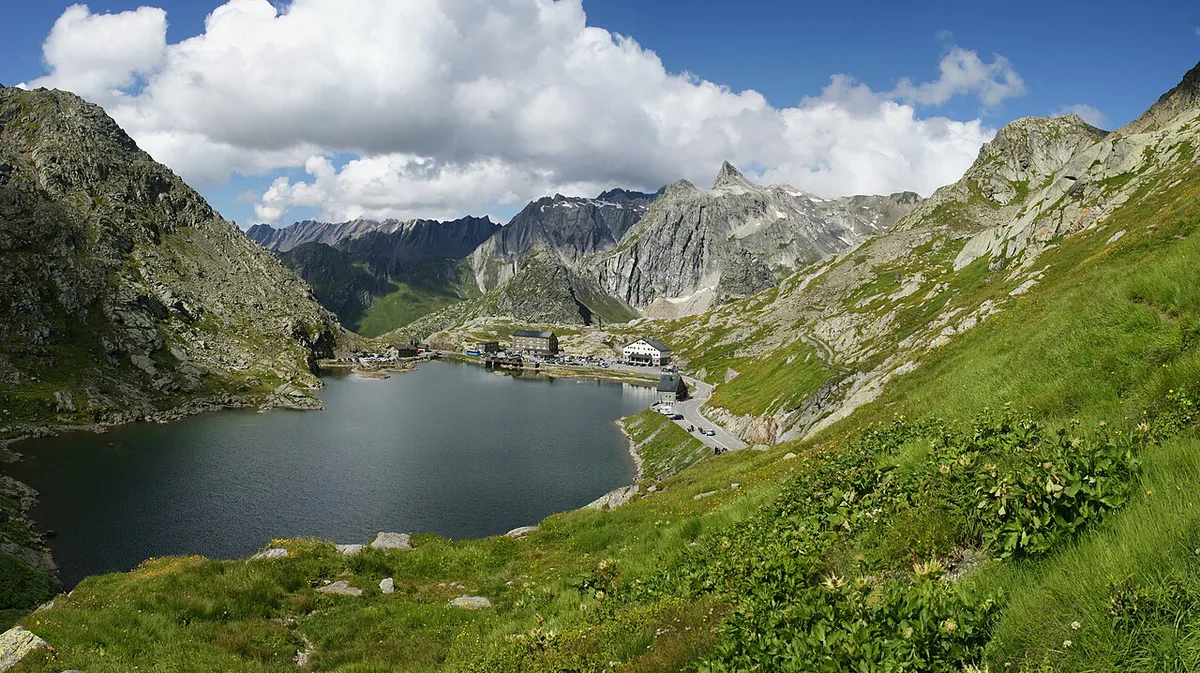
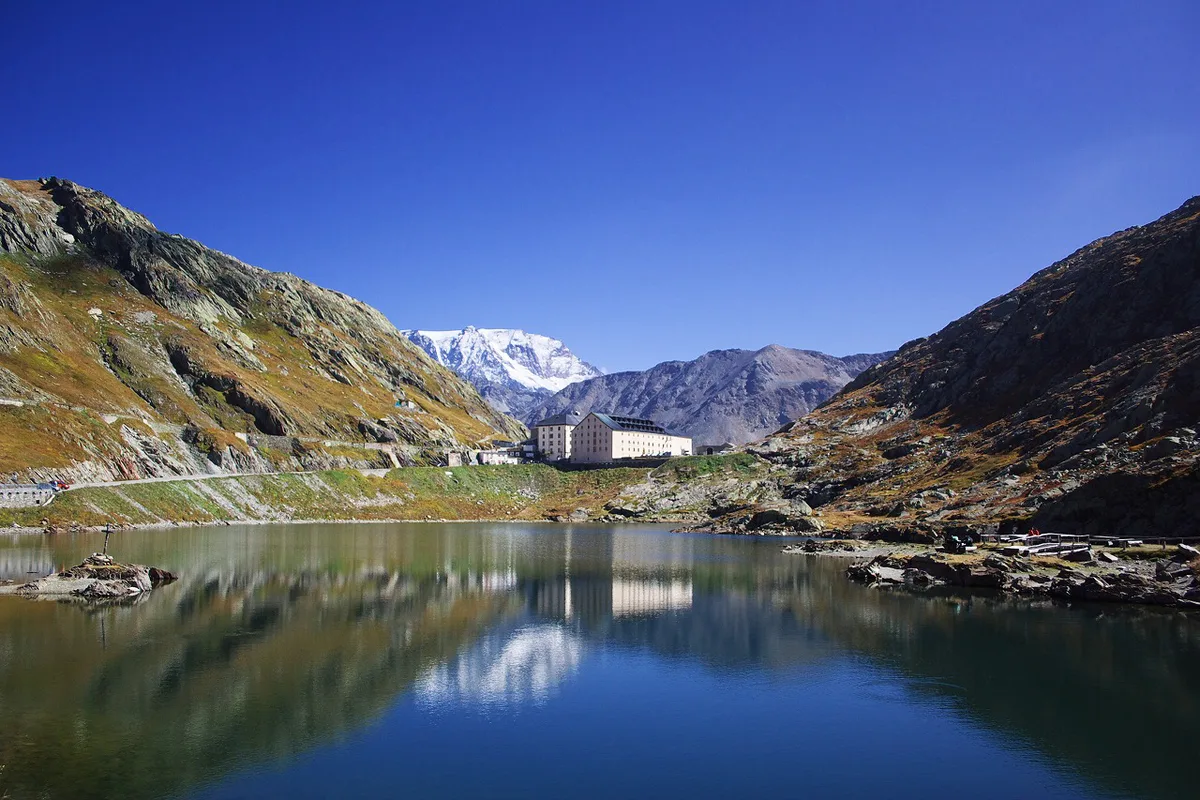
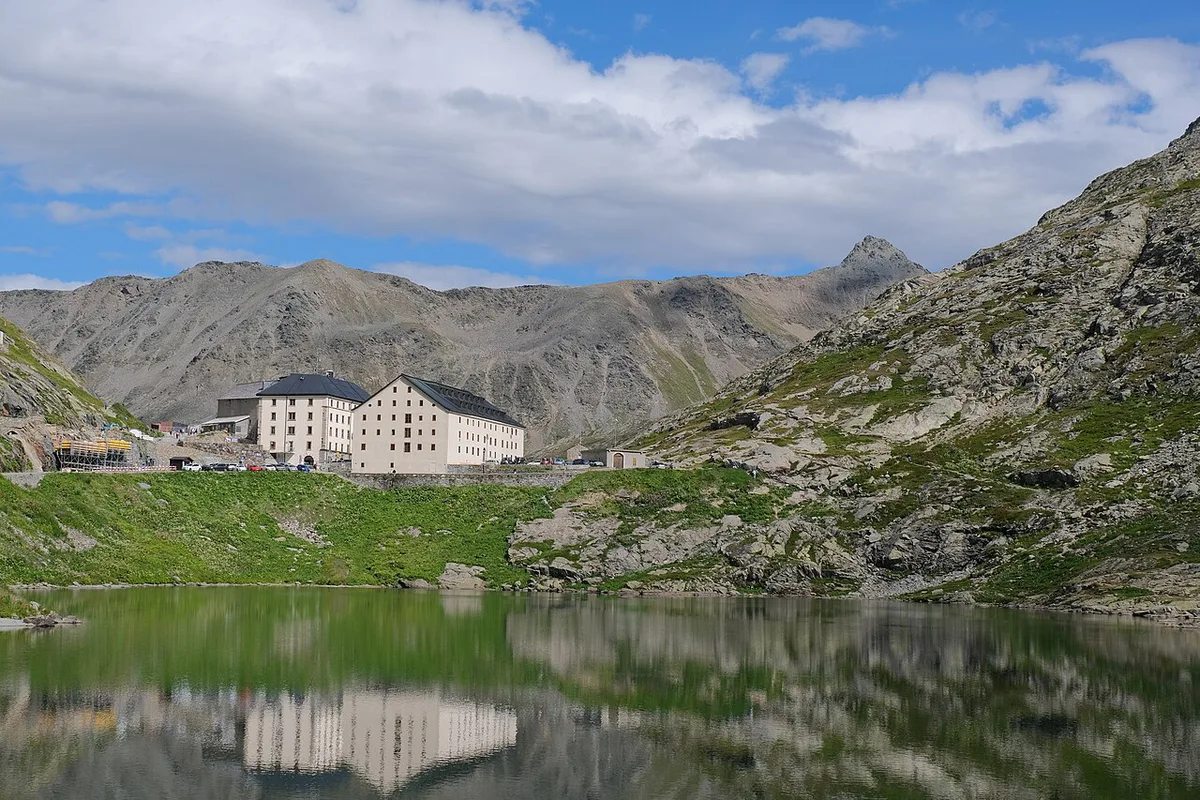
Featured image: Lysippos, CC BY-SA 3.0, via Wikimedia Commons.
Great St Bernard Tunnel: current status and how to check it
Do not rely on a third-party snippet for the tunnel's state. The operator's official site shows a live status light on its home page, and it read "Open tunnel" when this page was updated in November 2026. The tunnel is built to run 365 days a year, and both approach roads have covered galleries against avalanches, so weather closures are rarer than on the pass above it. The operator also publishes a calendar of night works. Open the status page on the day you travel and again before you leave your last stop with a data connection. Look for any notice about closures, restrictions or vehicle limits, and if one affects your time slot, switch to a route that does not depend on the tunnel.
What the tunnel is and the route it serves
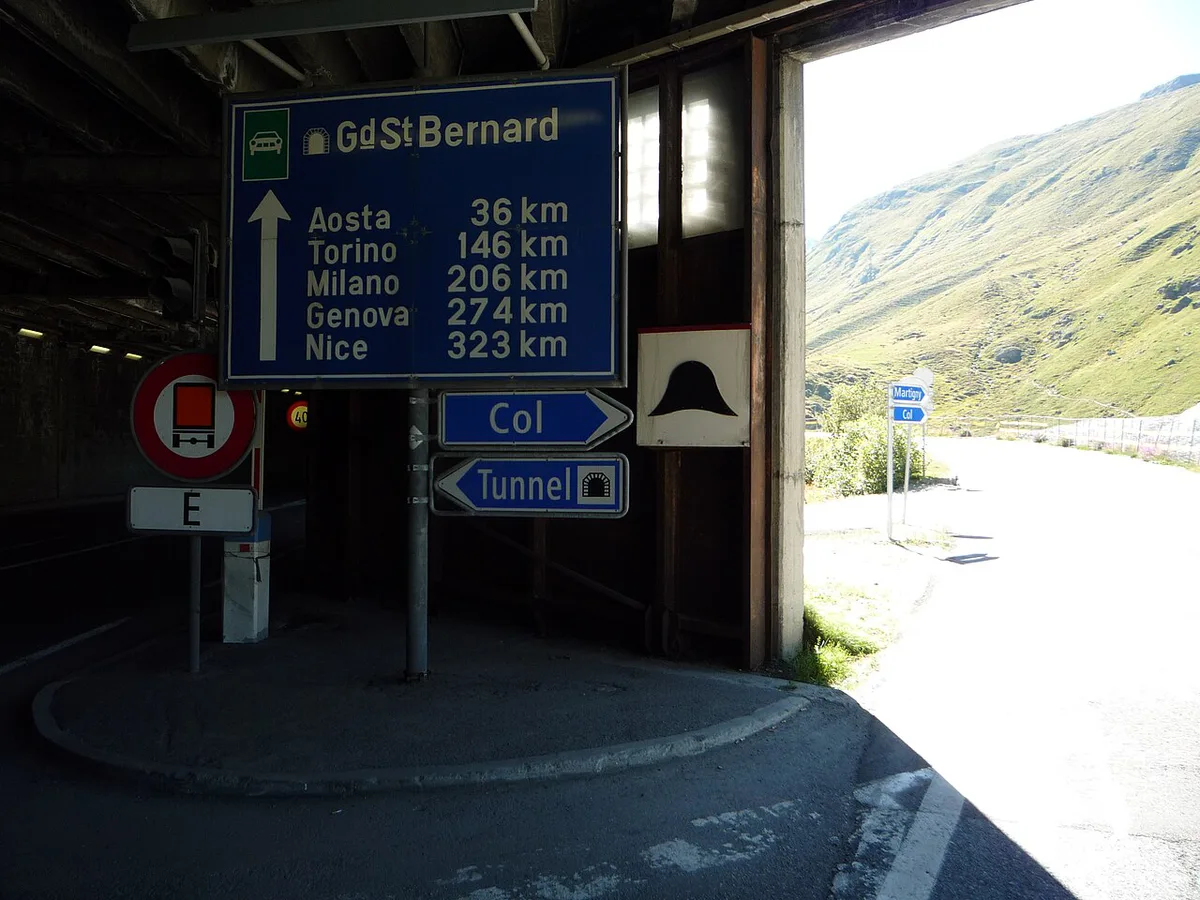
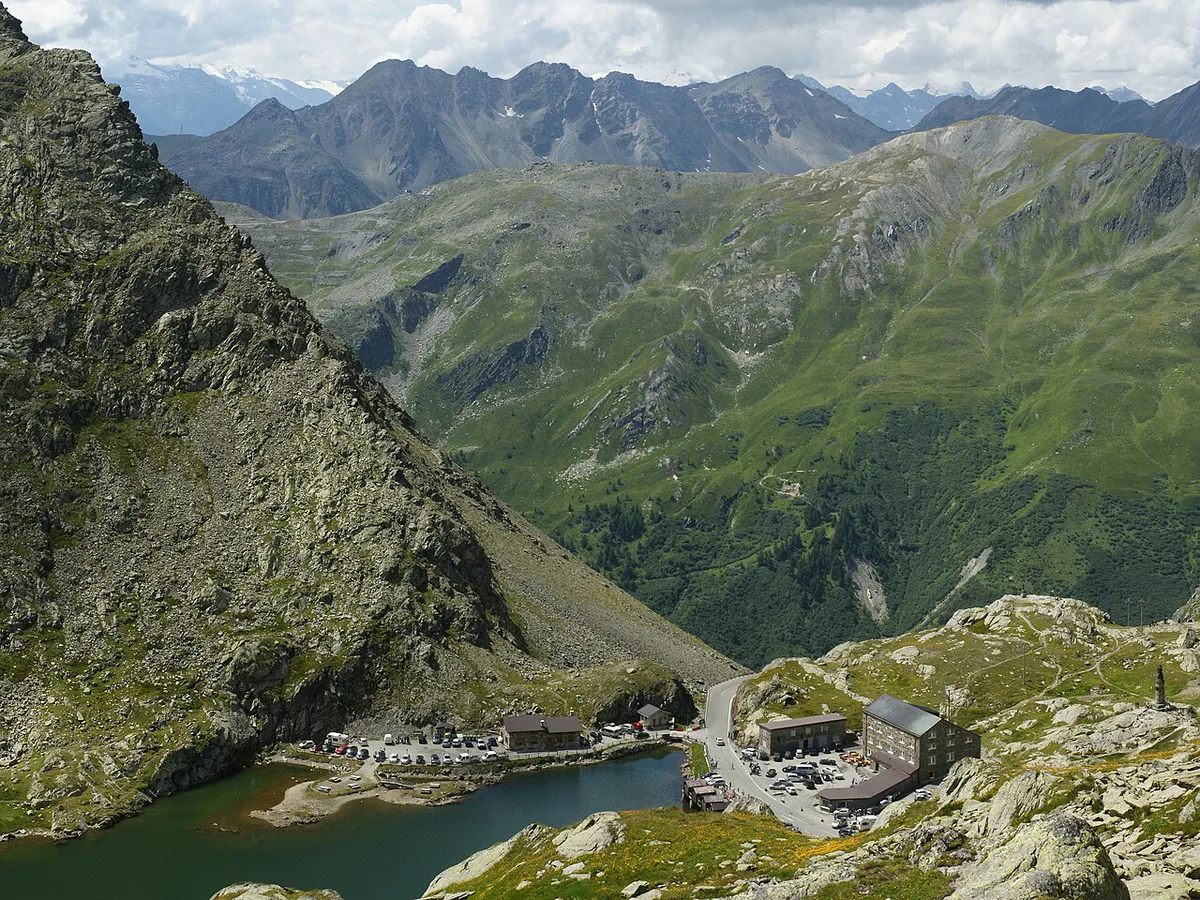
Great St Bernard is a 5.8 km road tunnel under the Alps between Switzerland and Italy opened on 19 March 1964. The northern portal is above Bourg-Saint-Pierre in the Valais at 1,918 m, with Martigny as the nearest sizeable town on the Swiss side. The southern portal is at Saint-Rhémy-en-Bosses in the Aosta Valley at 1,875 m, with Aosta as the Italian reference point. Plan the approach roads as carefully as the tunnel itself. A separate road crosses the same range over the Great St Bernard Pass. The tunnel and the pass are different routes: the pass is normally closed by snow from October to May, while the tunnel is meant to stay open all year.
- Suits drivers heading between the Valais and the Aosta Valley who want a direct road link.
- Suits trips already planned around Martigny or Aosta as an overnight stop.
- Suits travellers who can check status on the day and switch route if needed.
- Is a poor fit if your schedule has no slack for a closure or a long detour.
Tolls, vehicle rules and payment
Tunnel fees are set by the operator, not by a national vignette scheme, and a Swiss motorway vignette does not reduce them. The official tunnel site lists prices in both euros and Swiss francs. The tariff below has applied since 1 February 2026. Class A2 covers vehicles with two or more axles up to 2 m tall, which includes ordinary cars.
| Class | Vehicle | One way | Return |
|---|---|---|---|
| A1 | Motorcycle | €20.00 / CHF 19.00 | €28.00 / CHF 26.50 |
| A2 | Car, two or more axles, up to 2 m tall | €33.50 / CHF 32.00 | €53.50 / CHF 51.00 |
| B1 | Two or more axles, over 2 m and up to 3 m tall, such as many campers | €52.50 / CHF 50.00 | €84.00 / CHF 80.00 |
A return costs €13.50 less than two singles for a car and is valid for 30 days, so buy it if you will come back the same way. Vehicles over 3 m tall, such as trucks and buses, fall into higher classes listed on the operator's site. Our guide to European toll roads explains how tunnel fees differ from vignettes and motorway tolls. For general rules on driving across EU borders, see Your Europe's driving pages.
- Find your vehicle class: a car up to 2 m tall is A2.
- Note that prices are listed in both euros and Swiss francs.
- Keep a return ticket safe for the trip back.
- Keep the receipt if you travel on a business trip.
If the tunnel is closed or restricted: alternatives
Pick the fallback before you set off, not at the barrier. Each option below trades time, cost and season differently, so compare them on a live route planner on the day. On tolls alone, Mont Blanc and Fréjus each charge a car €55.50 one way on the French side or €56.40 on the Italian side in 2026, against €33.50 here. Mont Blanc Tunnel: Tolls, Closures & Alternatives (France–Italy) and the Fréjus Tunnel both cross between France and Italy, so they suit trips that can route through France. If you only need an Alpine tunnel for context, Tauern Tunnel: Toll, Route and Driving Tips in Austria is a different corridor and not a substitute for this route.
| Route | Trade-off | Seasonal access | Who it suits |
|---|---|---|---|
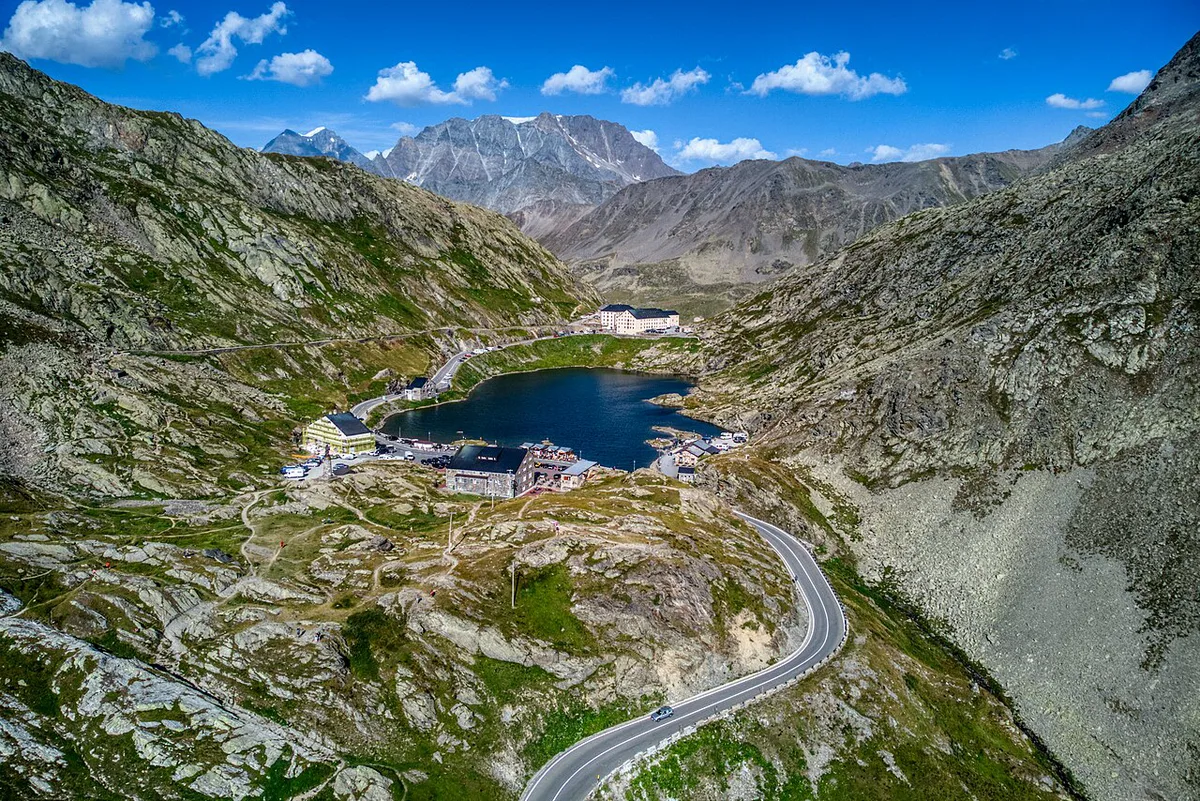
| Great St Bernard Pass | Same corridor as the tunnel, but a high mountain road with no toll | Normally closed by snow from October to May | Summer drivers with flexible time and suitable vehicles |
| Mont Blanc Tunnel | Routes through France, so it changes your approach roads; €55.50 one way for a car | No long closure in 2026; closed each autumn in 2024 and 2025 | Drivers already near the French side of the Alps |
| Fréjus Tunnel | Another France–Italy crossing, two tubes since July 2025; same toll as Mont Blanc | Open all year, with occasional night closures for works | Drivers who can route through France to Italy |
Decision guide and mistakes to avoid
Work through the list in order and stop at the first item that fails. Each step is quick, and together they cover the errors drivers make most often on Alpine crossings. For wider Europe-wide route planning and charging rules, the European Commission's road charging page is a useful reference.
- Open the status light on the operator's site on the day you travel.
- Choose your fallback route before leaving, and note its own status.
- Look up winter tyre and chain rules for your dates in Switzerland and Italy.
- Buy the CHF 40 Swiss vignette if your approach uses a Swiss motorway, such as the A9 to Martigny.
- Carry your passport or ID card and vehicle papers for the border.
- Fill the tank before the climb, since fuel stops on mountain roads can be sparse.
- Mistake to avoid: assuming the pass is open because the tunnel was last year.
Frequently Asked Questions
How much does it cost to cross the Saint Bernard tunnel?
Since 1 February 2026 a car pays €33.50 or CHF 32 one way and €53.50 or CHF 51 return; a motorcycle pays €20 or CHF 19 one way. The full tariff is on the official tunnel site.
Road-rule changes worth knowing
Optional updates to our guides.
You might also like
Continue reading
More guides you'll find useful