Speed Limits in the Netherlands: Road Rules by Type
Dutch speed limits by road type in km/h and mph, how daytime and evening motorway limits work, and how cameras and fines reach visitors and rental cars.
On this page
Last updated November 2026: speed limits in the Netherlands depend on road type, time of day and the sign in front of you. Defaults are 50 km/h (31 mph) in towns, 80 km/h (50 mph) on rural roads and 100 km/h (62 mph) on most motorways by day. Our hub on 7 Things to Know About Driving in the Netherlands covers the wider rules.
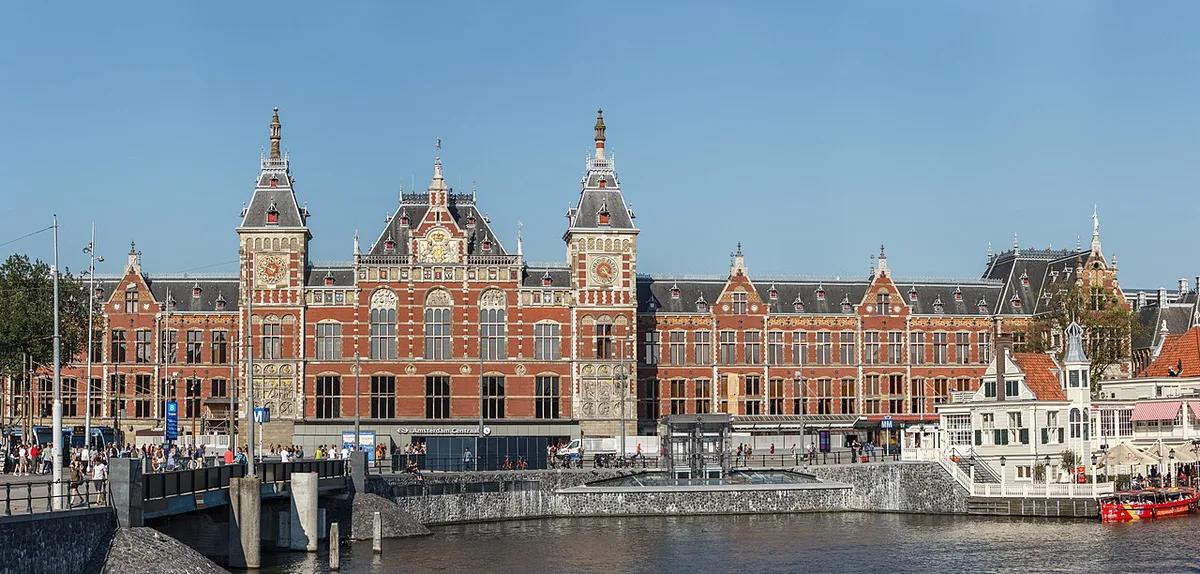
Featured image: Mart de Groot, CC BY 4.0, via Wikimedia Commons.
Quick answer: Dutch speed limits by road type
Dutch limits are set by road type, and a posted sign always beats the default. Rijkswaterstaat, which runs the national road network, publishes official road and traffic information. The table gives the usual figures with mph worked out for you. Mph values are rounded to the nearest whole number.
| Road type | Limit (km/h) | Limit (mph) |
|---|---|---|
| Built-up areas (default) | 50 | 31 |
| 30 km/h residential zones | 30 | 19 |
| Rural roads outside built-up areas (default) | 80 | 50 |
| Narrow rural access roads, where signed | 60 | 37 |
| Expressway (autoweg, default) | 100 | 62 |
| Car towing a light trailer (combined weight under 3.5 t) | 90 | 56 |
| Motorway, 06:00 to 19:00 (default) | 100 | 62 |
| Motorway, 19:00 to 06:00 (default) | 130 | 81 |
| Motorway stretches signed 120 all day | 120 | 75 |
| Motorway stretches signed 130 all day | 130 | 81 |
- Signs override defaults. A red-ringed number is the limit until a new sign or the end of the zone.
- Defaults apply only where no sign is posted. Municipalities can set lower limits on many urban roads.
- Conversion shortcut: multiply km/h by 0.62 to get mph.
How the daytime and evening motorway limits work
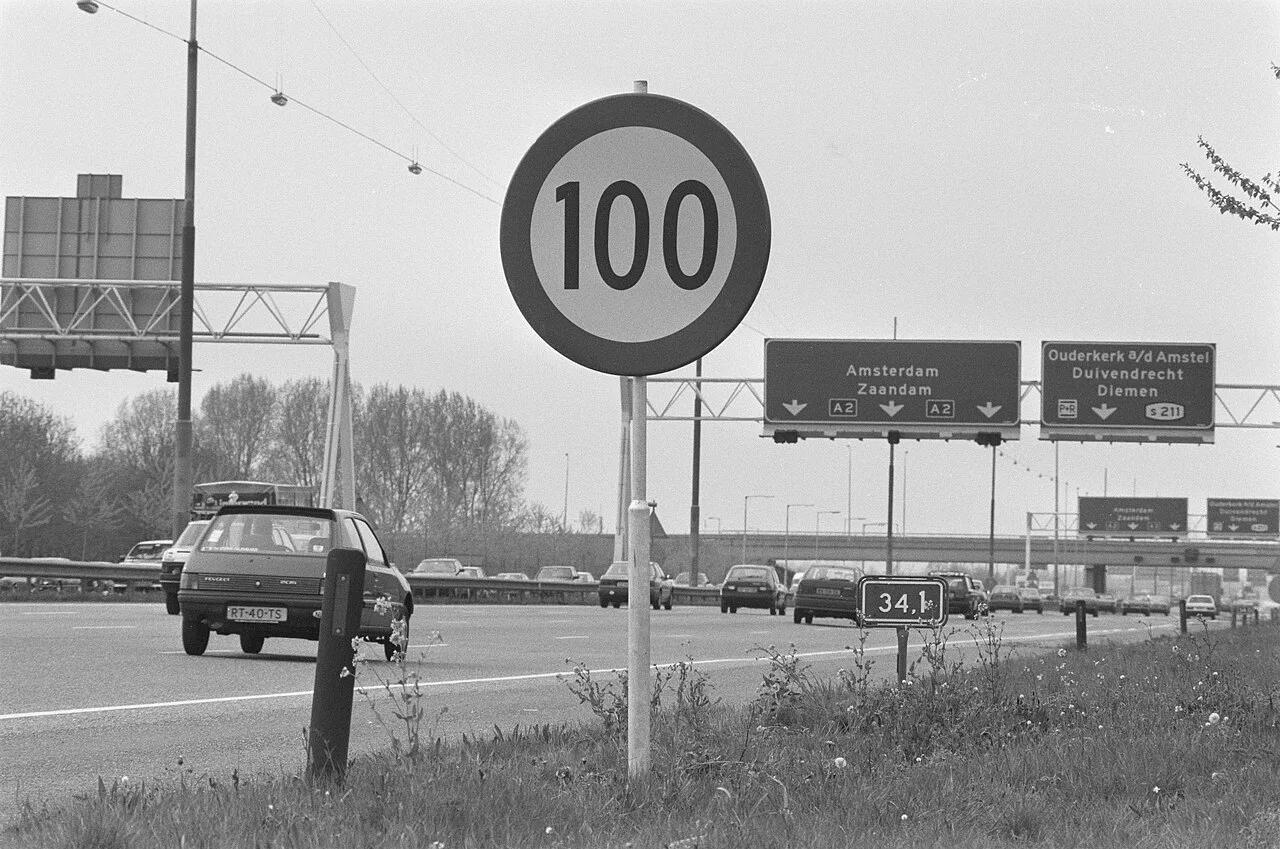
Since 16 March 2020, many Dutch motorways have carried a 100 km/h (62 mph) limit from 06:00 to 19:00. From 19:00 to 06:00 the default rises to 130 km/h (81 mph). On 14 April 2025 the daytime limit was lifted on three motorways, so the pattern now varies more from road to road. Roadside signs show both numbers, often with a time panel beside them. Some stretches post 120 km/h (75 mph) or 130 km/h all day instead. Follow the sign at each gantry or roadside post rather than assuming one national figure. The Dutch government explains national traffic rules at government.nl. At 19:00 you may legally speed up only where the evening default applies and no sign says otherwise.
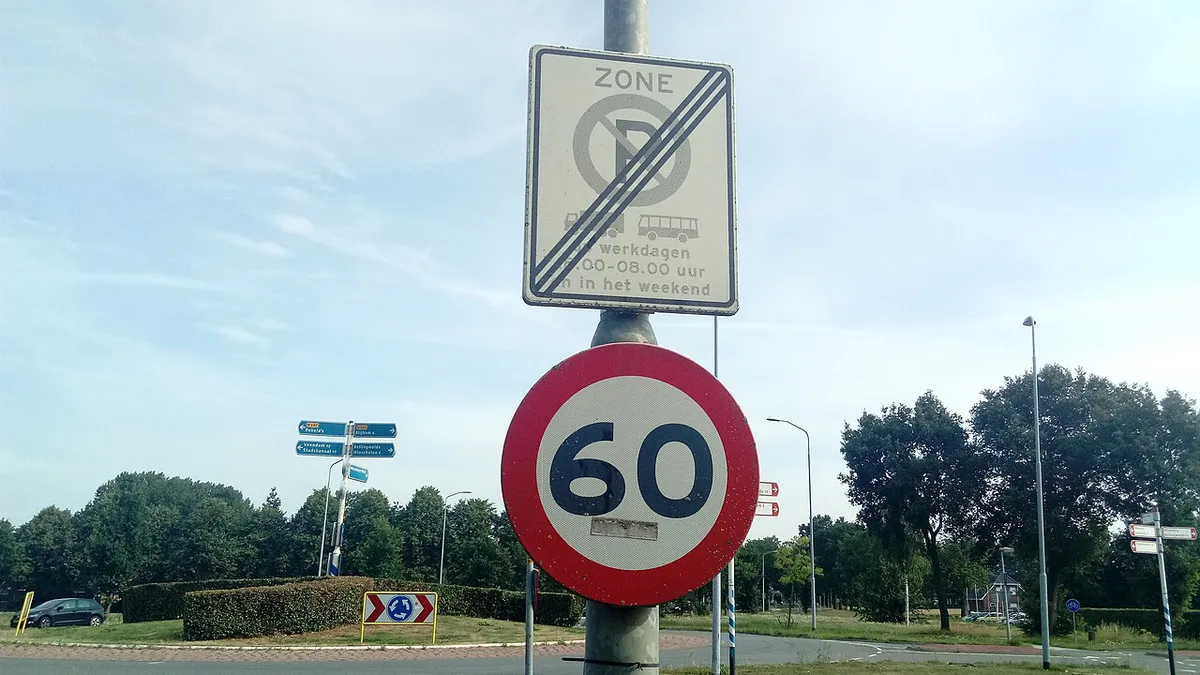
- Look for a sign pairing 100 with a time range, and a second sign with 130 and the opposite hours.
- Check the posted number again after every junction or interchange.
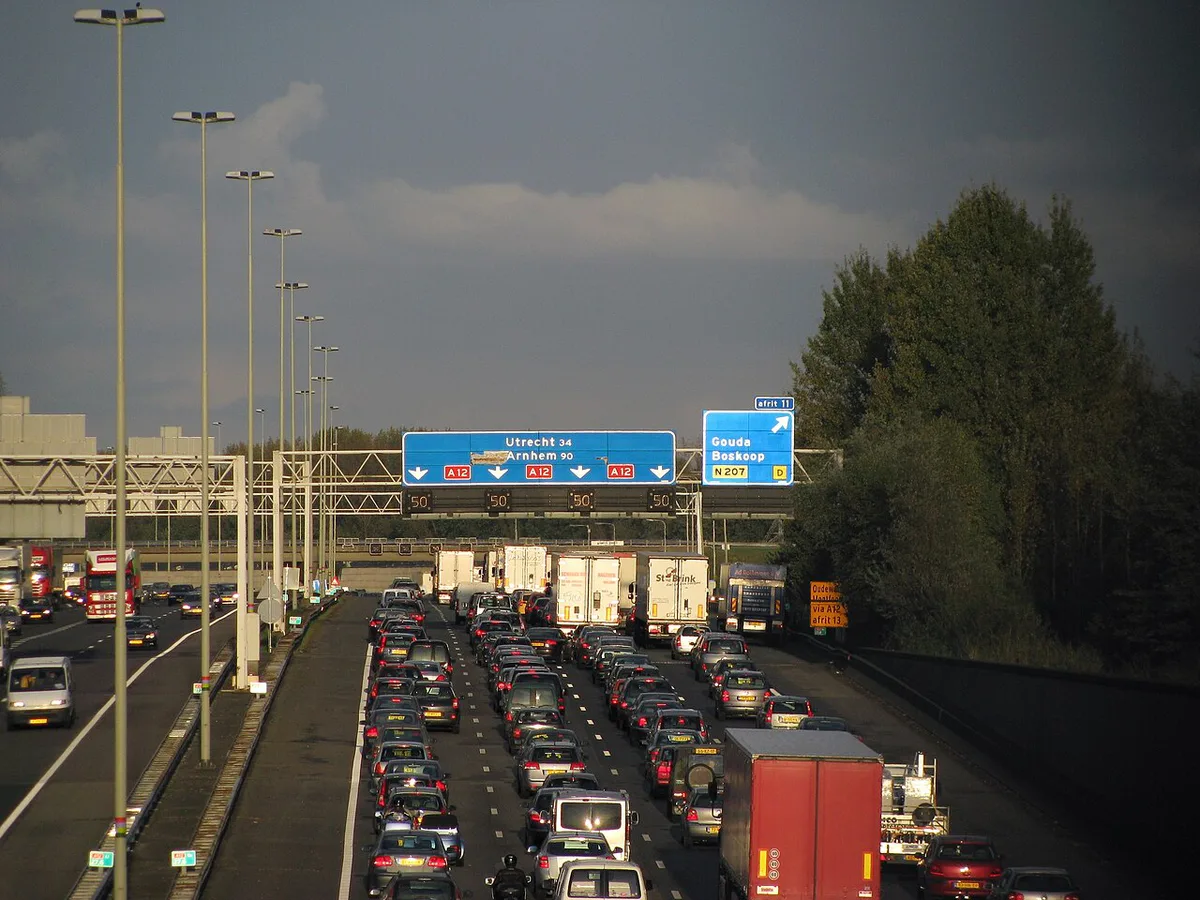
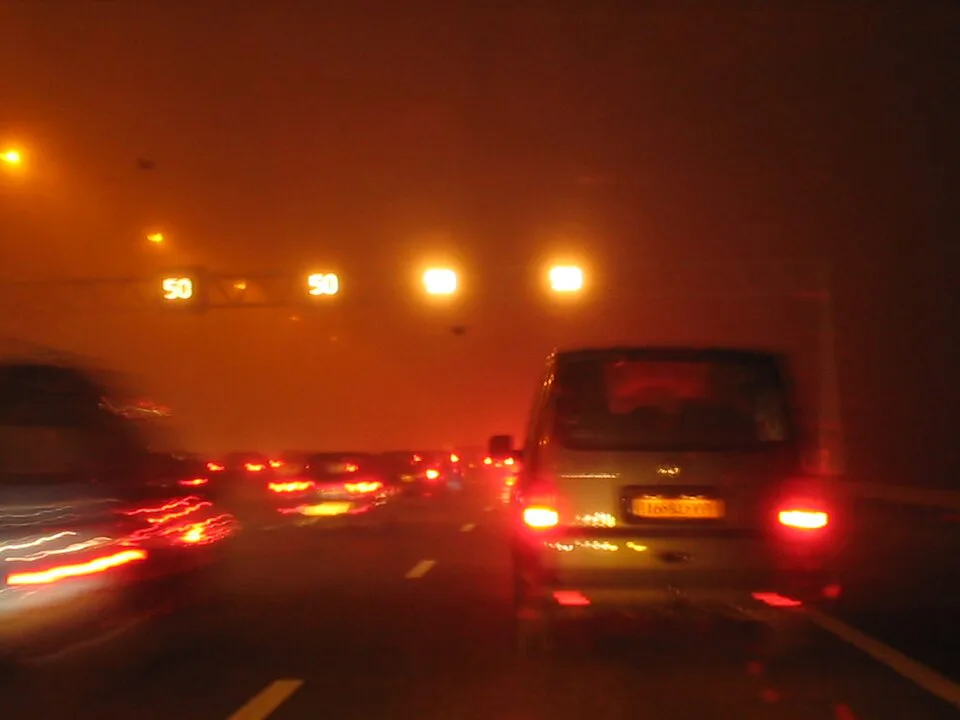
- Treat dense traffic and roadworks as reasons to stay under the limit, since roadworks often carry their own lower signs.
Built-up areas, 30 km/h zones, and rural roads
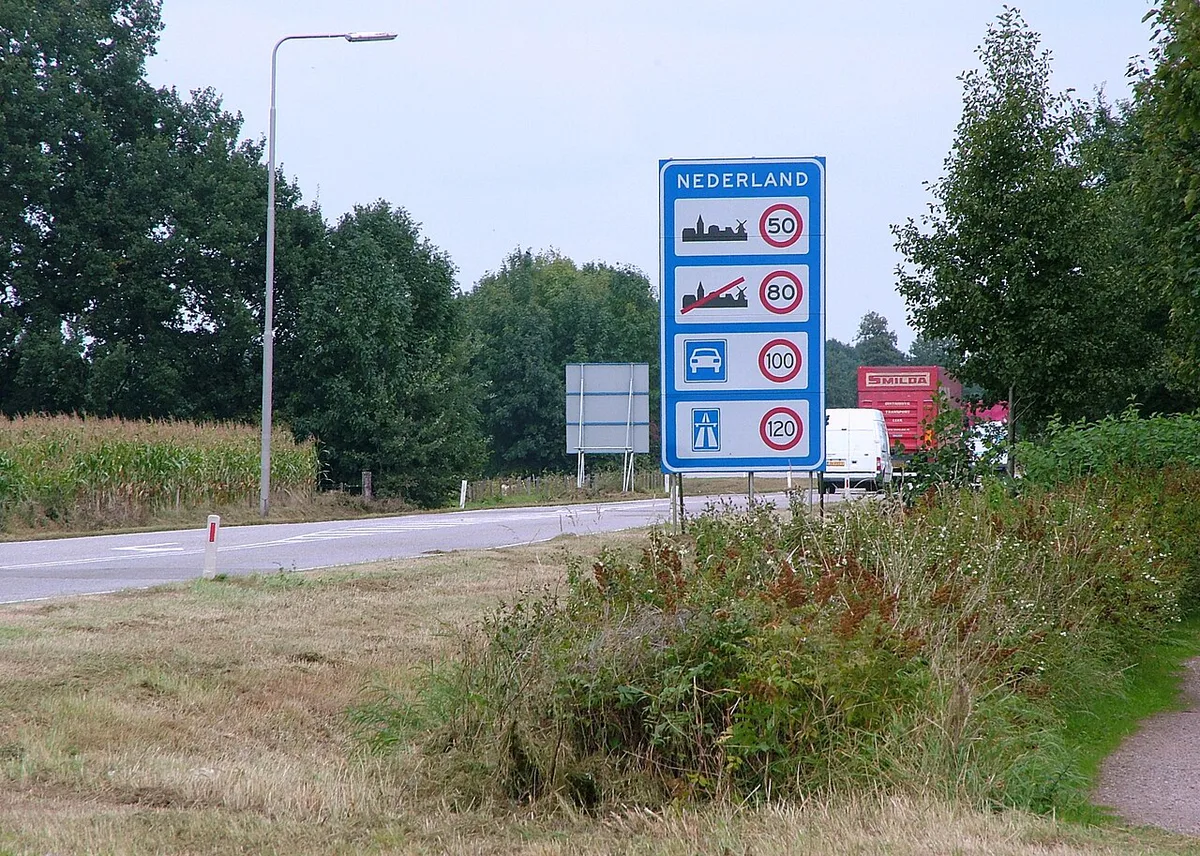
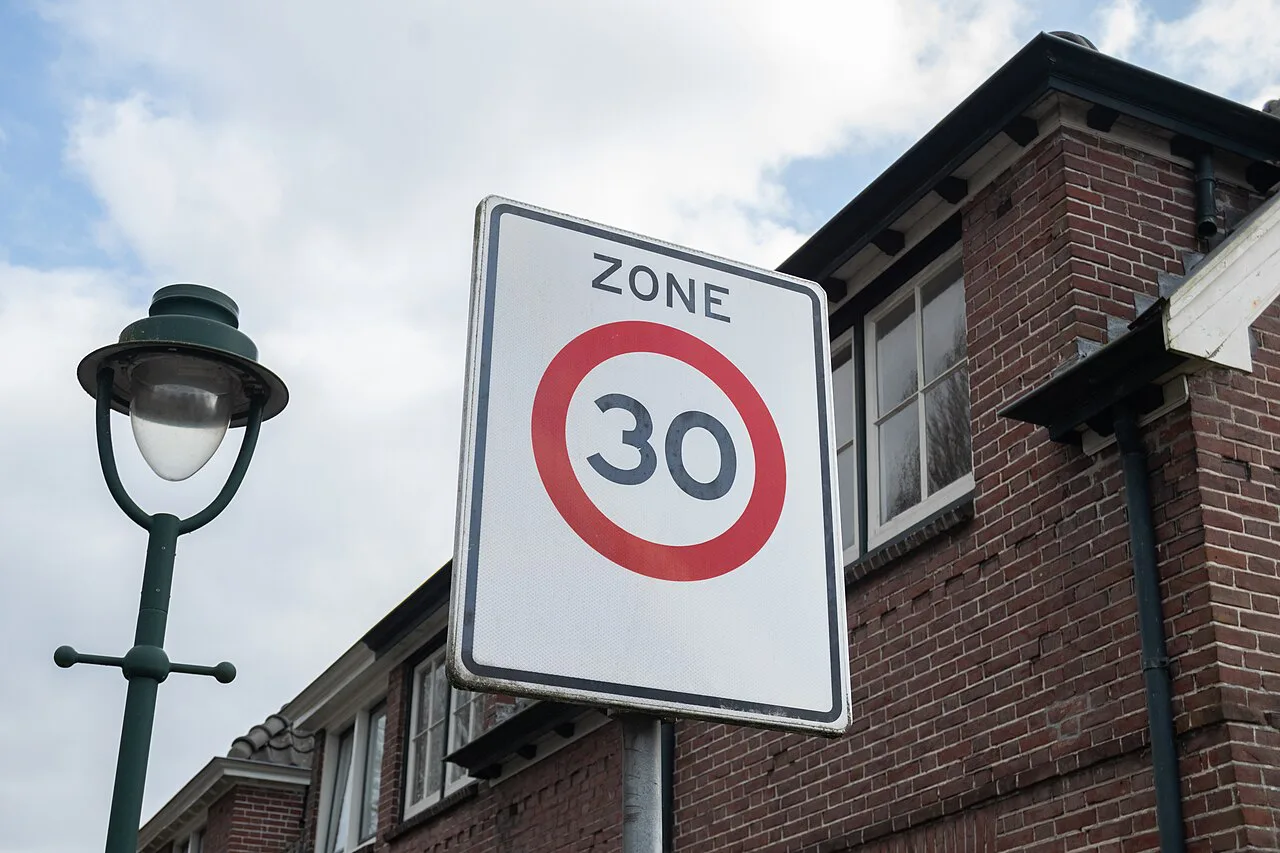
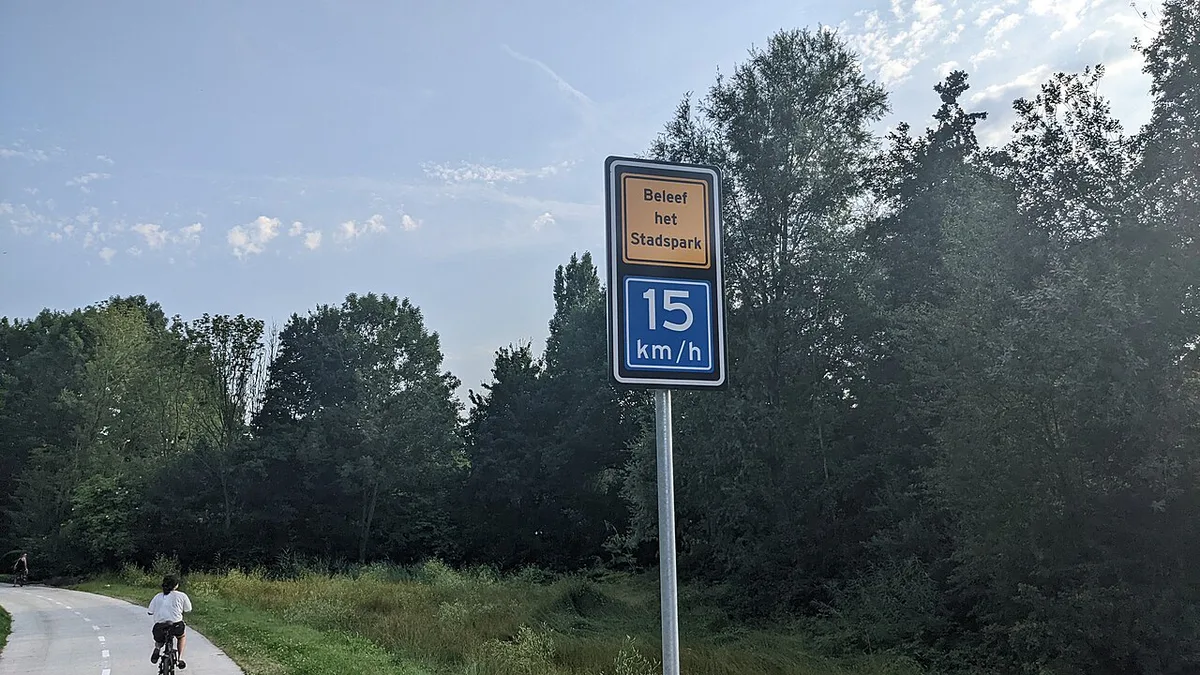
A town-name sign marks the start of a built-up area, where the default is 50 km/h (31 mph). Many residential streets are posted at 30 km/h (19 mph), and more towns are lowering limits to that level. Outside built-up areas the default is 80 km/h (50 mph). Narrow rural access roads are often signed at 60 km/h (37 mph). Rural limits drop quickly at villages, so watch for the town-name sign. Do not carry 80 km/h into a village because the road looks open.
Cameras, average-speed checks, and fines for visitors
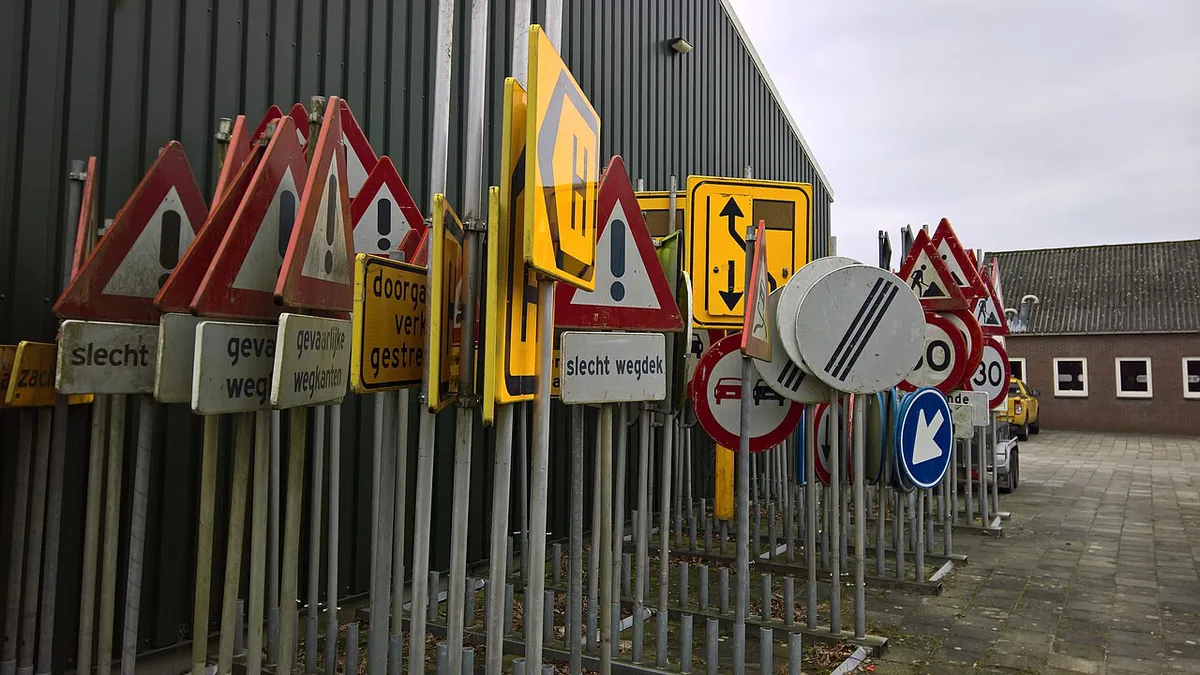
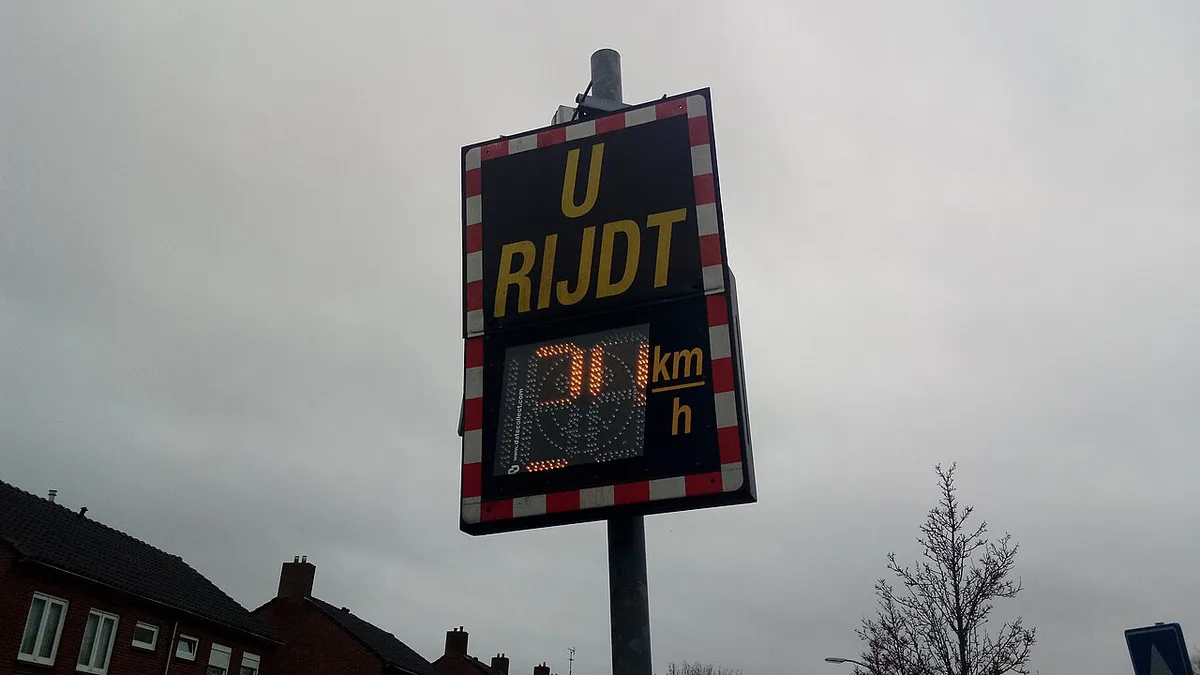
Dutch enforcement mixes fixed cameras, average-speed sections known as trajectcontrole, and mobile checks. Average-speed sections measure your time between two points. Slowing down near the camera alone will not help. Fines are usually posted to the registered keeper after the event, not collected at the roadside. Foreign plates are not exempt. Measured speeds get a technical correction of 3 km/h up to 100 km/h and 3% above that, so a fine can follow from about 4 km/h over the limit. Do not plan around that margin. Travelers who pick up a rental car in the Netherlands should expect the notice to reach the rental company first. Companies typically pass the details on to you, sometimes with an administrative fee. Check your rental contract for that fee, and expect the notice weeks after you fly home.
- Fixed cameras: posted limit applies from the sign onward.
- Trajectcontrole: stay at or below the limit for the whole section.
- Mobile checks: possible on any road type.
Driving in Dutch cities: cyclists, trams, and priority
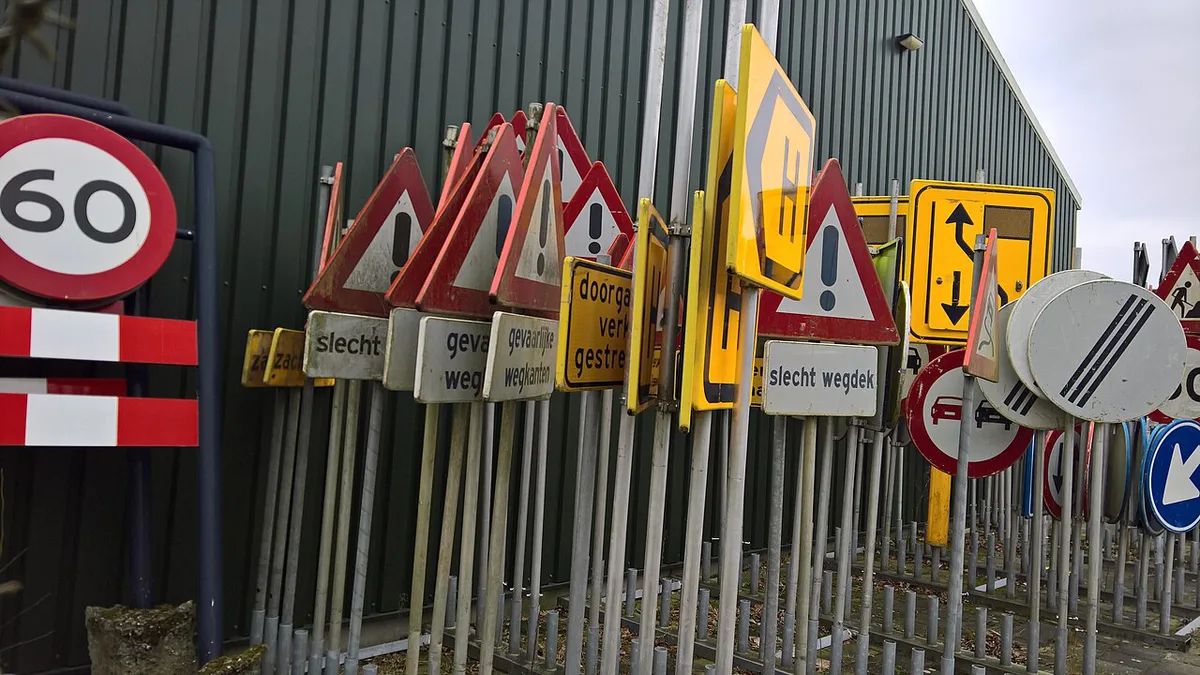
City limits are only half the challenge. Cyclists often have priority at junctions, and on many streets they share the carriageway with cars. Trams generally have priority over other traffic unless signs say otherwise. In 30 km/h (19 mph) zones, expect cyclists to ride two abreast and cross without warning. Our guide to Driving in Amsterdam: Parking, Zones & Rules covers central routes in detail. For where to leave the car, read about Parking in Amsterdam: Garages, P+R & Street Rules. Outside the capital, parking across the Netherlands is the next read.
Cyclists often share the carriageway with cars. Many residential streets are posted at 30 km/h (19 mph).
Crossing into Belgium or Luxembourg: what changes
Belgium and Luxembourg set their own limits, and Dutch motorway numbers do not carry over. Use our guides to Driving in Belgium: Rules, Zones and Tips and Driving in Luxembourg: Rules, Speed Limits & Tolls for the rules before you cross. Official Belgian information sits on the federal mobility portal. Cars hired in the Netherlands may have separate cross-border terms, so see Renting a Car in Belgium: Rules, Costs and Brussels Tips and Renting a Car in Luxembourg: Pickup, Costs, Rules. Heading to the capital adds a low-emission zone, covered in Brussels low-emission zone rules.
Common mistakes and a pre-drive checklist
Most Dutch speeding fines come from small slips rather than reckless driving. US drivers think in mph, so 100 km/h feels like 62 mph, and 130 km/h like 81 mph. Convert once before you drive and keep the numbers in mind. If you hold a US licence, read our guide to driving with a US licence for permit and paperwork questions.
- Trusting a navigation app's limit: the roadside sign wins.
- Missing a sign change after a junction or interchange.
- Carrying 100 km/h motorway speed into a 50 km/h built-up area.
- Forgetting that the 19:00 and 06:00 changes apply only where signed.
- Ignoring trajectcontrole signs and speeding between cameras.
- Setting your dashboard to mph and misreading the km/h scale.
Road-rule changes worth knowing
Optional updates to our guides.
You might also like

Continue reading
More guides you'll find useful