
Driving in Amsterdam: Parking, Zones & Rules
Should you drive in Amsterdam? See when a car makes sense, how parking and low-emission zones work, key rules, and smarter alternatives.
On this page
Last updated November 2026: driving in Amsterdam is usually the wrong choice for a city-centre visit. Trams, bikes, narrow canal streets and paid parking make a car a liability inside the A10 ring. Day trips, heavy luggage and arrivals by road from Belgium, Germany or Luxembourg are the cases where a car earns its place.
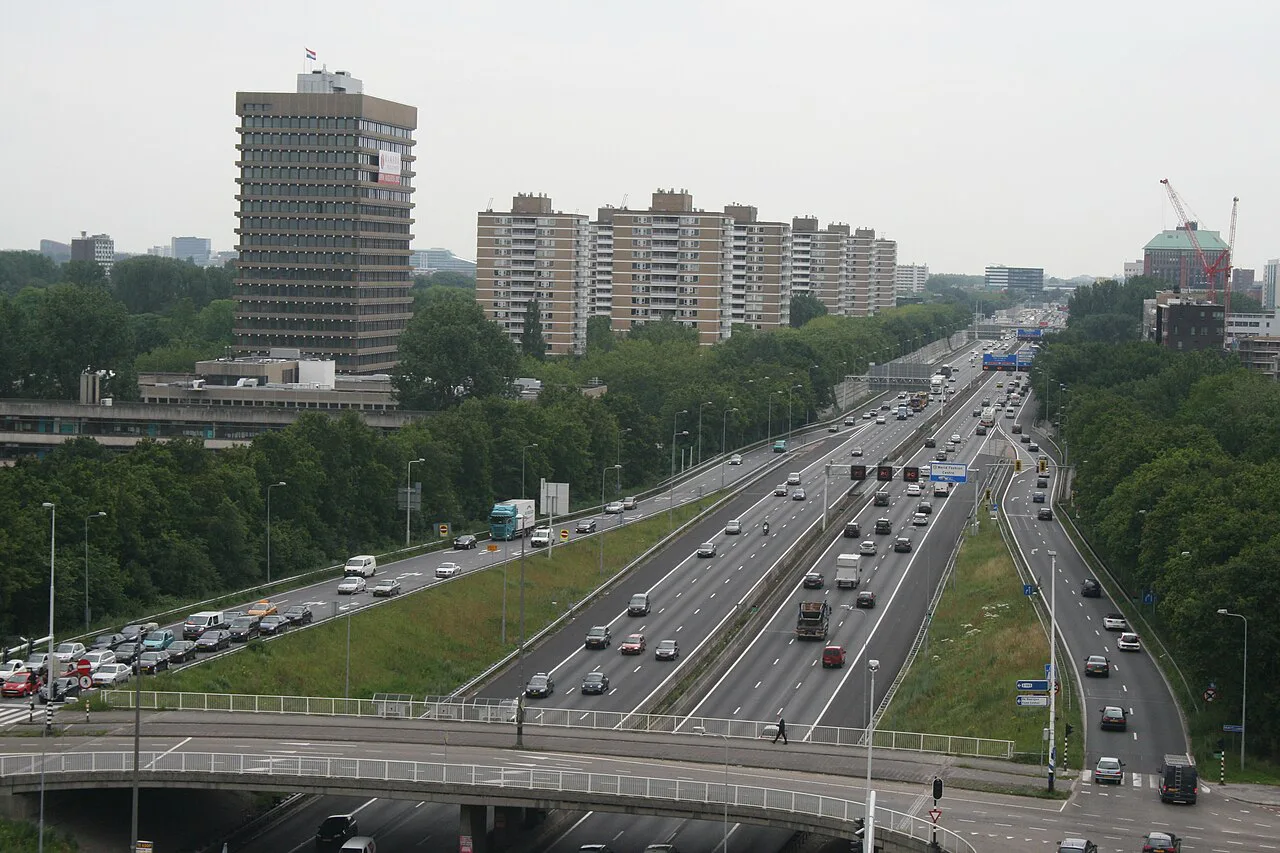
Featured image: Mojito, CC BY-SA 3.0, via Wikimedia Commons.
Should you drive in Amsterdam? The short answer
Skip the car if your trip stays inside the A10 ring. Street parking is expensive and limited, and every street is shared with trams, cyclists and mopeds. Canals leave narrow one-way streets that punish wrong turns. A car makes sense for day trips, luggage-heavy or mobility-limited travel, and arrivals by road. Even then, park on the edge of the city and ride in.
| Scenario | Drive? | Why |
|---|---|---|
| City-centre sightseeing | No | Trams, bikes and paid parking make a car a burden |
| Day trip to a town with weak rail links | Often yes | A car saves transfers and fixed timetables |
| Arriving by road from Belgium, Germany or Luxembourg | Yes, to the city edge | Park at a P+R site and ride in |
| Travelling with kids and luggage | Depends | Fine for arrival and departure, awkward for daily use |
| Reduced mobility | Sometimes | Ask your hotel about drop-off and accessible parking in advance |
| Overnight stay in the centre | No | Hotel parking is limited and usually paid |
Getting around Amsterdam without a car
Trams, the metro and buses cover almost every visitor route inside the city. A bike or your own feet handle short hops across the canal belt. Trains serve most day-trip towns. Rotterdam, for example, is about 40 minutes from Amsterdam by train, which is similar to driving in light traffic. Check the NS timetable for current times. For city sights and events, the official I amsterdam guide is a useful starting point.
| Option | Door-to-door time | Relative cost | Luggage friendliness |
|---|---|---|---|
| Tram, metro or bus | Fast in the centre | Low | Fine with a small bag |
| Bike | Fast for short hops | Low | Poor |
| Walking | Best inside the canal belt | Free | Fine with a small bag |
| Train to a day-trip town | Competitive with a car | Moderate | Good |
| Car | Slow in the centre, flexible outside it | High once parking is added | Best |
Parking and where to leave the car
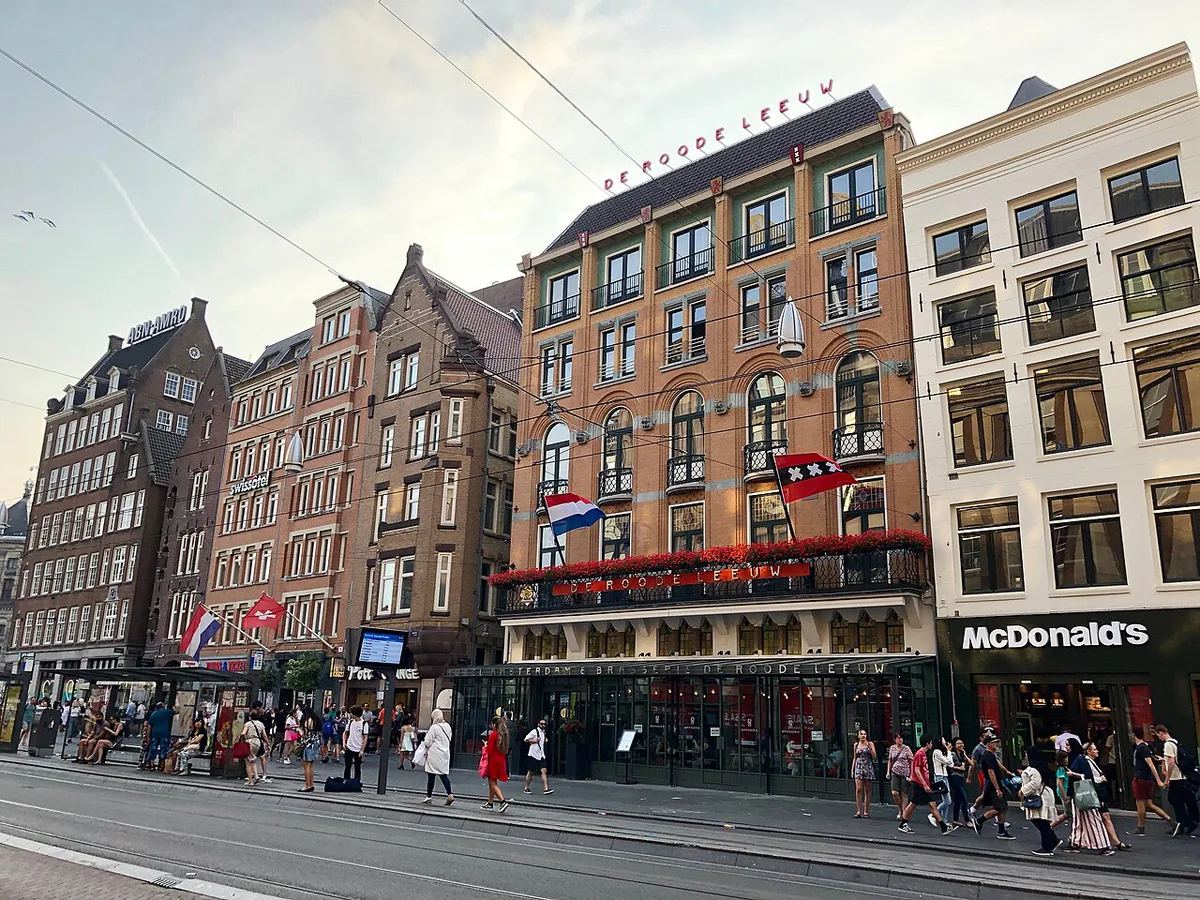
Park & Ride (P+R) sites on the edge of the city are the main workaround. Leave the car there and take public transport into the centre. Paid street parking in the centre is expensive, and the City of Amsterdam publishes current rates and permit rules. Hotels often have few spaces, so ask about parking when you book. Our guide to Parking in Amsterdam: Garages, P+R & Street Rules covers zones and payment in detail. For country-wide habits, see parking across the Netherlands.
Rotterdam is about 40 minutes by train, similar to driving in light traffic, and that is before any paid street parking is added.
Low-emission and zero-emission zones
Amsterdam runs a milieuzone that restricts older diesel vehicles. Zero-emission rules also apply to some vehicle classes in parts of the city. Foreign-registered vehicles may need to be registered before entering a zone, so read the City of Amsterdam's current page before you arrive. Your action is simple: find your car's emission class on its registration papers. Rental cars are usually recent, but ask the rental desk when you book. Zones in neighbouring countries work differently, as the Brussels low-emission zone shows.
Driving rules that surprise visitors in the city
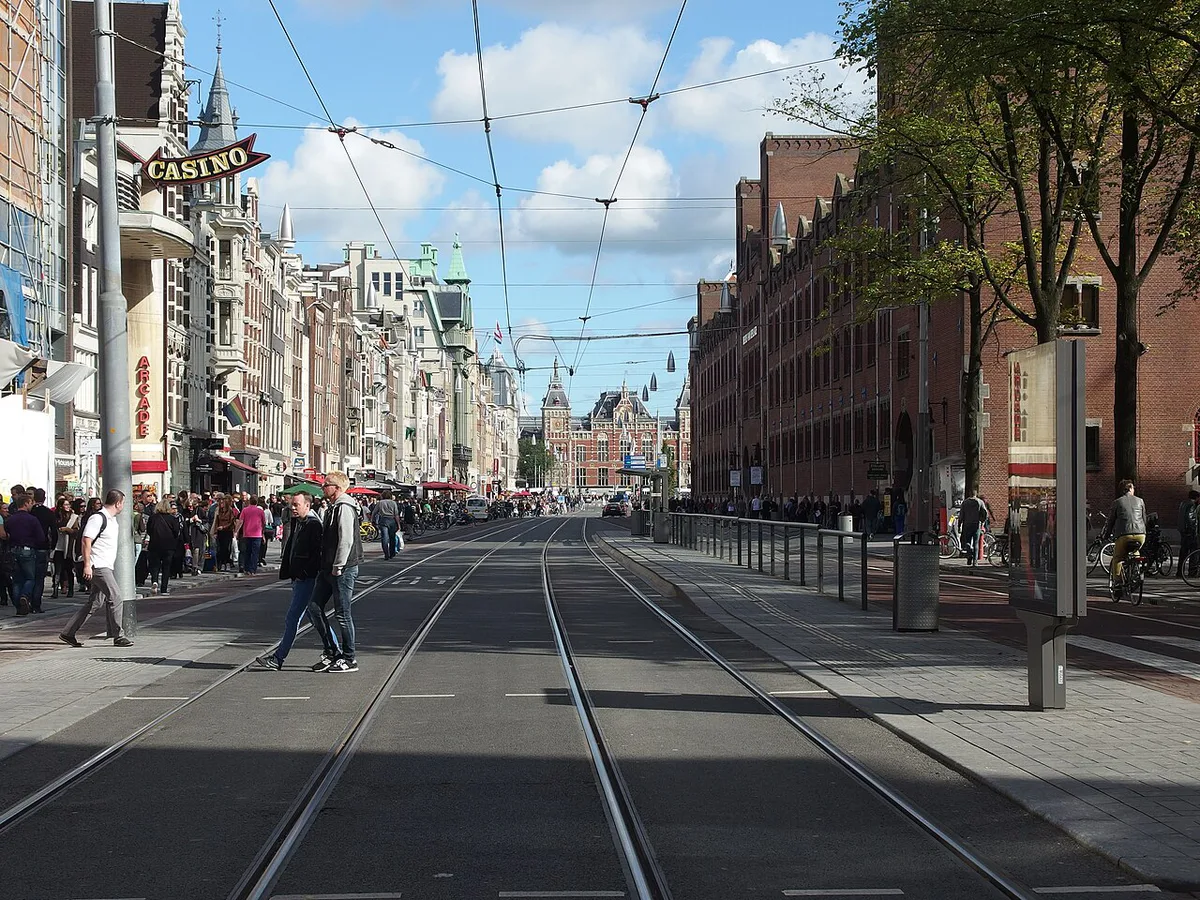
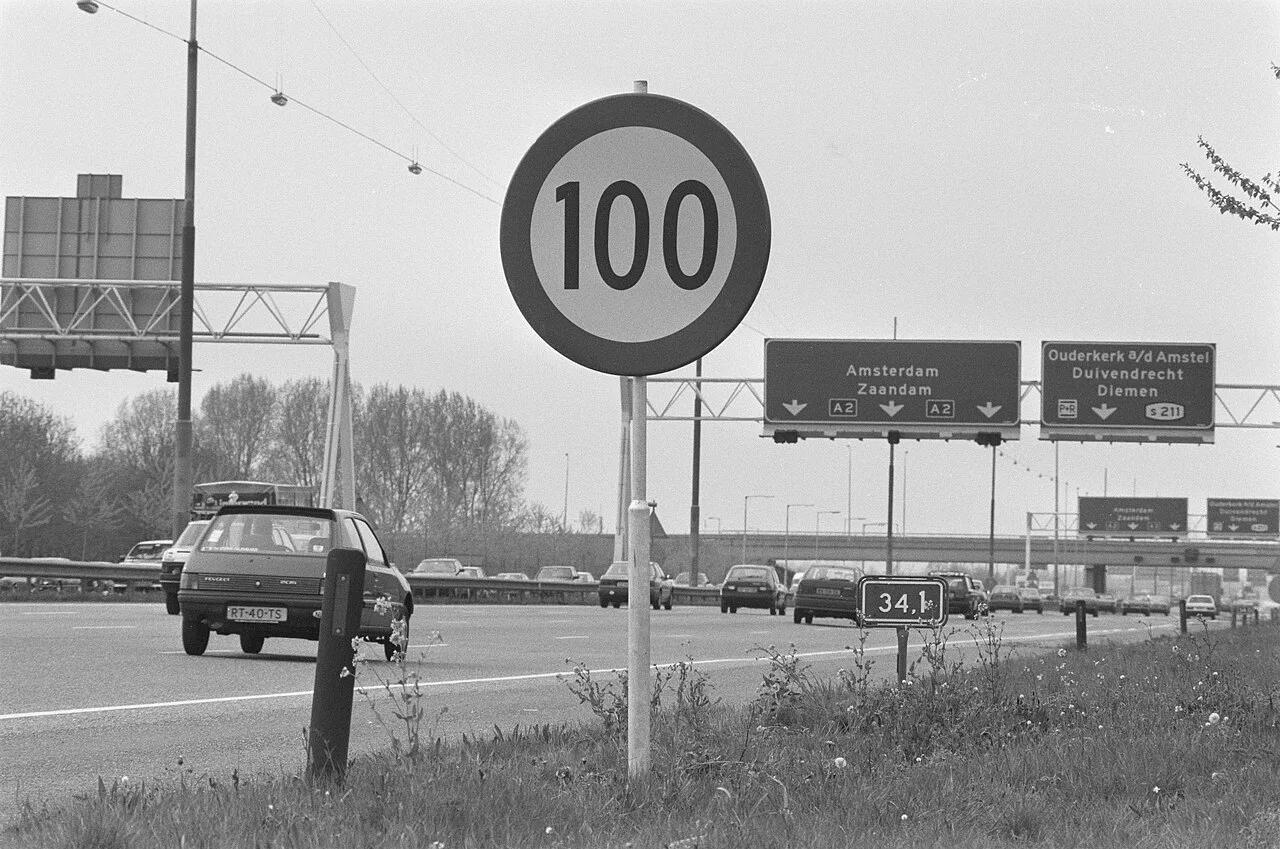
Traffic keeps to the right, as it does across the Netherlands. At unmarked junctions, traffic from the right has priority. Trams have priority over cars almost everywhere, and cyclists and mopeds in bike lanes expect you to yield when turning. Urban roads typically carry a 50 km/h limit, and speed cameras are common. Handheld phone use and drink-driving are both strictly policed. Rijkswaterstaat, the Dutch road authority, publishes national road information. Limits outside the city are in our guide to Dutch speed limits. Highways allow up to 100 or 130 km/h.
- Driving into the centre without a parking plan.
- Ignoring milieuzone and zero-emission rules for your vehicle.
- Leaving the car on the street overnight without checking the paid-parking hours.
- Forgetting that bikes and trams have priority.
- Turning across a bike lane without a shoulder check.
Licence, permit and rental basics
EU and EEA licences are valid for visits. Non-EU licences generally work for short stays too. Rental desks may ask for an International Driving Permit if your licence is not in English or Dutch. An IDP is not officially required in the Netherlands. The Government of the Netherlands publishes licence rules for visitors. US readers should read our guide to driving with a US licence. Rental basics are in our guide to Renting a Car in the Netherlands: Rules, Costs & Tips. Pick up at Schiphol or a city-edge location rather than the centre. Choose a small car, because canal-side lanes are narrow. General rules sit in our Netherlands driving guide.
Day trips by car from Amsterdam
Take the train when your destination has a main station near the sights. Rotterdam is the clear example. Choose a car for villages, farms and coastal stops with thin rail service. Belgium also works as a car trip. Read Driving in Belgium: Rules, Zones and Tips first. Then see Renting a Car in Belgium: Rules, Costs and Brussels Tips for cross-border rental rules. Luxembourg is far for a single day. If you plan a longer road trip, start with Driving in Luxembourg: Rules, Speed Limits & Tolls.
Inside the city a 50 km/h limit is typical, while highways allow up to 100 or 130 km/h once a day trip leaves town.
- Rotterdam: train beats car, with about 40 minutes of travel and no parking search.
- Rural villages with few trains: car wins.
- Brussels: either mode works, but a car must meet its low-emission zone rules.
- Long cross-border trips: car for flexibility, with a rental that permits border crossings.
Frequently Asked Questions
Do they drive on the left or right in Amsterdam?
Traffic in Amsterdam and across the Netherlands drives on the right. Priority from the right applies at unmarked junctions, and trams have priority over cars.
Do I need a low emission sticker for the Netherlands?
Amsterdam does not use a windscreen sticker. Zone rules depend on your vehicle's fuel and emission class, so look up the City of Amsterdam's current milieuzone page before you enter.
Road-rule changes worth knowing
Optional updates to our guides.
You might also like

Continue reading
More guides you'll find useful