Speed Limits in Poland: Limits, Fines & Camera Tips for Drivers
Poland's speed limits by road type, typical speeding fines from 50 zł to 2,500 zł, and tips for visiting drivers.
On this page
Last updated November 2026: speed limits in Poland default to 50 km/h (31 mph) in built-up areas and 90 km/h (56 mph) outside them. Dual carriageways allow 100 km/h (62 mph), dual-carriageway expressways 120 km/h (75 mph) and motorways 140 km/h (87 mph). Road signs override these defaults, and speeding fines run from 50 zł to 2,500 zł.
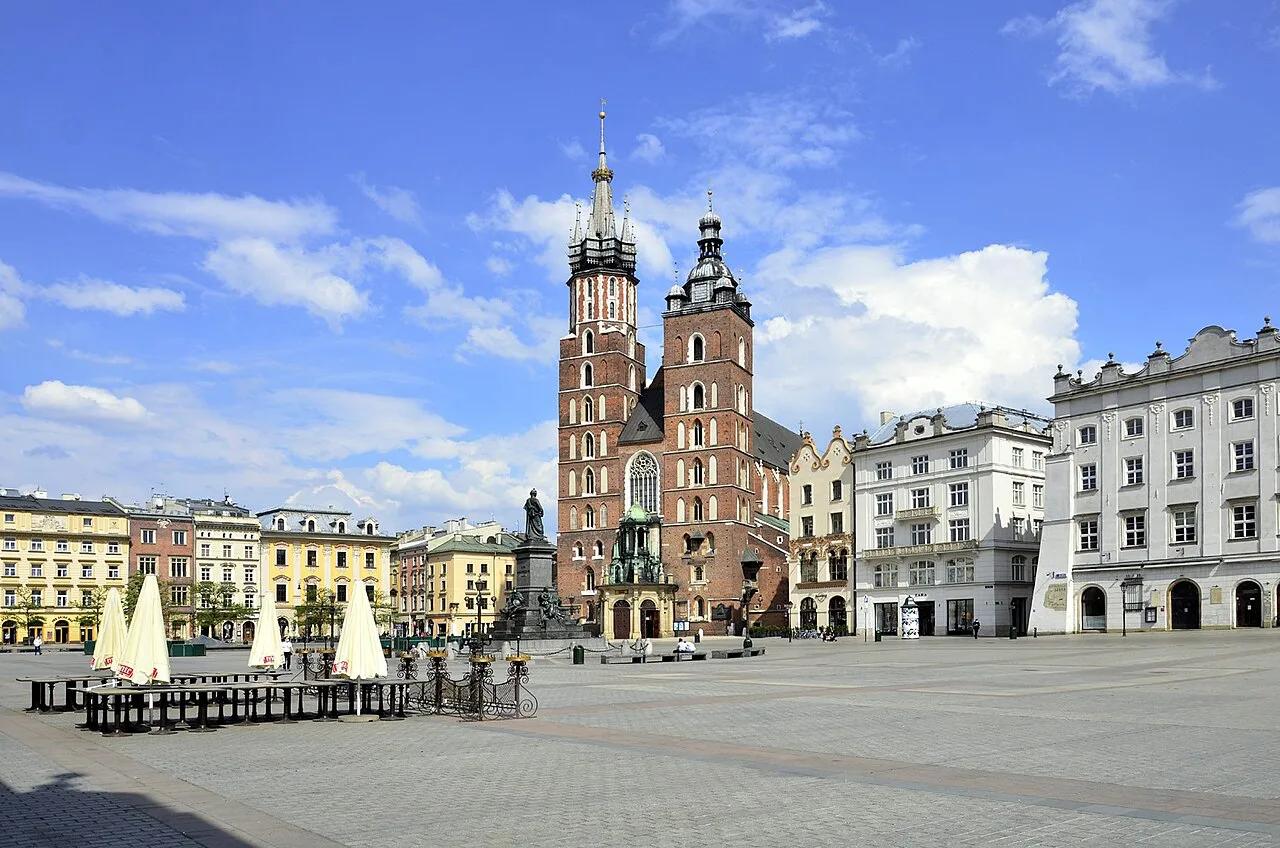
Featured image: Photo: Alexander Blum (www.alexanderblum.de), CC BY 4.0, via Wikimedia Commons.
Speed Limits in Poland at a Glance
Five default limits cover most of your driving. They are 50 km/h in built-up areas, 90 km/h on other roads, 100 km/h on dual carriageways and single-carriageway expressways, 120 km/h on dual-carriageway expressways and 140 km/h on motorways. Posted signs always beat the default. For the wider rules, see our full Poland driving guide.
| Road type | Limit (km/h) | Limit (mph) | How to recognise it |
|---|---|---|---|
| Residential zone | 20 | 12 | Marked by a strefa zamieszkania (residential zone) sign |
| Built-up area | 50 | 31 | Starts at the white place-name sign; applies day and night |
| Outside built-up areas | 90 | 56 | Default on ordinary rural roads |
| Dual carriageway | 100 | 62 | Two lanes each way with a central divider |
| Motorway (A roads) | 140 | 87 | Road numbers start with A |
| Expressway (S roads), dual carriageway | 120 | 75 | Road numbers start with S |
| Expressway (S roads), single carriageway | 100 | 62 | S number, one lane each way |
How Limits Change by Road Type
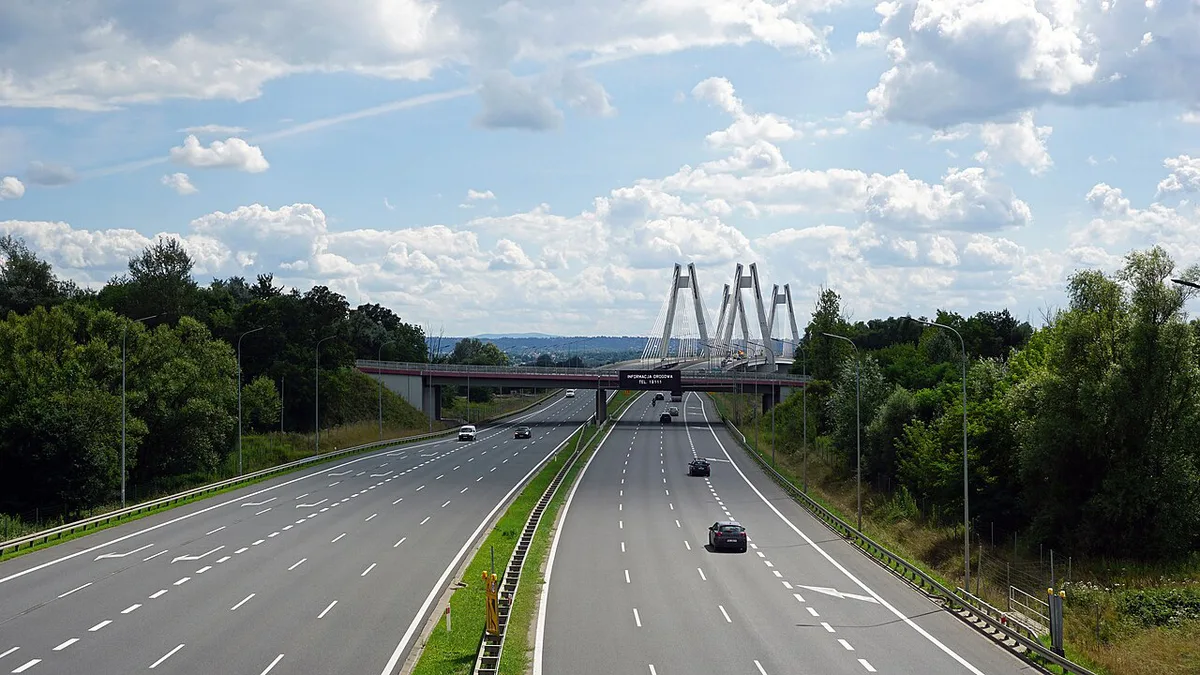
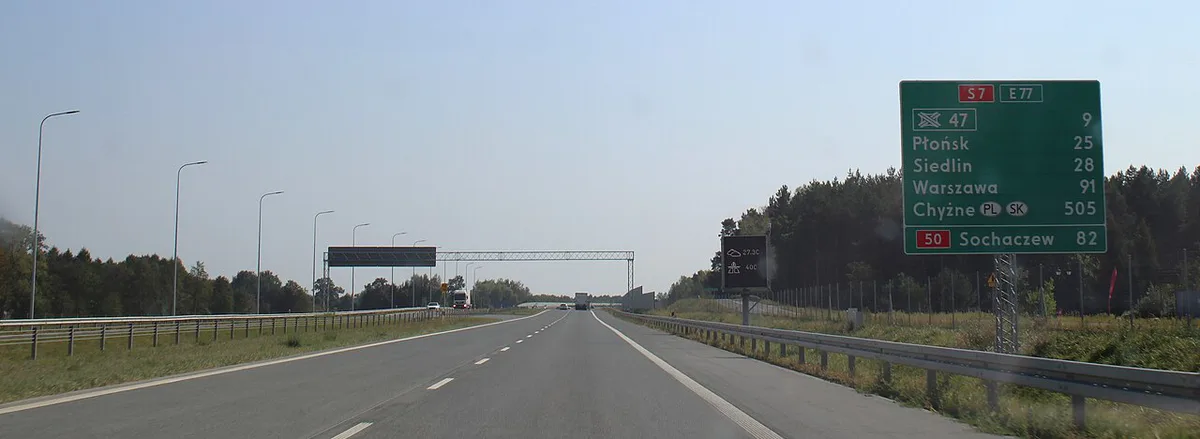
In towns and villages, the 50 km/h limit applies from the place-name sign, not from the first house. It ends at the matching sign on the way out. The 50 km/h limit holds around the clock: the old 60 km/h night allowance (23:00 to 05:00) ended on 1 June 2021. Outside built-up areas, 90 km/h is the default on single-lane national roads. Dual carriageways raise that to 100 km/h, and motorways allow up to 140 km/h. S roads are expressways: 120 km/h where they are dual carriageway and 100 km/h on the shorter single-carriageway stretches, so the limit can change along one road. A car towing a trailer or caravan is held to 80 km/h even on motorways and expressways, according to the Wikipedia summary of Polish limits. National roads are managed by GDDKiA, and the traffic inspectorate ITD runs the automatic cameras.
Speeding Fines in Poland
Fines below come from the current police tariff, as published in the 2026 tariff summary from Winiety24 and matched by AutoCentrum (both read November 2026). The lowest fine is 50 zł for up to 10 km/h over the limit. The highest is 2,500 zł for more than 70 km/h over. Repeat offending doubles the fine only from 31 km/h over: the same offence again within two years. For example, 35 km/h over costs 800 zł, and a repeat within two years costs 1,600 zł. Exceeding the limit by more than 50 km/h in a built-up area means the police take your licence for three months, and since 3 March 2026 the same applies on single-carriageway two-way roads outside built-up areas. Other fines add up fast too. Skipping a seat belt costs 100 zł plus 5 penalty points, and using a hand-held phone while driving costs 500 zł plus 12 points. Payment rules for non-residents are set by the Polish Police. Rental firms may pass fines on under your contract, so read the terms in our Poland car rental guide.
Count the 90 km/h rural default as your baseline: 25 km/h over costs 300 zł, while 35 km/h over costs 800 zł and doubles to 1,600 zł for a repeat within two years.
| Speed over the limit | Fine | Repeat within 2 years | Penalty points |
|---|---|---|---|
| Up to 10 km/h | 50 zł | 50 zł | 1 |
| 11-15 km/h | 100 zł | 100 zł | 2 |
| 16-20 km/h | 200 zł | 200 zł | 3 |
| 21-25 km/h | 300 zł | 300 zł | 5 |
| 26-30 km/h | 400 zł | 400 zł | 7 |
| 31-40 km/h | 800 zł | 1,600 zł | 9 |
| 41-50 km/h | 1,000 zł | 2,000 zł | 11 |
| 51-60 km/h | 1,500 zł | 3,000 zł | 13 |
| 61-70 km/h | 2,000 zł | 4,000 zł | 14 |
| More than 70 km/h | 2,500 zł | 5,000 zł | 15 |
Speed Cameras and Average-Speed Checks
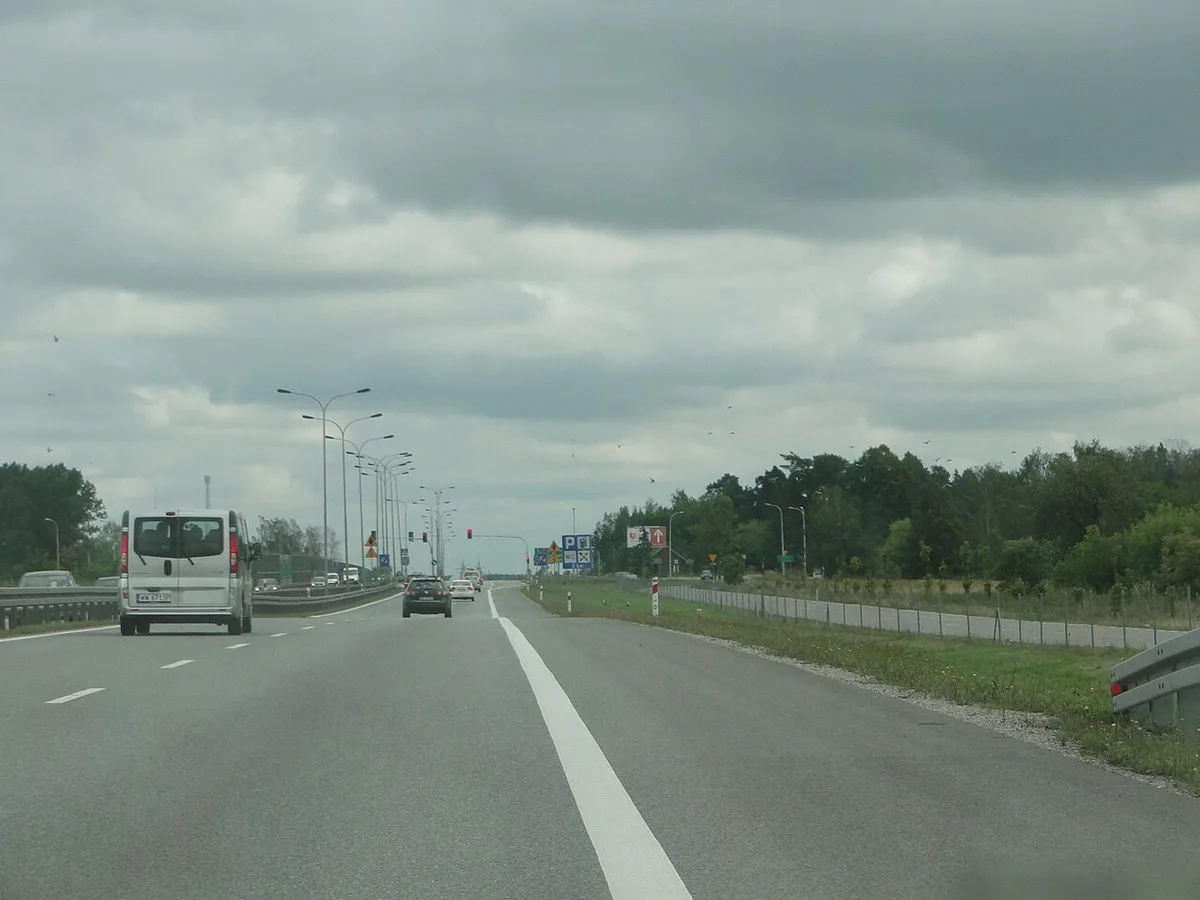
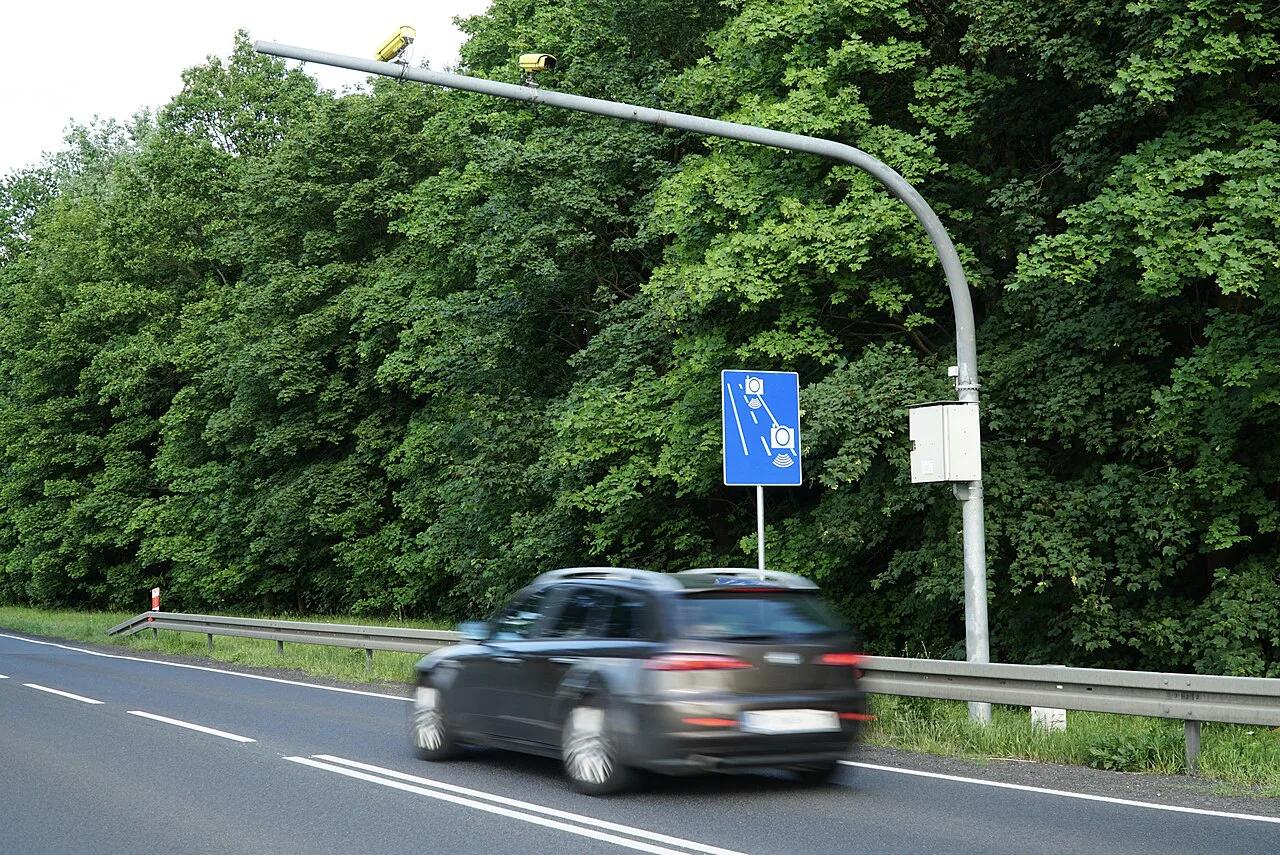
Poland uses fixed speed cameras, section-speed control (odcinkowy pomiar prędkości) and red-light cameras. The fixed network is run by CANARD, the automatic enforcement centre of the road transport inspectorate (ITD), which publishes a map of camera and section-control sites. CANARD added new section-control sites through 2026, mainly on motorways and expressways, including stretches of the A4 and the S6, according to Auto Świat. A section-control reading averages your speed between two gantries, so braking for the camera does not help.
Common Mistakes Visiting Drivers Make
Most tickets come from a few predictable slips. These are the ones to plan around.
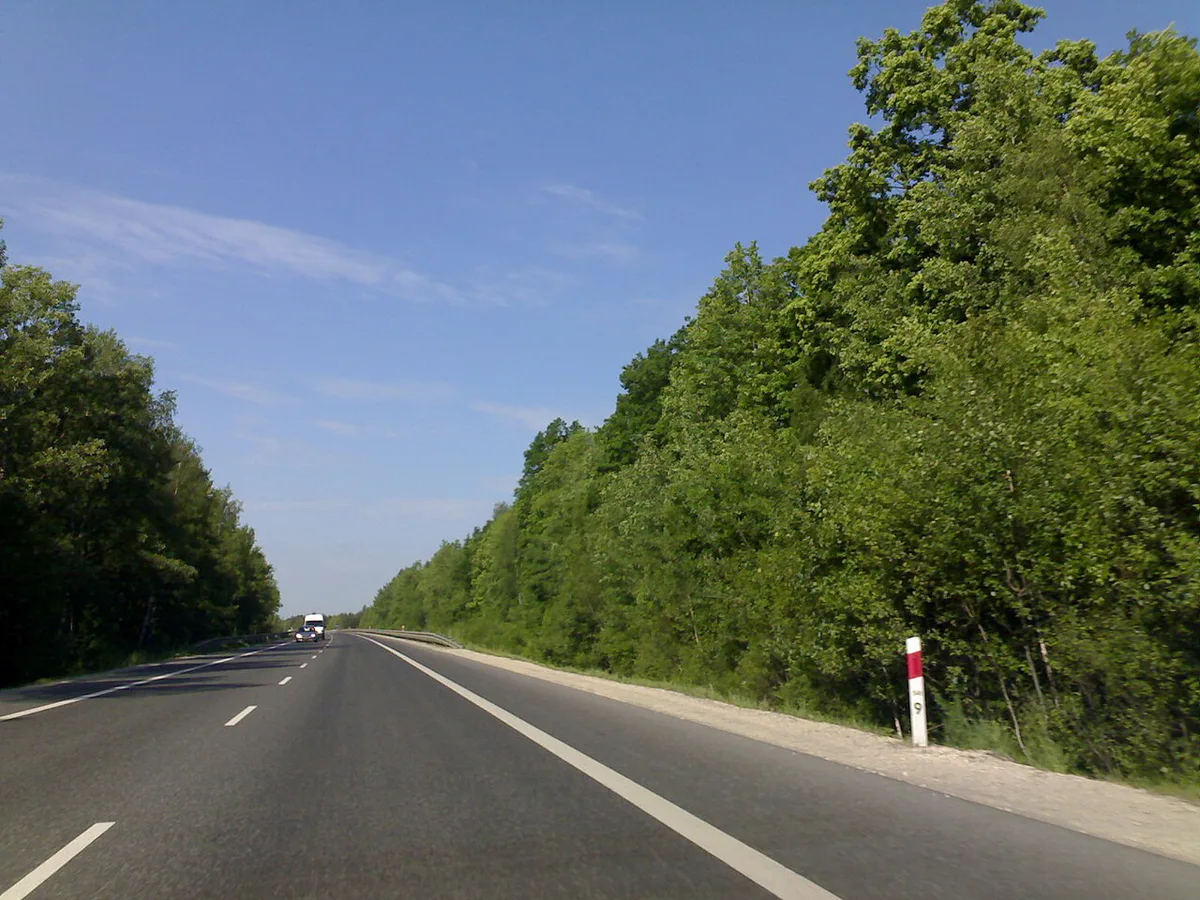
- Missing the place-name sign: 50 km/h starts there, even on a road that felt like open country.
- Reading mph as km/h: 50 km/h is only 31 mph, so a US-style 50 is a serious overspeed.
- Keeping motorway speed after a sign drops the limit near roadworks.
- Treating S roads like motorways: expressways top out at 120 km/h, not 140 km/h.
- Driving after drinking: the legal blood alcohol limit is 0.2 promille, and above 0.5 promille it becomes a criminal offence, so the safe amount is none.
Planning Your Drive: Time, Toll and Rental-Car Considerations
Legal arithmetic shows what speed buys you. A 100 km leg at 90 km/h takes about 67 minutes, and at 140 km/h it takes about 43 minutes. That gap exists only where a motorway runs your route. Toll rules differ by road, so read our Poland toll guide before choosing the faster road. For route ideas, see our Poland road trip itinerary. Save the emergency numbers: 112 for any emergency, police 997, ambulance 999 and fire 998. US and Canadian visitors should carry an International Driving Permit alongside the home licence. The six-month rule for non-EU licences concerns people who take up residence in Poland, who must then exchange the licence, as Infor explains. Continuing your trip? Read our Czech Republic driving guide. Heading south, try the Hungary driving guide. Our Slovakia rental guide covers that border. Further on, see Driving in Slovenia: Rules, Vignette & Tips for Visitors.
Only where a motorway runs your route does 100 km take less time: at 140 km/h it takes about 43 minutes.
Emergency Numbers and Safe Driving Decisions
Save Poland’s emergency numbers before setting off, especially for longer rural or motorway drives. 112 works for any emergency from any phone. Call police on 997 after a collision, dangerous driving incident or roadside security concern. Call an ambulance on 999 when anyone needs medical help. Call the fire service on 998 for a vehicle fire or other fire-related emergency.
Do not let an urgent journey push you beyond the posted limit. The default motorway limit is 140 km/h, but temporary signs near roadworks can require a much lower speed. In built-up areas, the 50 km/h limit begins at the white place-name sign. Pull over only where it is safe and lawful, then give responders your road number, direction of travel and nearest visible sign.
- Any emergency: 112
- Police: 997
- Ambulance: 999
- Fire service: 998
Road-rule changes worth knowing
Optional updates to our guides.
You might also like

Continue reading
More guides you'll find useful